
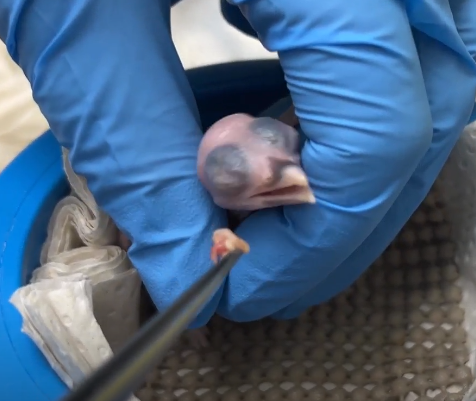
Summary of First Sihek, aka Guam Kingfisher, Chick of 2025 Hatches at the Cincinnati Zoo:
The article discusses the progress of the Sihek breeding program, aimed at conserving a bird species once common in Guam but decimated by invasive species. Nine Sihek birds released on Palmyra Atoll are thriving and have even produced eggs this year. However, to focus on stabilizing the species in captivity, further translocation of birds to Palmyra has been postponed until 2026. The success in breeding efforts is evident, with two nesting pairs on Palmyra potentially producing more eggs and additional eggs in various zoos expected to hatch. The goals are multifaceted, aiming to increase Sihek numbers in managed care, establish a population on Palmyra Atoll, and ultimately reintroduce the species to Guam. The selection of Palmyra Atoll as a release site is due to its predator-free environment and protective status. This effort is a collaboration among various zoos and conservation institutions across the United States.
- The recent hatching of the first Sihek chick of 2025 at the Cincinnati Zoo sparks hope for the species’ conservation efforts.
- The establishment of a Sihek population on Palmyra Atoll represents a critical step in the bird’s conservation, underlining the importance of predator-free environments.
- The cooperative efforts among AZA-accredited zoos and conservation institutions exemplify the collaborative approach needed for successful wildlife conservation.
- The challenge of reintroducing species into their native habitats underscores the broader complexities of wildlife conservation in the face of invasive species threats.
- The future direction of Sihek conservation efforts emphasizes a multi-faceted approach, combining in-situ and ex-situ strategies to stabilize and grow the population.
In an era marked by growing environmental challenges, the conservation narrative surrounding the Sihek, or Guam Kingfisher, vividly illustrates the pivotal role of collaborative efforts in preserving biodiversity. The recent hatching of the first Sihek chick of 2025 at the Cincinnati Zoo & Botanical Garden represents a beacon of hope for a species that stands on the brink of extinction. This event not only marks a significant achievement for the zoo but also signifies a momentous step forward in the broader conservation efforts for the species.
The story of the Sihek is a tale of resilience and determination. Decimated by the accidental introduction of the brown tree snake to Guam in the 1940s, the Sihek population faced near-obliteration. This catastrophic reduction in their numbers prompted a crucial intervention by biologists, who initiated a conservation breeding program within AZA-accredited zoos across the United States. The aim was clear: to prevent the complete extinction of the Sihek by fostering a sustainable population under human care, with the ultimate goal of reintroducing these birds into their natural habitat.
The selection of Palmyra Atoll as a release site for the Sihek reintroduction program was strategic. This predator-free environment, shielded by comprehensive conservation statuses, presents an ideal setting for the Sihek’s reestablishment. Palmyra’s isolation from invasive species threats and its protected status offer a unique opportunity for the Sihek to thrive in the wild once more. The release of Sihek at Palmyra Atoll in late 2024 showcased the fruition of concerted efforts by a consortium of conservation institutions and zoos, highlighting the collective investment in the species’ future.
The cooperative model of conservation exemplified by the Sihek’s reintroduction reflects an imperative shift in wildlife preservation strategies. The collective expertise and resources of institutions such as the Cincinnati Zoo, Smithsonian’s National Zoo and Conservation Biology Institute, and others within the cooperative have been instrumental in advancing the conservation goals for the Sihek. This collaborative approach not only amplifies the impact of individual efforts but also fosters a shared sense of purpose and responsibility in confronting the challenges that threaten our planet’s biodiversity.
One of the paramount challenges in the conservation of species like the Sihek is the complexity of reintroducing them into their native habitats. The successful hatch of a Sihek chick at the Cincinnati Zoo underscores the effectiveness of ex-situ conservation methods while also underlining the importance of in-situ strategies for eventual reintroduction. The ongoing efforts to stabilize and grow the Sihek population through breeding programs represent a critical interim step in the journey towards reestablishing a wild population on Guam.
Looking ahead, the future of Sihek conservation hinges on a multifaceted approach that encompasses both the nurturing of captive populations and the meticulous preparation of suitable release sites. The goal to move more birds to Palmyra in 2026 sets a clear trajectory for the near-term, emphasizing the importance of robust in-situ conservation efforts. Moreover, the initiative to reintroduce the Sihek to Guam speaks to a broader vision of not only restoring this species to its native environment but also restoring ecological balance and biodiversity on the island.
The story of the Sihek, from the brink of extinction to the hopeful signs of recovery, encapsulates the challenges, complexities, and triumphs of wildlife conservation. The first Sihek chick of 2025 hatched at the Cincinnati Zoo symbolizes not just the potential for resurgence but also serves as a poignant reminder of the resilience of nature when supported by concerted human effort. As we forge ahead, the journey of the Sihek continues to inspire and inform the collective endeavor to conserve our planet’s precious and irreplaceable wildlife.
