
- The significance of hoof care in the health of giraffes
- The role of positive reinforcement in animal training
- The process and techniques of hoof care training
- The importance of animal participation in veterinary care
- The impact of this training on conservation and animal welfare
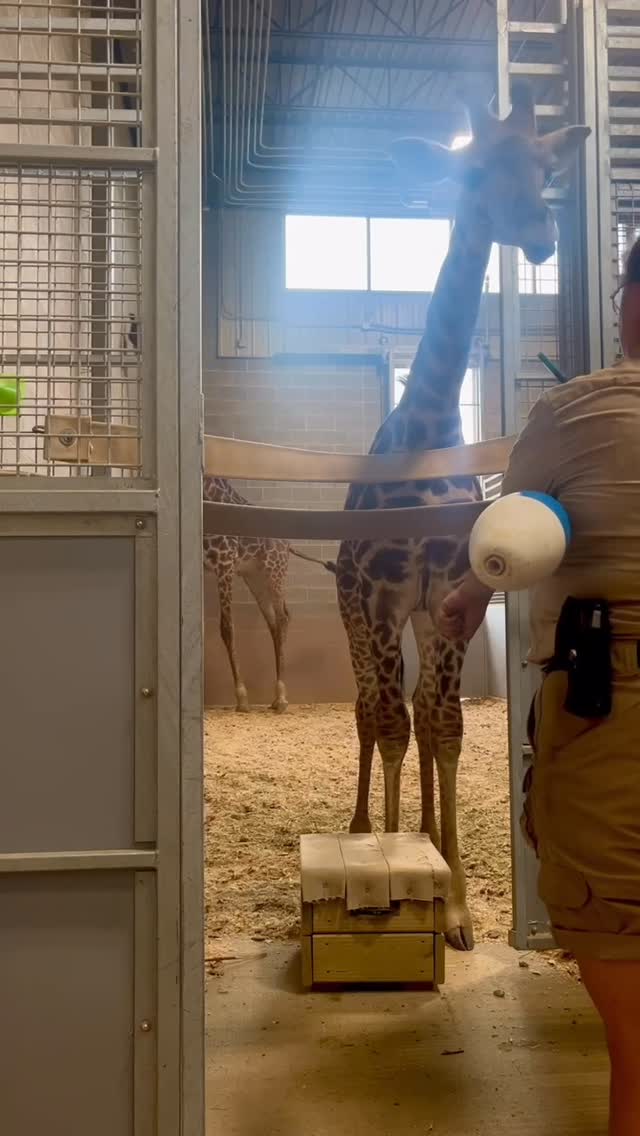
Zoo keeper staff have made remarkable strides in hoof care training with giraffe calf Hadassah, showcasing the critical relationship between animal care and training techniques. Proper hoof care is essential for the overall health of giraffes. These large herbivores depend on their hooves to support their massive bodies, and any neglect in their maintenance can lead to a range of health issues including pain, difficulty moving, and in extreme cases, life-threatening infections.
Giraffes in the wild are naturally adapted to their environment, but in captivity, irregular surfaces and lack of natural behaviors can cause hoof problems. Regular hoof trimming is crucial. As giraffes grow, their hooves can become overgrown or incorrectly shaped without proper care. This is where consistent training and a collaborative relationship between the animals and their caretakers become vital. By teaching Hadassah to voluntarily place her foot on a block, keepers not only facilitate essential care but also foster a sense of cooperation, allowing the animal to engage actively in its health management.
Positive reinforcement training plays a pivotal role in this process. This method relies on rewarding desired behaviors, which encourages animals like Hadassah to participate willingly in their routines. Rather than relying on coercion or stress, positive reinforcement creates a trusting bond between the giraffes and their keepers. This bond enhances behavioral responses, enabling keepers to carry out veterinary care with minimum stress for both the animal and the staff.
Training sessions typically include a series of short, focused interactions. Keepers utilize treats, verbal praise, or even gentle physical guidance to encourage specific behaviors. Over time, this approach helps animals associate medical procedures with positive experiences. Hadassah’s willingness to place her foot on the block exemplifies how successful positive reinforcement can be. Each time she participates, she becomes more accustomed to having her hooves examined and trimmed, which not only contributes to her health but also sets a precedent for other animals in the facility.
The process of hoof care training is multifaceted. Initially, keepers work on desensitizing the animals to having their feet touched. This might involve slow introductions using the keepers’ hands or tools, gradually moving to more invasive elements like hoof trimming equipment. As animals like Hadassah learn to trust their keepers, they are more likely to cooperate during the actual procedures. This training also helps reduce potential risks of injury for both the animals and the veterinarians carrying out the care.
The participation of animals in their own healthcare has profound implications for veterinary practices in zoological settings. Animals displaying cooperation during examinations can lead to calmer environments, making procedures safer for both parties involved. In Hadassah’s case, by stepping onto the block, she takes an active role in her own maintenance, which can help foster long-lasting health benefits. This method of training goes beyond mere management; it emphasizes the mental engagement of animals, allowing them to learn and grow.
Furthermore, the benefits of this approach ripple outward into broader conservation efforts. Engaging animals in their care results not only in better health but also experiences that enhance the animals’ overall quality of life in zoological settings. This creates a model that other institutions can replicate, promoting humane and effective animal care practices. Additionally, as visitors to the zoo witness these interactions, it fosters a greater understanding and respect for wildlife and the intricacies of animal care.
Zoo keeper Emily’s experience with giraffe calf Hadassah illustrates the transformative power of effective training strategies in animal husbandry. By focusing on compassion and cooperation, the zoo staff not only care for animals but also promote their well-being and foster an educational environment for guests. This approach builds bridges between the animals and the staff, allowing for more humane and effective interactions.
As hoof care training with animals like Hadassah continues to evolve, understanding its role in promoting health and welfare remains paramount. The impact of these sessions extends beyond individual animals, influencing standard practices across zoological settings. Regular positive reinforcement training fortifies relationships between species, encouraging better outcomes for veterinary care and enhancing the overall mission of conservation.
Zoo staff are continuously learning from each animal they encounter, fine-tuning approaches to maximize health benefits and minimize stress. Animals are not merely passive subjects in this training; they are active participants. The principles behind training giraffes, especially when it comes to hoof care, resonate in various aspects of animal management, emphasizing education and empathy throughout the process.
Hadassah’s colt-like stumbling in her early training demonstrates that every animal has its unique journey to navigate, reminding keepers to adapt their techniques accordingly. The dedication of keeper staff in observing subtle changes in behavior and body language plays a significant role. Listening to the animals’ needs and adjusting times and methods of training leads to a more enriched training atmosphere.
Moreover, as institutions dedicated to wildlife conservation aim to reflect on their methods and practices, stories like that of Hadassah illustrate the ongoing commitment to adapting techniques that benefit both animal welfare and public education. This narrative inspires zoo guests to understand further the complexities of animal care and the behind-the-scenes efforts that shape the specimens they see.
Through consistent advocacy for humane treatment, a sustainable approach to animal care becomes increasingly attainable. Fellow institutions can follow suit, prioritizing animal driven approaches that value their well-being. The importance of training animals like Hadassah in hoof care can pave the way for future caravans of giraffes that understand their role as both wildlife and ambassadors for their species.
The emphasis placed on positive reinforcement has shown that animals are perceptive and capable of learning and adapting. This awareness encourages an active rather than passive role for animals in their care, cultivating a culture of respect between species that is critical for human-animal relationships. In this ever-evolving landscape, the commitment to these practices signals a relevant shift towards empathy and understanding in animal care.
In observing Hadassah’s progress, one sees not just a technique of hoof care training, but a reflection of a larger philosophy — that animals deserve to be treated with dignity and respect. The investment in such training is an investment in animal welfare and conservation. As the critical bond between animals and their keepers deepens, so too does the responsibility of caretakers to uphold the highest standards of care.
By focusing attention on intentional training methods, the emphasis on wildlife and their needs becomes clearer. Each success story, like that of Hadassah, adds a new chapter to the narrative of zoo care, reinforcing the essentials of positive reinforcement, compassionate training, and proper medical attention. The future of veterinary care in zoological settings hinges upon models like these, illustrating how collaboration can yield remarkable results in health and wildlife preservation.
*****
Source Description
This is so cool! Zoo keeper staff have been working on hoof care training with giraffe calf Hadassah, and it’s amazing to see it pay off. Regular and consistent positive reinforcement training like this is so important with animals because it forms a positive bond with caretakers and allows the animals to participate in their own care. You can see Hadassah choose to put her foot on the block, which will eventually allow keepers to examine her legs and feet and trim her hooves.
Thanks to Keeper Emily for sharing!
