
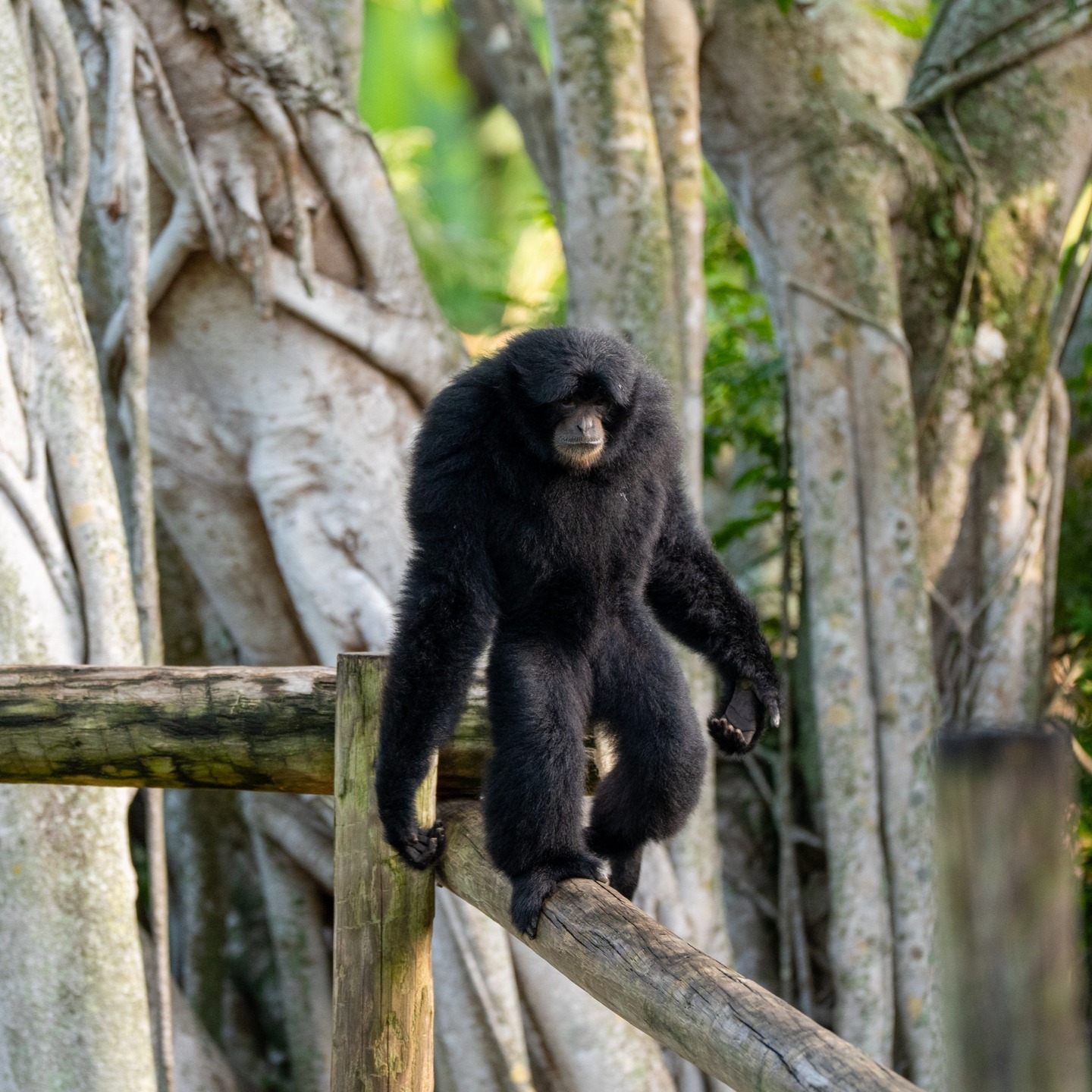
- King Louis: A Siamang in Action
- The Anatomy and Physical Adaptations of Siamangs
- Behavioral Traits and Social Structure of Siamangs
- Conservation Status and Habitat Loss Challenges
- The Role of Zoos in Siamang Conservation and Education
King Louis, a charming figure in the animal kingdom, exemplifies how siamang gibbons are not just adept at swinging through the treetops, but also surprisingly agile on the ground. A native of Southeast Asian rainforests, the siamang possesses various physical and behavioral traits that enable it to thrive in both arboreal and terrestrial environments. This article examines these magnificent creatures through several key themes, ranging from their physical adaptations to their behaviors, social structures, conservation challenges, and the critical role of zoos in fostering appreciation and understanding.
Siamangs are a species of gibbon, belonging to the family Hylobatidae, and are primarily found in Indonesia, Malaysia, and Thailand. They are characterized by their long arms, which facilitate swinging from branch to branch in their tropical forest habitats. Typically, siamang arms are roughly 1.5 times their body length, providing exceptional reach and leverage. This anatomical design aids in brachiation—a form of locomotion that involves swinging from tree limb to tree limb using their arms.
However, what is often overlooked is how this species can navigate life on the forest floor. Unlike many other tree-dwelling primates, siamang gibbons are capable of a stable bipedal locomotion, especially in a terrestrial environment. King Louis often demonstrates this ability, showcasing that these animals exhibit both arboreal and terrestrial capabilities. This versatility is essential for adaptations to their habitat, as they may need to travel across varied terrains in search of food or to escape predators.
Siamangs have a distinct physical appearance that sets them apart from other primates. Their dense black fur is not just for looks; it also provides insulation in cooler climates and camouflage in the dark underbrush of the jungle. Their throat sacs, noticeable especially in males, amplify their vocalizations, which can travel over long distances. These vocal calls, often described as booming and rhythmic, serve multiple purposes—marking territory, attracting mates, and facilitating social interactions.
Beyond their impressive physical traits, the social behavior of siamangs is equally fascinating. They tend to live in small family groups, typically consisting of a mated pair and their offspring. Their hierarchies are matriarchal, where females are the primary caregivers. During the day, family members engage in play and social grooming, strengthening their bonds. Communication is vital within these groups. Siamangs will engage in duet singing, often synchronizing their calls. This not only reinforces group cohesion but also asserts their territory to neighboring siamang groups.
The social structure of siamang gibbons highlights their need for connection and cooperation. Offspring typically remain with their parents until they reach maturity, learning skills essential for survival, including foraging and social interactions. Establishing trust and cohesion within family units is crucial, as it enables easier integration of young members and stronger overall group dynamics.
Despite their remarkable adaptations, siamangs face significant threats in the wild, primarily driven by habitat loss. Deforestation, primarily due to logging and agricultural activity, has dramatically decreased their natural habitat. The destruction of forests forces these animals into fragmented environments, making it harder for them to find food and mates. Moreover, illegal wildlife trade poses an additional threat, as young siamangs are often captured and sold as exotic pets, disrupting their social structure and ecological role.
Currently, the International Union for Conservation of Nature (IUCN) lists siamangs as “Endangered.” The plight of these gibbons exemplifies the broader environmental challenges that many species are facing today. Habitat conservation is essential not only for the survival of siamangs but also for the entire ecosystem. Forests serve as critical carbon sinks, mitigating climate change and supporting countless other plant and animal species.
Zoos play an increasingly vital role in the conservation of siamangs. They provide a controlled environment where these animals can thrive while serving as centers for education and research. By housing these primates, zoos facilitate breeding programs aimed at increasing the genetic diversity necessary for long-term survival. Many zoo facilities emphasize the importance of habitat preservation through outreach programs, allowing visitors to understand the connection between rainforest ecosystems and global health.
Moreover, modern zoos employ innovative techniques to create enriched environments that mimic natural habitat characteristics. Providing structures for climbing, shaded areas for rest, and natural foraging opportunities enable captive siamangs to showcase their behavior more naturally. Educational programs hosted at zoos can inspire visitors to support conservation efforts in the wild. By raising awareness about the challenges that siamangs and their ecosystems face, zoos cultivate a sense of responsibility in individuals, engaging them in wildlife preservation.
Research efforts within zoos also provide invaluable insights into the behavior and health of siamangs. Scientists can study the effects of social dynamics in captive settings, advancing our understanding of stressors and social needs within these primates. Such studies lead to better husbandry practices, contributing to improved welfare for animals both in captivity and in the wild.
In addition to direct conservation efforts, zoo initiatives often extend to in-situ conservation—conservation efforts that take place within the natural habitat. Collaborations with local organizations in Southeast Asia aim to promote sustainable land-use practices that benefit both local communities and wild siamang populations. By fostering economic incentives for local populations to protect natural resources, these programs seek to reduce the amount of deforestation and illegal wildlife trade.
Wildlife conservation is a multifaceted challenge that requires the combined efforts of scientists, policymakers, and the public. Kate Louis’s playful demonstrations of agility highlight the adaptability of siamangs, yet also expose the fragility of their existence in an increasingly challenging environment. The importance of collective action cannot be overstated. By supporting local conservation organizations and visiting reputable zoos, individuals can contribute to a global movement that seeks to protect not only siamangs but also the intricate ecosystems they inhabit.
As we reflect on the world’s biodiversity, the plight of the siamang gibbon stands as a reminder of what is at stake. Their ability to navigate through treetops and on the ground illustrates the intricate balance of evolution and adaptation. By fostering a deeper understanding of these animals, we can honor their role in our planet’s health and commit to protecting their future. Through education, research, and active participation in conservation efforts, we pave the way for the preservation of unique species like the siamang and the ecosystems they inhabit. The time to act is now, ensuring that these remarkable beings can continue to swing through their forest homes for generations to come.
*****
Source Description
Although they spend most of their time swinging in the treetops of their island habitat, King Louis is demonstrating that siamangs are pretty nimble on their feet too!
