
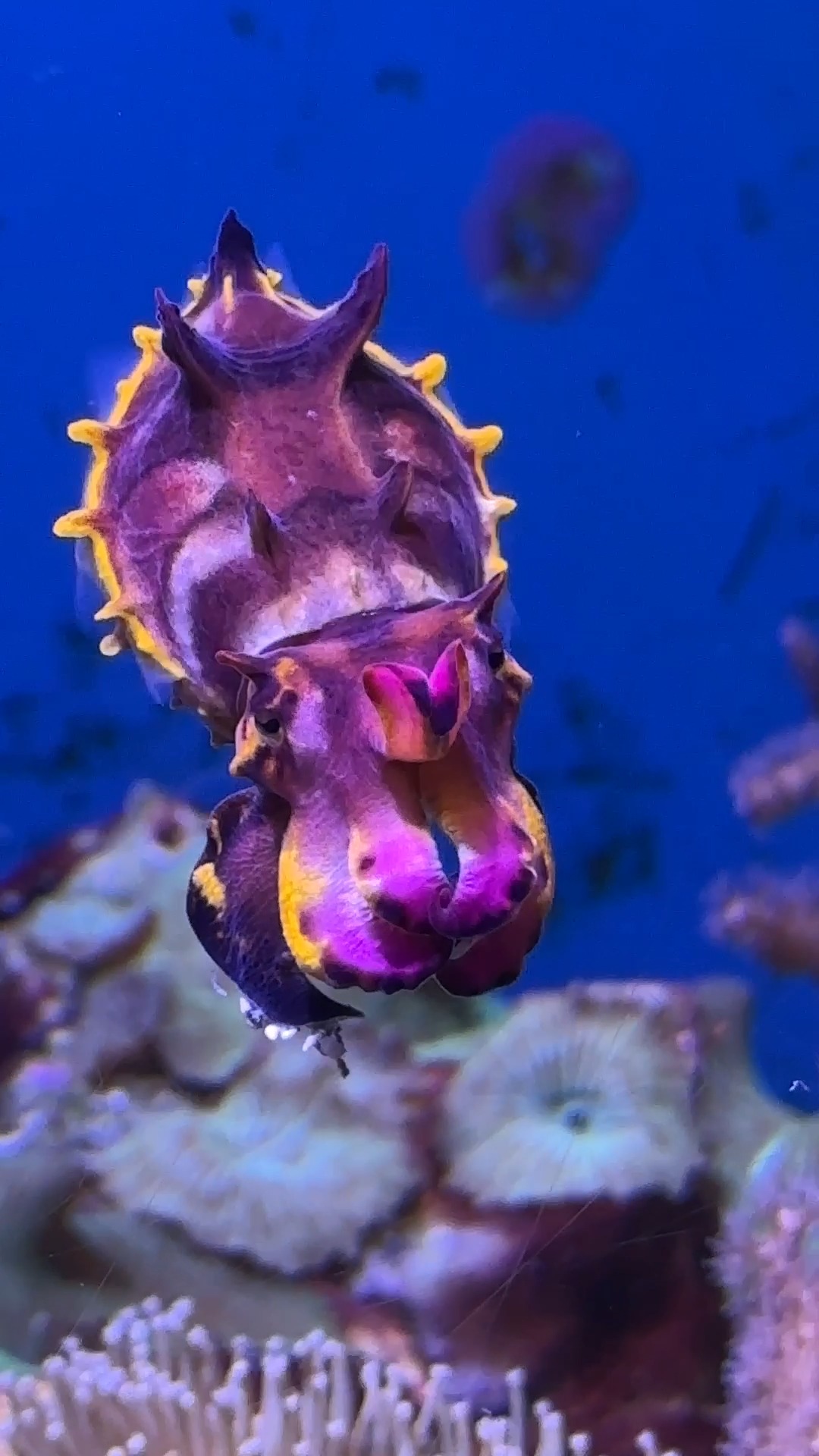
- The cuttlefish’s color-changing ability and its biological basis
- The flamboyant cuttlefish’s courtship behavior and mating rituals
- The ecological significance of cuttlefish camouflage
- Research findings and implications for cuttlefish communication
- Conservation efforts and the challenges faced by cuttlefish
Cuttlefish are remarkable creatures known for their exceptional ability to change color rapidly. This unique adaptation provides them with effective camouflage, essential for both predator evasion and prey attraction. Their chromatophores—specialized skin cells containing pigments—play a pivotal role in this color-changing phenomenon. These cells expand and contract rapidly under neural and hormonal control, allowing cuttlefish to alter their appearance in fractions of a second. This remarkable capability not only aids in blending into surrounding environments but also serves critical functions, such as communication and attracting mates.
The flamboyant cuttlefish (Metasepia fenomenalis) stands out as one of the most visually striking species among cuttlefish. This species, found in regions of the Indo-Pacific, exhibits spectacular color displays characterized by bright hues and intricate patterns. Unlike many other cuttlefish, flamboyant cuttlefish boast a distinctly bold coloration that is not purely defensive—it also plays a significant role in courtship rituals. Recent research from the University of Chicago reveals that male flamboyant cuttlefish engage in vibrant displays when courting females. These displays include an array of visual signals, such as flamboyant arm waving and an intriguing behavior dubbed “kissing,” where males touch arms with females.
A male flamboyant cuttlefish approaches a camouflaged female, showcasing a kaleidoscope of colors to stand out. The intensity and duration of these displays are crucial; females tend to favor males that exhibit more vibrant and sustained visual displays. Females assess these characteristics as indicators of the male’s overall fitness. In this context, color-changing serves a dual purpose, enabling males to captivate females while simultaneously signaling their health and vitality.
The ecological significance of cuttlefish camouflage cannot be overstated. These animals inhabit diverse marine environments, where suitable hiding spots can be scarce. Their ability to beautifully mimic the textures and colors of their surroundings—whether it be sandy sea beds or rocky reefs—enables them to evade various predators, including larger fish and seabirds. This adaptation has made cuttlefish proficient hunters as well; they can involuntarily blend into their environment while stalking prey such as small fish and crustaceans. This dual role of camouflage as both a hunting tool and a defense mechanism shapes the cuttlefish’s predatory success.
Research findings related to cuttlefish communication reveal even more fascinating aspects of their social lives. Cuttlefish are known to communicate not just through color but also via body language. The positioning of their arms and the poise of their bodies contribute to their ability to convey messages to other cuttlefish. This interplay of visual displays and body language fosters complex interactions, particularly during mating seasons. Males, in engaging in displays, often face off against other males, demonstrating aggression by adopting darker colors and expanding their bodies. The alternation between aggressive displays and courting behavior showcases the cuttlefish’s sophisticated visual communication system.
Conservation is becoming increasingly relevant as cuttlefish populations face numerous threats. Climate change and ocean acidification have been shown to affect the ecosystems in which these animals thrive. Their habitats are at risk from pollution, overfishing, and destruction from human activities. Scientists emphasize that preserving biodiversity in marine ecosystems is critical not only for cuttlefish but for the overall health of oceanic environments. Conservation efforts are required to identify and protect essential habitats, ensuring that future generations can observe and study these extraordinary creatures.
Moreover, education plays a vital role in engaging the public’s interest in cuttlefish conservation. By highlighting their remarkable abilities, particularly the ability to change color rapidly, educational programs can foster a greater appreciation for marine life. Institutions such as aquariums can play a significant part in raising awareness about these cephalopods. Interactive exhibits showcasing cuttlefish camouflage and courtship behaviors provide valuable learning experiences for visitors.
The flamboyant cuttlefish’s distinctive features, particularly regarding its courtship rituals, exemplify the complexity of animal behavior. Research shows that males that exhibit prolonged displays not only attract females but also may deter rivals. These competitive interactions often elevate the stakes for males, reinforcing the evolutionary advantage of effective communication strategies. The extravagant displays of color and movement promote successful mating, contributing to the species’ reproductive success.
In summary, the cuttlefish exemplifies the incredible adaptability of marine organisms. Their ability to change color rapidly holds significant implications for their survival, social interactions, and overall ecological role. The flamboyant cuttlefish, with its vibrant displays and elaborate mating rituals, serves as a prime example of how color change is woven into the fabric of its existence.
Fostering deeper understanding requires continued research efforts into the biology and ecology of cuttlefish. As marine habitats undergo changes, scientists endeavor to decode the mechanisms behind these adaptations. This will not only reveal insights into cuttlefish biology but will also provide a lens through which to view broader ecological and evolutionary principles at work in marine environments.
The significance of cuttlefish conservation and education cannot be understated. Protecting these animals and their habitats enriches marine ecosystems while preserving biodiversity for future generations. Engaging communities through educational initiatives develops a broader connection to marine conservation, making the case for better stewardship of ocean environments more compelling. As we deepen our knowledge about the cuttlefish’s remarkable abilities, we also nurture a sense of responsibility towards the preservation of these extraordinary creatures and their habitats.
*****
Source Description
Cuttlefish have the ability to change color rapidly to either camouflage themselves for protection, hunting, or communication. The flamboyant cuttlefish is instantly recognizable by its elaborate color display. However, researchers from the University of Chicago found that in the wild, these animals will save some of their brightest showings for courtship rituals.
Male flamboyant cuttlefish are anything but subtle. In the wild, they will approach and court a camouflaged female with a kaleidoscopic range of colors and elaborate rituals, which include rapid arm waving and “kisses” (where males briefly touch arms with the female). Females can be choosy and will generally select males that display more often and for longer periods of time, according to scientists at the University of Chicago’s Marine Biological Laboratory.
Observe our flamboyant cuttlefish in Spineless!
