
- Natural history and species differences: porcupine taxonomy, distribution, behavior, and the biology of quills.
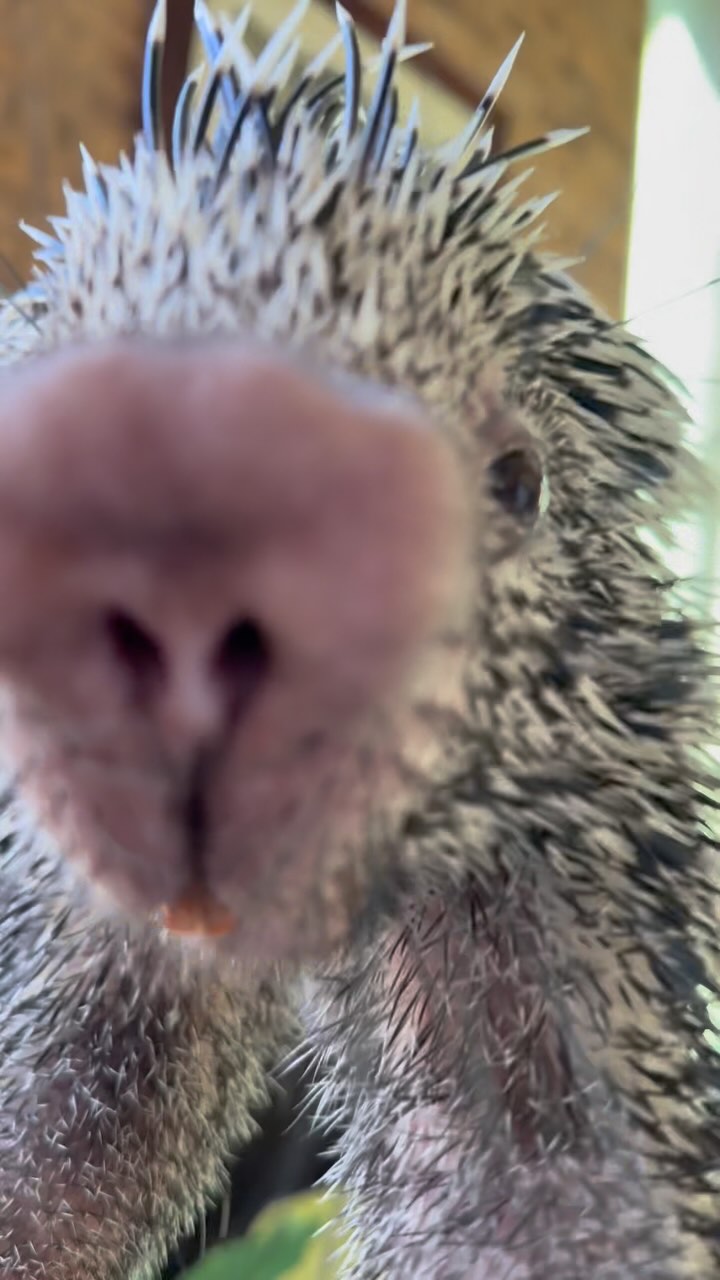
- Interpreting social contact and body language: what a recorded interaction labeled “Here’s a porcupine hug from us to you!” likely represents, and safety limits for human and animal welfare.
- Captive care and management: enclosure design, enrichment, training, veterinary care, and protocols for minimizing quill injuries.
- Conservation, threats, and rehabilitation: population pressures, human-wildlife conflict, rescue practices, and the role of public outreach including social media content like the Instagram reel.
- Educational impact and responsible storytelling: how zoos and conservation organizations use affectionate messaging to build empathy while maintaining factual, safety-focused communication.
Porcupines are rodents with specialized defensive anatomy and a surprising set of behavioral adaptations. Members of two families — Old World porcupines (Hystricidae) and New World porcupines (Erethizontidae) — differ in morphology, habitat use, and climbing ability. New World species, such as the North American porcupine (Erethizon dorsatum), are often arboreal or semi-arboreal and possess quills embedded in dense, flexible skin that allows for climbing. Old World porcupines tend to be larger, strictly terrestrial, and display a heavier body plan suited to digging and sheltering in burrows or rock crevices. Understanding these distinctions matters for husbandry, interpretation, and conservation planning.
Quills are modified hairs made chiefly of keratin, arranged on the dorsum, flanks, and tail in species-specific patterns. Quill length, stiffness, and barbing vary among species and determine how quills detach and penetrate potential predators or threats. New World porcupines have shorter, barbed quills that are loosely anchored and can embed in flesh, while many Old World species have longer, thicker quills designed to discourage close contact by their size and sheer presence. Quill structure also influences clinical treatment when injuries occur. Removal requires veterinary expertise to limit secondary tissue damage and infection.
Behaviorally, porcupines are primarily solitary. Their activity cycles range from nocturnal to crepuscular, with foraging behavior driven by seasonal resource availability. Diets are generally herbivorous: leaves, bark, stems, roots, and fruit form the bulk of intake, with notable seasonal shifts in plant selection. Social interactions, when they occur, often center on mating, juvenile care, or limited affiliative behavior between familiar individuals. In captive settings, controlled social pairing can succeed, but it demands careful monitoring for signs of stress or aggression. An affectionate scene framed by a caption such as “Here’s a porcupine hug from us to you!” can reflect a managed, habituated interaction rather than typical wild behavior.
Interpreting physical contact in porcupines requires a careful read of species-specific body language. A relaxed porcupine will have a neutral tail and quill posture and may accept proximity from a familiar conspecific or a trained caregiver. Defensive responses include raising quills, stamping hind feet, clacking teeth, or positioning the tail toward the threat. When a human caregiver appears in footage framed as a hug, that interaction is almost always the product of training, trust-building, and strict protocols. Public-facing content that uses a warm caption like “Here’s a porcupine hug from us to you!” can humanize animals and foster compassion. At the same time, narration should clarify boundaries: wild porcupines should not be approached, picked up, or hugged. Doing so risks injury to people and stress or harm to the animal.
Zoos and accredited wildlife centers develop species-specific husbandry programs that prioritize physical health and psychological well-being. Proper enclosure design for porcupines accommodates foraging, nesting, climbing (for arboreal species), and opportunities for concealment. Substrate choices, durable climbing structures, and elevated platforms mirror natural behavior. Thermal considerations are crucial. Many porcupine species tolerate cool temperatures but require dry, insulated dens for overnight rest and for raising young. Lighting schedules simulate natural photoperiods to support seasonal reproductive physiology.
Dietary management is central. A balanced regime includes high-fiber browse, seasonally varied leafy material, and formulated pellet rations adjusted for age and reproductive status. Calcium balance must be monitored to avoid metabolic bone disorders; mineral blocks and calcium-rich browse can be helpful. Chewing materials are important for dental wear; porcupines have continuously growing incisors that need abrasion from fibrous foods and gnawing opportunities. Nutrition intervention must be evidence-based and adapted to species needs.
Enrichment and behavioral training improve welfare and facilitate medical care. For porcupines, enrichment that stimulates foraging—hidden food, puzzle feeders, and scent trails—encourages natural feeding strategies. Structural enrichment such as hollow logs, elevated platforms, and burrow-like dens supports species-typical movement patterns. Positive reinforcement training enables cooperative behaviors for husbandry tasks: voluntary presentation for weight checks, oral medication administration, and targeted radiography. Training sessions are short and reward-based. They reduce the need for chemical restraint and lower injury risk to animals and staff.
Veterinary care for porcupines addresses species-specific concerns. Quill-related wounds require prompt assessment for embedded barbs, possible migration toward vital structures, and secondary bacterial infection. Imaging—radiography or ultrasound—may be necessary to locate retained quills. Anesthesia protocols must account for porcupines’ respiratory sensitivity and thermal regulation. Routine health monitoring includes dental exams, fecal parasite screening, and weight trends. Reproductive management uses noninvasive monitoring when possible; hormonal assays from feces or saliva can detect estrus and gestation without frequent handling.
Handling quill injuries in free-ranging wildlife and companion situations follows clear steps. First, prevent further injury by stabilizing the subject and limiting movement. Second, avoid pulling quills without veterinary oversight; premature or improper extraction can break quills and leave fragments that promote infection. Third, provide analgesia and antibiotics as indicated. Rehabilitation facilities adhere to standardized treatment protocols and evaluate fitness for release based on behavior, mobility, and healing. Transfer from rehabilitation to permanent care is considered only when release would pose undue risk to the animal or ecosystem.
Conservation challenges vary by species and geography. Habitat loss and fragmentation reduce available forage and shelter. Road mortality is a notable cause of local population declines in landscapes with heavy vehicle traffic. Persecution and hunting occur where porcupine meat or quills are valued, and agricultural conflict arises when porcupines strip bark or damage crops and orchards. Climate change is altering plant phenology, which can decouple porcupine feeding cycles from optimal resource availability. Effective conservation strategies combine habitat protection, conflict mitigation, and public education.
Conflict mitigation is practical and local. Farmers can protect vulnerable trees with physical barriers or temporary electric fencing, and seasonal shifts in planting can reduce overlap with porcupine feeding periods. Community-based outreach that includes nonlethal deterrence and compensation mechanisms produces more durable outcomes than punitive measures. Data collection—roadkill surveys, camera traps, and citizen science reporting—helps managers identify hotspots for intervention. Reintroductions and translocations require genetic assessment and habitat suitability analysis to prevent disease spread and to match ecological requirements.
Public outreach is a powerful conservation tool when used responsibly. Social media content, such as a short clip paired with the caption “Here’s a porcupine hug from us to you!”, can reach tens of thousands of people in minutes. Such posts humanize animals and trigger emotional empathy, which can translate to donations, volunteerism, and support for conservation policies. Effective posts combine engaging visuals with science-based context: where the animal species lives, what threats it faces, how the interaction was staged safely, and what viewers can do to help. Every use of affectionate messaging should be balanced with clear safety guidance and a call to action that advances tangible conservation outcomes.
Interpretive content should clarify that captivity influences behavior. A porcupine habituated to daily positive-reinforcement sessions will tolerate close contact with familiar caregivers. That does not make it domesticated. Habituation is a form of learned tolerance built on controlled reinforcement and predictable handling. Captive animals can provide invaluable opportunities for research, education, and breeding programs. Still, messaging must not encourage mimicry in the public. A caption like “Here’s a porcupine hug from us to you!” gains impact when followed by factual notes: the interaction was supervised, the animal is trained, and wild encounters must be avoided.
Zoos and conservation organizations track impact metrics for outreach campaigns. Metrics include engagement rates, message sentiment, donations triggered by specific posts, and enrollment in educational programs. Data-driven evaluation identifies what content leads to behavioral change. Posts that combine emotive hooks with clear conservation asks—signing a petition, supporting habitat restoration, or avoiding wildlife feeding—drive measurable results more often than pure entertainment clips. Story arcs that follow an animal’s rehabilitation or the progress of a local conservation project deepen long-term engagement.
Retail and merchandise linked to outreach must reflect ethical sourcing and educational aims. Revenue from animal-themed merchandise can fund care and fieldwork, but programs must be transparent about where proceeds go. Collaborations with local communities for sustainable craft production create mutual benefits. When animals are featured in promotional material, organizations have a responsibility to represent their needs accurately and to avoid commodifying their images in ways that encourage risky behavior.
Research inspired by captive observations can be valuable. Studies on quill microstructure inform biomimetic material science. Behavioral research yields insights on cognitive abilities, social recognition, and sensory ecology. Collaboration between zoological institutions and universities expands sample sizes and analytical rigor. Ethical research protocols protect animal welfare and prioritize noninvasive methods whenever possible.
Regulatory frameworks guide transport, trade, and display. CITES listings and national wildlife laws regulate international movement of some porcupine species and their parts. Zoos adhere to accreditation standards and veterinary guidelines that govern enclosure size, social grouping, and enrichment. Permitting for educational demonstrations requires adherence to safety protocols and clear public disclaimers. These legal and ethical systems function to protect animal welfare and public health.
Medical research should be shared across institutions. Case reports on unusual quill migration, anesthetic sensitivities, or reproductive anomalies add to collective knowledge. Centralized databases for case histories and treatment outcomes accelerate improvements in care. Continuing education for husbandry and veterinary teams is essential to keep pace with evolving best practices.
The intersection of compassion and accuracy elevates conservation messaging. A caption such as “Here’s a porcupine hug from us to you!” is effective if paired with context: attribution of the animal’s identity, explanation of the circumstances, protective measures taken by staff, and direct ways the audience can participate in conservation. That approach builds trust and prevents misunderstandings that could lead to hazardous mimicry.
Field conservation benefits from captive education and vice versa. Funding generated by public engagement often supports habitat protection, community outreach, and anti-poaching patrols. Conversely, field data refine captive management guidelines by revealing seasonal diets, parasite loads, and natural behaviors that should be replicated in artificial settings.
Finally, practical guidance for the public reduces harm. Do not approach or handle wild porcupines. If you find an injured porcupine, contact local wildlife rehabilitators or animal control. Keep dogs and children at a safe distance; curious pets can be severely wounded. For landowners experiencing recurrent porcupine damage, consult wildlife management professionals for site-specific, humane deterrence strategies.
Use of social media posts like “Here’s a porcupine hug from us to you!” can amplify care, curiosity, and conservation action when backed by transparent, evidence-based interpretation. These moments of connection can translate into scientific support, funding for habitat protection, and better outcomes for porcupines and people who share the landscape with them. Here’s a porcupine hug from us to you! captures affection; repeated emphasis on safety and fact-based context converts that affection into meaningful conservation behavior. Here’s a porcupine hug from us to you! works best as both an emotional bridge and an educational prompt. Here’s a porcupine hug from us to you! can become a starting point for deeper learning and responsible stewardship.
*****
Source Description
Here’s a porcupine hug from us to you! 🥰
