
- Understanding the significance of National Learn to Swim Day and promoting aquatic safety.
- The engaging behavior and adaptations of Southern sea otters, emphasizing Bennett at Wild Arctic.
- Wildlife conservation efforts and the role of zoos in preserving endangered species.
- The social structure and supervision behavior demonstrated by otters like Mocha.
- The importance of zoos like Wild Arctic in education and promoting awareness about aquatic life.
National Learn to Swim Day emphasizes the critical importance of aquatic education and safety. Many people experience anxiety or lack confidence near water. Highlighting this day helps promote initiatives that encourage swimming skills, vital for both enjoyment and safety.
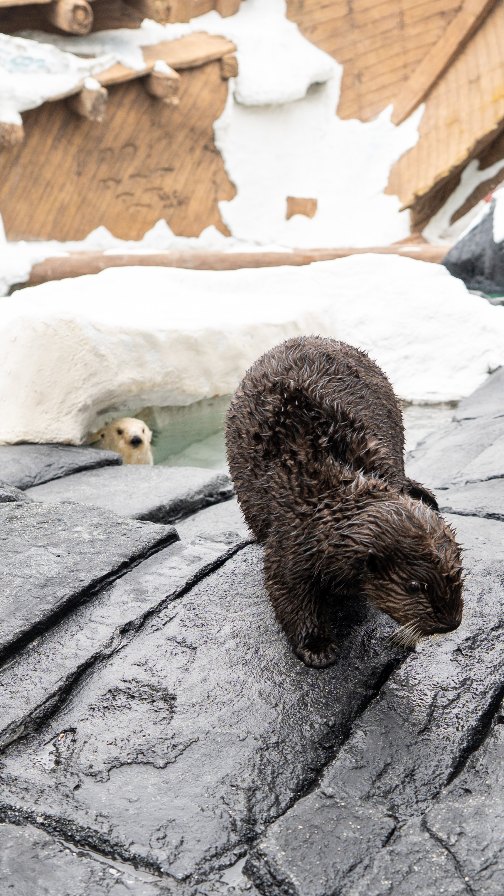
Southern sea otters are captivating marine mammals integral to their ecosystem. Bennett, the sea otter exploring his new habitat at the Wild Arctic, offers a glimpse into the dynamic world of these creatures. Known for their playful behavior, otters like Bennett engage in complex interactions that are both entertaining and educational.
Sea otters have remarkable adaptations suited for aquatic life. Their dense fur provides insulation in cold waters, while their webbed feet and streamlined bodies allow for agile swimming. Bennett’s exploration of his new environment demonstrates these adaptive skills in action, showcasing how otters effortlessly navigate both land and water.
The role of zoos in wildlife conservation cannot be understated. Wild Arctic, where Bennett resides, is instrumental in efforts to protect and propagate endangered species. Zoos provide controlled environments where endangered species can be studied, bred, and hopefully reintroduced into the wild. They also educate the public about conservation, fostering an understanding of and respect for wildlife.
Otters are social animals with structured group dynamics. Mocha’s supervision of Bennett as he explores represents a natural behavior where older, more experienced otters guide juveniles. This social learning is crucial for young otters, as they acquire vital skills for survival.
Educational initiatives in zoos help bridge the gap between the public and wildlife conservation. Wild Arctic’s role extends beyond mere exhibition, serving as a platform for research, conservation, and education about aquatic life. Through these efforts, visitors gain a deeper understanding and appreciation of marine ecosystems and the species within.
Highlighting initiatives like National Learn to Swim Day, combined with the engaging behavior of animals like Bennett, ignites a passion for learning and conservation. These initiatives underscore the necessity of understanding our aquatic environments for future generations. By promoting awareness and fostering education, zoos like Wild Arctic play an essential part in both preserving wildlife and expanding public consciousness about aquatic ecosystems.
*****
Source Description
In celebration of National Learn to Swim Day, we hope you enjoy watching Southern sea otter Bennett exploring his new digs at Wild Arctic (with just a little supervision from Mocha) 💙🦦💙
