
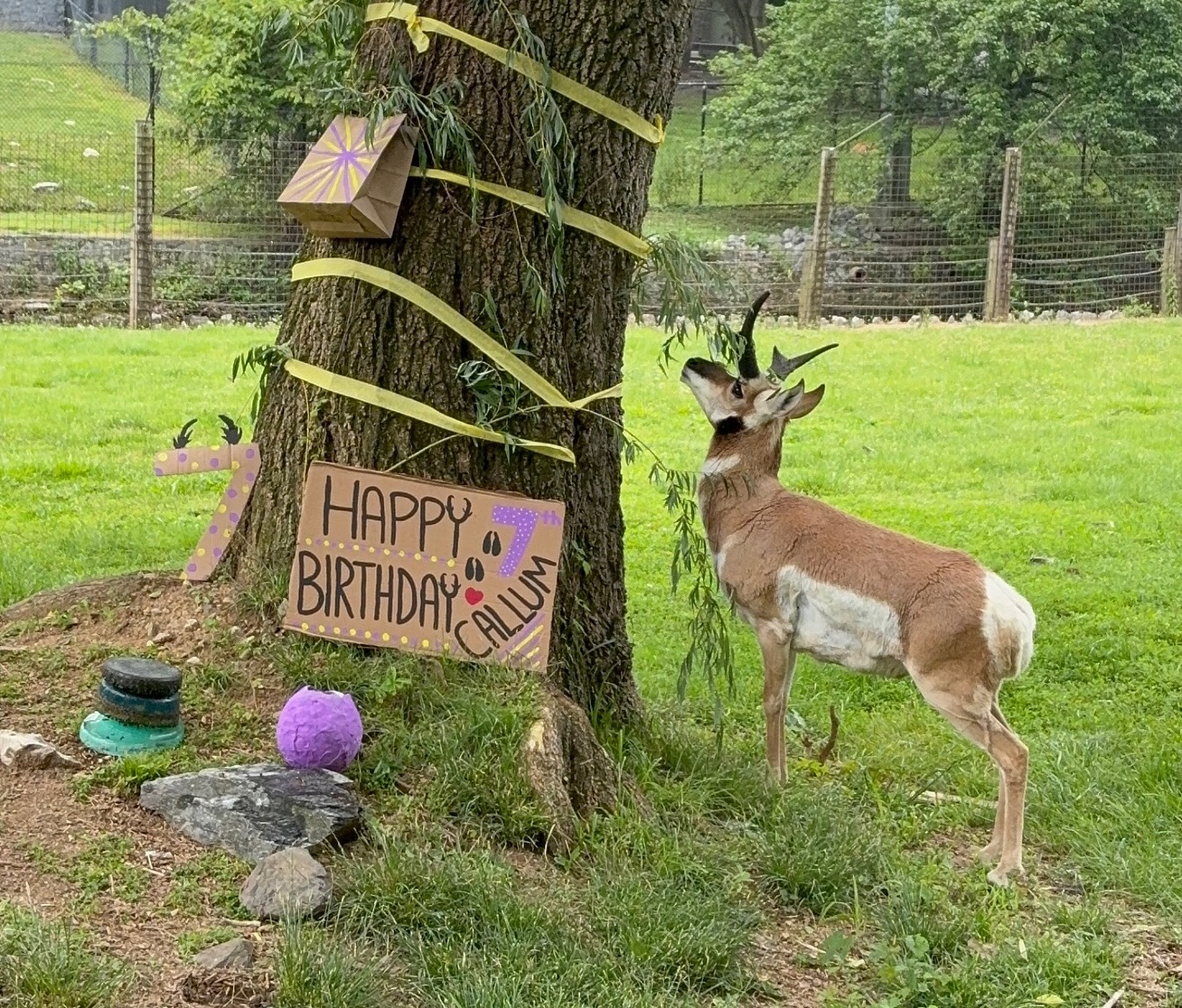
- Overview of pronghorns and their ecological significance.
- Details of Callum’s birthday celebration and zoo management practices.
- Importance of enrichment activities for captive animals.
- Conservation efforts and challenges faced by pronghorns in the wild.
- The role of zoos in education and wildlife conservation.
Pronghorns are remarkable mammals, often mistaken for antelopes but possessing unique characteristics that differentiate them. Their presence is primarily noted across North America, where they play a vital role in the ecosystem. The celebration of Callum the Pronghorn’s seventh birthday offers an opportunity to explore these fascinating creatures and the significance of modern zoo management and conservation efforts.
Pronghorns are noted for their extraordinary speed, capable of reaching up to 60 mph, making them the second fastest land mammals after cheetahs. This speed is not just a thrill of nature but an evolutionary advantage evolved to escape predators across the open plains. Their exceptional eyesight allows them to detect moving objects far away, making them well-adapted to environments where visibility is crucial for survival.
These extraordinary animals primarily inhabit grasslands and deserts, where they feed on grasses, forbs, and shrubs. Pronghorns play a crucial role in their ecosystems by controlling plant populations, which in turn supports other wildlife. Their ecological contributions underline the importance of their conservation.
Callum’s birthday celebration at the zoo was a testament to the dedication of the animal care team. This milestone highlights the personalized care and attention that zoos invest in their residents. Animals in captivity benefit significantly from enrichment activities, which are designed to stimulate their natural behaviors. For Callum, this might include offering toys that encourage foraging, mimicking the challenges he would face in the wild.
Zoo management practices have evolved to focus not only on the welfare of animals but also on enhancing the educational experiences of visitors. By curating engaging activities, zoos foster an environment where animals can thrive, and visitors can learn about the importance of conservation. The birthday event featured interactive sessions where guests learned about pronghorns’ natural habitats, behaviors, and the threats they face in the wild.
Pronghorns face numerous challenges in their natural environments, including habitat fragmentation and competition with livestock. These issues are exacerbated by human activities and climate change, making conservation efforts more critical than ever. Organizations are working tirelessly to protect these species by advocating for habitat preservation and creating corridors that allow for safe migration.
Zoos are pivotal in these conservation efforts, serving as arks for endangered species and centers for scientific research. They offer a controlled environment where detailed studies of animal behavior, health, and genetics can take place, providing invaluable insights that inform conservation strategies in the wild.
Education is another cornerstone of the role that zoos play in conservation. By engaging the public with programs that highlight the importance of biodiversity and environmental stewardship, zoos cultivate a deep-seated respect for nature among visitors. This connection inspires action and support for global conservation initiatives.
In summary, celebrating Callum the Pronghorn’s seventh birthday is more than just a festivity; it symbolizes ongoing efforts in research, education, and conservation led by dedicated teams at zoological institutions. As ambassadors of biodiversity, pronghorns and their intriguing traits remind us of the intricate web of life that supports our planet. Such celebrations reinforce the importance of preserving this legacy for future generations while emphasizing the essential contributions of zoos in conservation biology.
*****
Source Description
Happy 7️⃣th Birthday to Callum the Pronghorn! 🎉
Our awesome keepers made sure he had the best celebration!
📷: Maddy, Naturalist
