
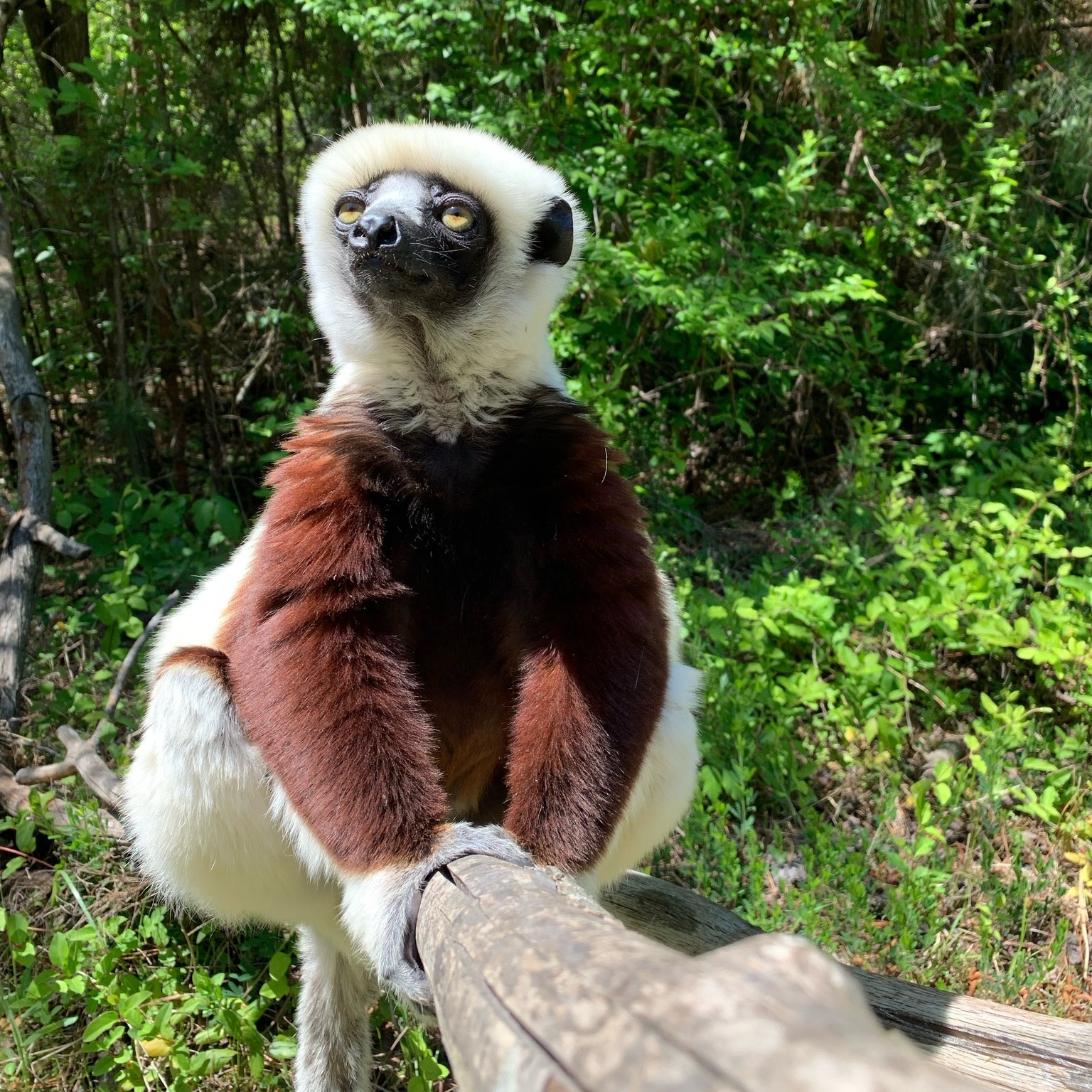
- Coquerel’s Sifaka: Overview and Characteristics
- The Life of Valeria and Carlo at the Duke Lemur Center
- Conservation Efforts through Species Survival Plans (SSP)
- The Role of Hormonal Birth Control in Lemur Management
- Glamor Shots: Public Engagement and Educational Value
Coquerel’s Sifaka: Overview and Characteristics
Coquerel’s sifaka, a captivating species of lemur, belongs to the indriid family. Known for their striking appearances and distinctive leaping movements, these lemurs inhabit the dry deciduous forests of northwest Madagascar. They exhibit a vibrant coat of white and dark brown fur, which helps them blend into their arboreal surroundings. With long, powerful hind limbs, they execute spectacular leaps from tree to tree, sometimes covering distances of up to 30 feet. This extraordinary locomotion underscores their adaptation to a life predominantly spent among the branches.
Endemic to Madagascar, Coquerel’s sifakas play a crucial role in their ecosystem as seed dispersers, aiding forest regeneration. However, these lemurs face numerous threats, such as habitat destruction and hunting, leading to their classification as an endangered species according to the IUCN Red List. Conservation initiatives are vital for ensuring their survival.
The Life of Valeria and Carlo at the Duke Lemur Center
Valeria and Carlo reside at the Duke Lemur Center (DLC), a 100-acre sanctuary dedicated to lemur conservation, research, and education. Despite their notable pairing, they are not involved in breeding. This non-breeding status is part of a carefully managed approach practiced by the DLC to maintain the health and genetic diversity of the lemur population under human care.
Valeria, a female sifaka, receives hormonal birth control during breeding seasons. This practice is common for females not selected for breeding through the Species Survival Plan (SSP). Carlo, on the other hand, has previously contributed to the genetic pool, siring offspring like Johann, who also resides at the center. Johann is a parent to Egeria and Albus, continuing the lineage.
Conservation Efforts through Species Survival Plans (SSP)
Species Survival Plans are critical frameworks used by conservation organizations to manage breeding and genetic diversity. These plans aim to preserve the long-term viability of endangered species like Coquerel’s sifakas. By strategically selecting breeding pairs, the SSP enhances genetic variability, which is essential for the health and adaptability of the population.
The process involves genetics, demographics, and behavioral studies to decide which individuals should breed. This scientific approach helps maintain a balanced population and minimizes risks of inbreeding. For Coquerel’s sifakas, SSPs are integral to sustaining their presence in both natural and controlled environments.
The Role of Hormonal Birth Control in Lemur Management
To effectively manage the lemur population, hormonal birth control is a widely adopted practice. This method allows facilities like the Duke Lemur Center to prevent unplanned breeding, maintaining control over population size. It also ensures that breeding is purposeful, directed by conservation priorities rather than chance.
Valeria’s experience with birth control underscores the importance of this approach. Without such measures, managing genetic diversity and population health would be significantly more challenging. This control facilitates strategic planning, aligning with conservation goals while considering the well-being of the animals.
Glamor Shots: Public Engagement and Educational Value
The glamor shots of Valeria and Carlo serve more than an aesthetic purpose; they are powerful educational tools. These images, captured by photographer Sarah K., highlight the beauty and unique qualities of Coquerel’s sifakas, fostering public interest and awareness. This engagement plays a critical role in conservation efforts by sparking curiosity and empathy.
Visuals can translate complex conservation messages into relatable stories, making the plight of endangered species more tangible to a broad audience. Educational campaigns leveraging such imagery can inspire support for conservation actions, ensuring a brighter future for these remarkable lemurs.
The interplay of scientific research, management practices, and public outreach exemplified at the Duke Lemur Center offers a holistic model for wildlife conservation. By understanding and advocating for species like Coquerel’s sifakas, we contribute to preserving biodiversity and fostering a sustainable world.
*****
Source Description
Glamor shots of Coquerel’s sifaka pair Valeria and Carlo 🥰
Despite being a female-male pairing, Valeria and Carlo are not breeding. Most lemurs at the Duke Lemur Center do not live in breeding pairs, and females like Valeria are administered hormonal birth control during breeding season to prevent pregnancy. When lemurs breed, it is because the pairing has been hand-selected through a Species Survival Plan (SSP) to add genetic diversity to the population of these endangered animals in human care. Carlo has previously sired offspring at another facility with a different female—his oldest son, Johann, also lives at the DLC and is father to Egeria and Albus! 💙
📸: Sarah K.
