
-
The story behind the Rockdale Flood Painting by J.J. Kavanaugh and its historical context.
-
The rediscovery of the painting in an attic nearly 100 years later and its impact on modern historical and cultural preservation.
-
The unique perspectives offered by Kavanaugh’s painting alongside the works of Alexander Simplot and Samuel Root.
-
Analyzing the geological and environmental factors contributing to the Rockdale flood and its relevance to current environmental studies.
- The utilization of modern technology, such as digital 3D mapping, in studying historical events and their geographical context.
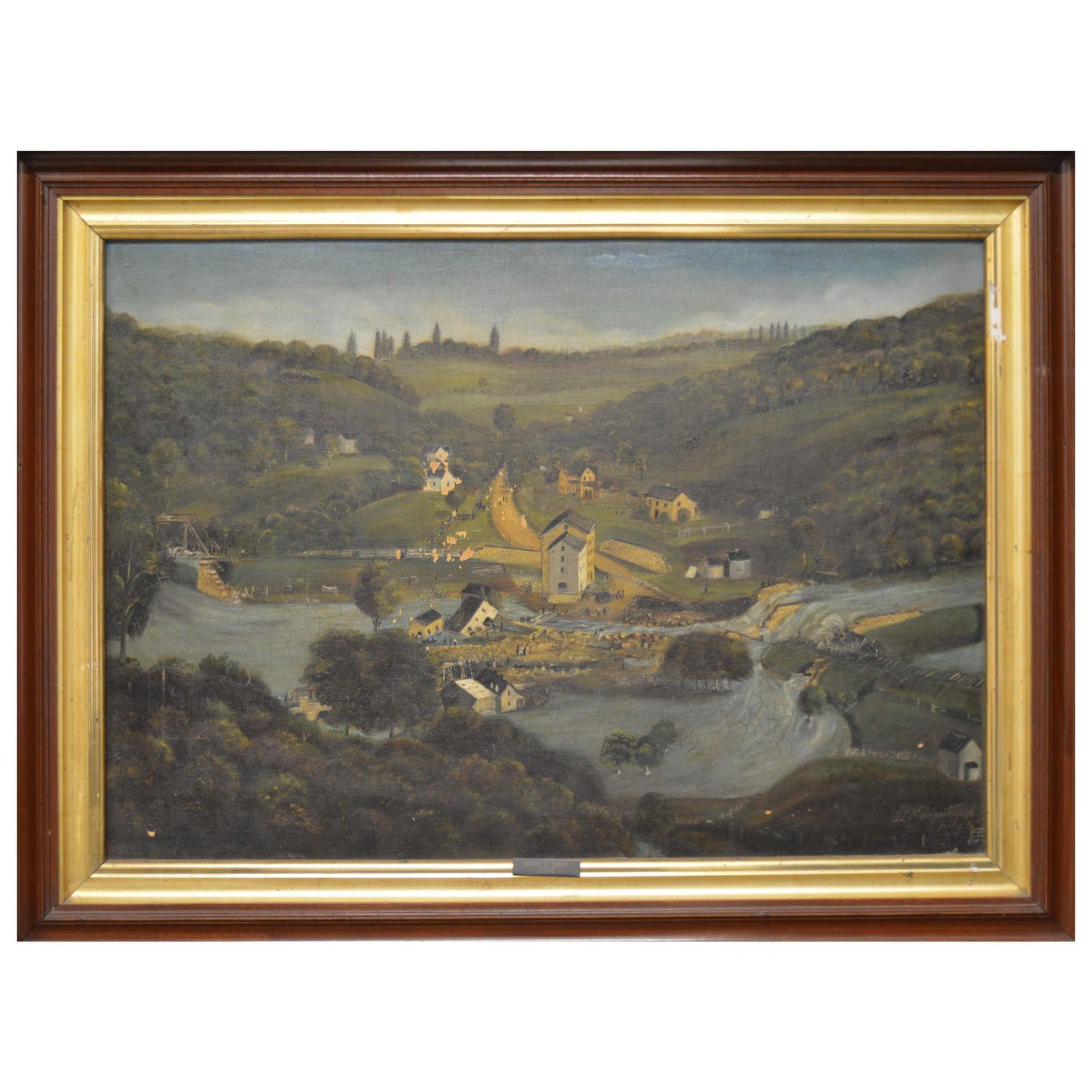
The Rockdale Flood Painting by J.J. Kavanaugh captures a poignant moment in the history of Dubuque, Iowa, when on July 5, 1876, a catastrophic event unfolded. At the tender age of 18, Kavanaugh immortalized the disaster—the collapse of the Rockdale dam—through a powerful visual narrative that echoes through time. This painting offers a window into the devastation that claimed 39 lives, revealing not only the physical aftermath but the psychological scars left on a community.
The dam collapse was a result of both human and natural forces. Intense rainfall had swelled the Mississippi River to dangerous levels, compromising the structural integrity of the dam, which was already vulnerable due to technological limitations of the era. Such events underscore the importance of understanding hydrological and environmental dynamics, crucial in today’s world where climate change poses increasing challenges. For historians and environmental scientists alike, Kavanaugh’s work provides a case study in early flood management—or lack thereof—and the interactions between human engineering and nature.
Almost a century after the calamity, Kavanaugh’s painting emerged from obscurity, found tucked away in an attic. Its rediscovery was not merely a stroke of luck but also a testament to the importance of preserving our cultural and historical artifacts. This painting was donated to the River Museum, offering researchers and the public a tangible link to the past. These artifacts play a crucial role in reminding us of our vulnerabilities and the need for resilience in community planning and environmental conservation.
Kavanaugh’s depiction is unique in that it provides an interpretative artistic viewpoint, which complements the factual documentation captured by artist Alexander Simplot and photographer Samuel Root. While Simplot’s sketches and Root’s photographs provide detailed visual records, Kavanaugh’s painting conveys the emotional impact, adding layers of understanding to the historical narrative. The collaboration and comparison of these works offer a multifaceted perspective on the events, allowing a deeper appreciation of how art and documentation intersect to tell a compelling story.
To further explore the environmental and geological aspects of the Rockdale flood, it’s important to look at the contributing factors. The Mississippi River’s hydrological patterns, regional rainfall data, and the engineering approaches of the 19th century all played a role. Analyzing these factors with modern scientific knowledge can offer insights into similar challenges today, emphasizing the need for sustainable environmental planning. Understanding how erosion, weather patterns, and human intervention can lead to disasters is crucial for current and future conservation efforts.
Modern technology has allowed us to gain even greater insight into the Rockdale flood. By using old maps and modern satellite images, researchers have been able to pinpoint the locations of the failed dam and surrounding landscapes. Despite changes over time, some landmarks remain, offering continuity and a sense of place. The integration of Kavanaugh’s painting with a digital 3D map via Google Earth exemplifies how technology can breathe new life into historical studies, enhancing our understanding of past events.
Digital mapping technology offers not just static views but dynamic tools that facilitate exploration of geological changes over time. This ability to visualize the past and present landscape helps us understand the environmental shifts that have occurred, providing vital information for future planning and disaster prevention. Such interdisciplinary approaches bridge the gap between art, history, and science, fostering a comprehensive understanding of natural disasters.
The Rockdale Flood Painting by J.J. Kavanaugh is more than a piece of art; it is a cultural artifact that continues to educate and resonate. It serves as a valuable educational resource, linking past with present, art with science, and history with future insights. By studying such works, we better appreciate the complexities of our environment and the narratives that shape our world. As we continue to face environmental challenges today, the lessons embedded within these historical events guide our pursuit of knowledge, conservation, and resilience.
*****
Source Description
Check out April’s Collection spotlight: the Rockdale Flood Painting by J.J. Kavanaugh!
On July 5, 1876, disaster struck Dubuque when the Rockdale dam collapsed, leading to a devastating flood that claimed 39 lives. Kavanaugh, just 18 years old at the time, painted this tragic scene from a high vantage point. Artist Alexander Simplot and photographer Samuel Root were the only others who captured the moment.
Fast forward nearly 100 years: this painting was found in an attic and donated to the River Museum.
Using old maps and modern satellite images, we can identify the locations of the failed dam and the surrounding scenery. Even though the landscape has changed, some landmarks are still standing! We even aligned the painting with a digital 3D map using Google Earth.
Discover the full story at https://www.rivermuseum.org/collection-spotlight
