
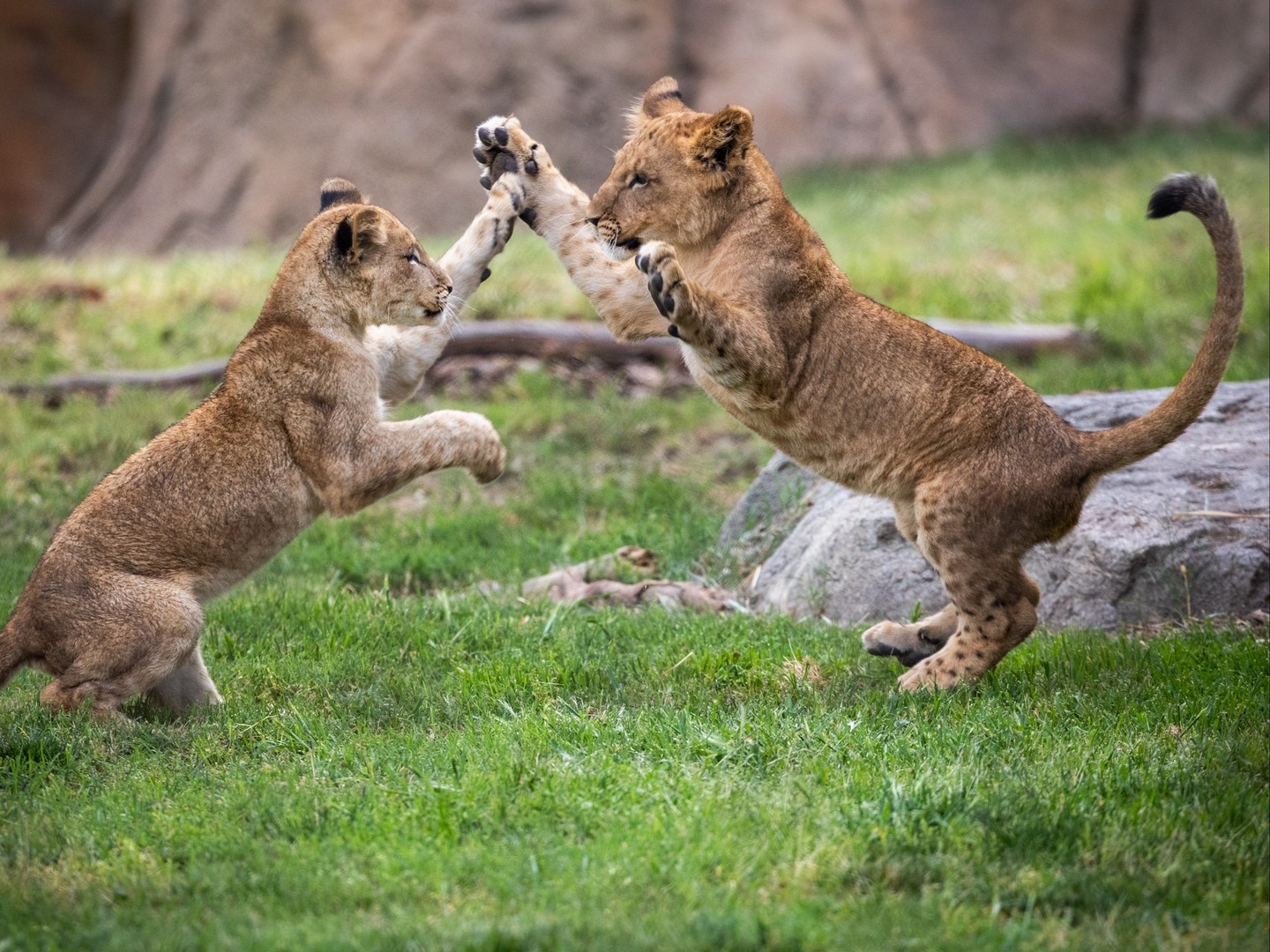
- Introduction to Asali and Taraj, their significance in the animal kingdom.
- Growth patterns and physical development of lion cubs.
- Habitat details and the importance of witnessing wildlife.
- The role of zoos in species conservation and education.
- Wildlife conservation efforts and their impact on ecosystems.
Asali and Taraj, two lion cubs whose names have become familiar in zoological circles, are capturing the hearts of many. These majestic creatures, now growing rapidly, serve as representatives of their species’ vitality and the conservation efforts aimed at preserving them. Understanding the growth and habitat of Asali and Taraj is pivotal for appreciating their role in wildlife conservation.
Lion cubs exhibit fascinating growth patterns that tell a story of instinct and survival. Asali and Taraj are no exceptions. From the moment they are born, lion cubs undergo rapid physical development. In their early days, they weigh just a few pounds and are entirely dependent on their mother. Their closed eyes slowly open around the age of ten days, marking the beginning of their exploration of the surrounding world.
By the age of three months, these cubs become more playful and curious. They learn critical survival skills by mimicking the adults in their pride. Their growth is not just in size; it includes the honing of instincts essential for hunting and social interaction.
Witnessing Asali and Taraj in their habitat offers a glimpse into the way these creatures adapt and thrive. Observing lions in a naturalistic setting provides educational opportunities, showcasing real-life behaviors such as grooming, feeding, and social structure. This experience underscores the complexity of their social dynamics, emphasizing the importance of family bonds and territory.
Zoos play a crucial role in providing a safe and controlled environment for such observations. Well-managed zoos replicate natural habitats to stimulate animals physically and mentally. Myriad efforts are directed towards creating enriching environments that cater to the needs of Asali and Taraj. The provision of ample space and environmental options allows them to exhibit natural behaviors, contributing to their physical health and psychological well-being.
In terms of conservation, zoos serve as pivotal institutions. They protect species like Asali and Taraj from threats such as habitat loss and poaching. By maintaining genetic diversity through carefully managed breeding programs, zoos contribute to the long-term survival of threatened species. These programs are meticulously designed to retain genetic health, ensuring future reintroduction into their native habitats if necessary.
Wildlife conservation is more vital than ever. Efforts to preserve species like Asali and Taraj have far-reaching impacts on ecosystems. Lions, being apex predators, maintain the balance in their environment by regulating prey populations. Preserving their numbers not only secures their future but also the equilibrium of their ecosystems.
Public engagement in conservation efforts is essential. Education programs, both in-person and virtual, allow individuals to connect with wildlife like Asali and Taraj. By raising awareness about their importance, zoos inspire future generations to advocate for conservation. Through storytelling and immersive experiences, people develop a deeper appreciation for these majestic creatures.
The growth of Asali and Taraj and their presence in a habitat represent more than just an opportunity to observe lions. They symbolize the concerted efforts of zoos and conservationists to ensure the survival of species facing numerous threats. Understanding their journey from birth through maturity, and the efforts made to sustain their lineage, is a testament to the critical importance of organized conservation strategies.
The story of Asali and Taraj continues to unfold, drawing attention to the significance of conservation and education in preserving our planet’s rich biodiversity. Through observing their development and existence in habitats, we gain insight into the complexities of their world, sparking a deeper commitment to protect it.
*****
Source Description
Asali and Taraj are getting so big 🥺 have you witnessed them on habitat yet? 🦁
