
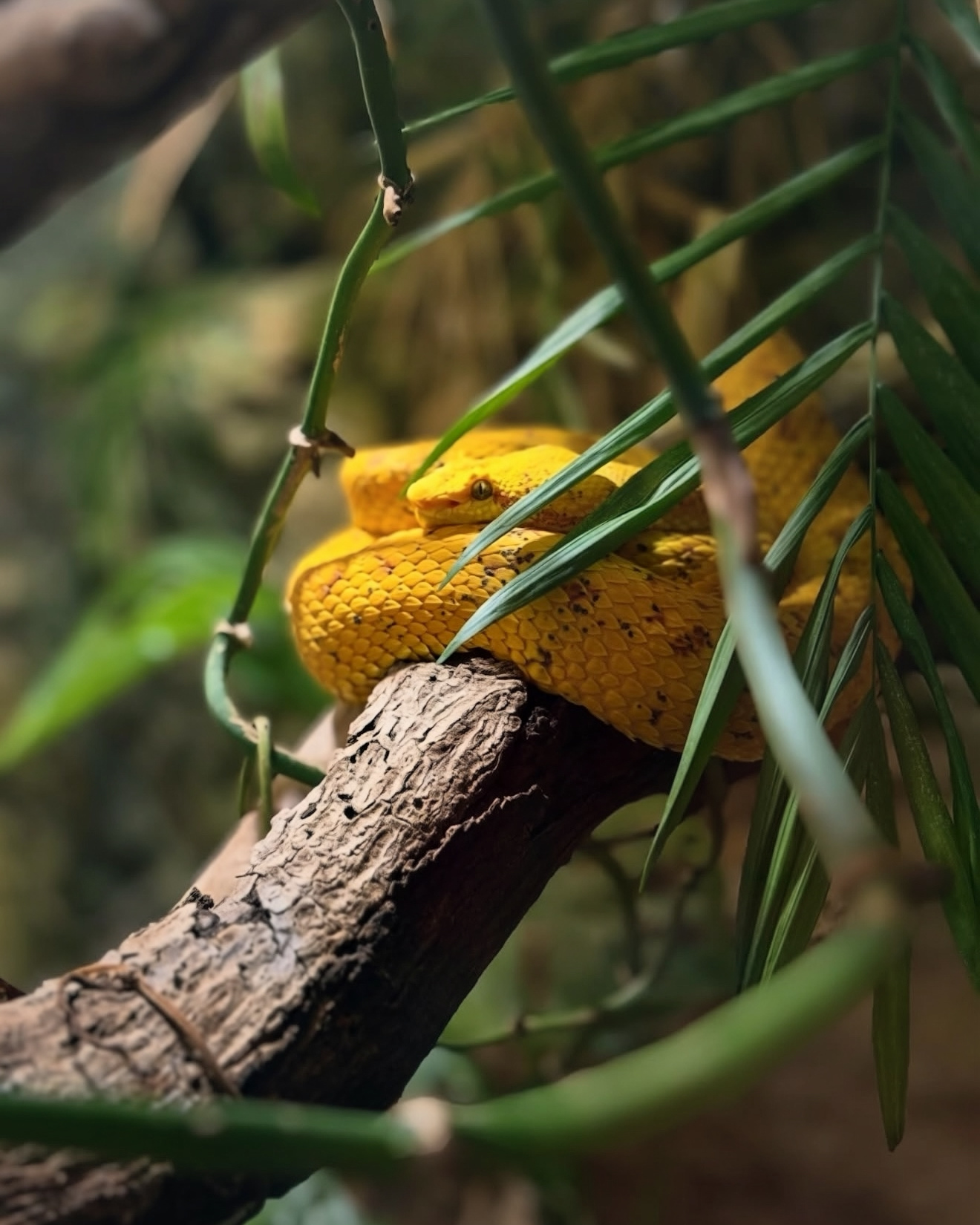
- Overview of the Eyelash Palm Viper’s physical characteristics and adaptations
- Habitat and distribution in Central and South America
- Behavioral ecology, including hunting techniques and diet
- Conservation status and threats faced by the species
- Importance of the Eyelash Palm Viper in its ecosystem
The Eyelash Palm Viper (Bothriechis schlegelii) stands out as a small but notable resident of Central and South American rainforests. This snake is distinguished by the unique fringe-like scales above its eyes, which serve a crucial role in breaking up its outline. This specific adaptation allows the viper to remain undetected as it ambushes its prey. The Eyelash Palm Viper showcases a striking coloration that can include shades of yellow, green, orange, or red. These vibrant hues help it blend seamlessly into the lush backgrounds of its arboreal habitat.
This snake typically resides in the abundant foliage of trees, often coiling on branches and demonstrating an exceptional ability to camouflage itself. The striking appearance of the Eyelash Palm Viper serves more than just aesthetics; it is a survival mechanism that plays a significant role in its ability to hunt and evade predators. This viper’s coloration can vary not only according to its habitat but also according to its individual geographic location. These variations can offer clues to the environmental conditions and ecological preferences of distinct populations.
In terms of its physical characteristics, the Eyelash Palm Viper reaches an average length of 2 to 3 feet. Its slender body helps it navigate through the branches with remarkable agility. Its head is somewhat triangular, with heat-sensing pits located between the eyes and nostrils, which are vital for locating warm-blooded prey. These features create a formidable predator adapted for its environment, enabling it to hunt prey with both precision and stealth.
The habitat of the Eyelash Palm Viper consists mainly of humid tropical and subtropical forests spread across Central America—from southern Mexico through to countries like Costa Rica and Panama—and into parts of South America such as Colombia and Ecuador. The dense foliage provides critical shelter and an abundance of prey, making it an ideal habitat for this species. The viper is primarily arboreal, although it can sometimes be found on the forest floor. This adaptability to both vertical and horizontal territories provides varied hunting opportunities.
The Eyelash Palm Viper employs a unique approach to hunting. Its diet primarily consists of small mammals, birds, and amphibians. Using its impeccable camouflage, it ambushes unsuspecting prey that comes too close. The snake’s venom is hemotoxic, targeting blood tissues and causing paralysis in its victims. This enables the viper to subdue prey quickly, reducing the risk of escape. Once the prey is immobilized, it can be safely consumed, often whole, due to the snake’s flexible jaw.
The behavioral ecology of the Eyelash Palm Viper is complex. Its hunting strategy heavily relies on patience. Often, it can remain coiled for extended periods, using minimal energy while waiting for the perfect moment to strike. This method not only conserves energy but also increases its odds of capturing prey. The viper’s reproductive habits reflect a similar level of adaptability, as it gives birth to live young rather than laying eggs. This adaptation enhances survival rates, especially in environments with frequent moisture.
As with many species, the Eyelash Palm Viper faces numerous threats that endanger its survival. Habitat destruction, primarily due to deforestation for agriculture and urban development, poses a significant risk. These changes in land use disrupt not only the viper’s habitat but also that of its prey, leading to declines in both populations. Additionally, the illegal wildlife trade sometimes targets exotic snakes, placing further pressure on their numbers.
Despite these threats, the Eyelash Palm Viper is currently classified as a species of “Least Concern” by the International Union for Conservation of Nature (IUCN). However, the ongoing losses of rainforest habitats highlight the necessity of continued vigilance in monitoring these populations. Effective conservation strategies are imperative for preserving the biodiversity of rainforest ecosystems, demonstrating the interconnectedness of species within these environments.
The role of the Eyelash Palm Viper extends beyond its presence as a predator. Every species is part of an ecological network, and the viper’s predation helps regulate populations of its prey. This balance can, in turn, affect other flora and fauna within the same habitat. By influencing prey populations, the Eyelash Palm Viper inadvertently contributes to maintaining ecological stability. Healthy ecosystems are essential not only for the species that inhabit them but also for overall planetary health.
The Eyelash Palm Viper is an unforgettable species that showcases the incredible adaptations of wildlife in tropical rainforests. Its striking visual features, combined with its impressive hunting strategies, create a narrative of survival and integration within its environment. Yet, as conservationists work to safeguard habitats, it becomes critical to recognize the importance of each species in maintaining the intricate balance of ecosystems.
Efforts to protect the Eyelash Palm Viper and its rainforest home represent a step toward preserving not just this snake but the broader biodiversity that exists within these vibrant ecosystems. Effective conservation frameworks that prioritize habitat protection and restoration can play a pivotal role in ensuring the survival of this captivating species.
Understanding the Eyelash Palm Viper is not just important for herpetologists and wildlife enthusiasts; it also serves as a reflection of the health of our global ecosystem. By studying this viper and fostering appreciation for its unique traits, we can better equip ourselves to advocate for conservation initiatives and responsible land management practices. Each small effort dedicated to protecting species like the Eyelash Palm Viper contributes to the overall success of conservation objectives.
Advocacy for habitat protection is vital. Organizations dedicated to rainforest conservation often implement educational programs aimed at raising awareness among local communities and policymakers about the ecological significance of species like the Eyelash Palm Viper. These initiatives not only highlight the importance of biodiversity but also emphasize the economic and cultural benefits of healthy ecosystems.
By investing in these education and conservation initiatives, we can foster a greater understanding of the interconnectedness of wildlife populations and their habitats. Engaging local communities and stakeholders in conservation dialogues can also amplify the chances of successfully protecting the Eyelash Palm Viper and its rainforest ecosystem.
In addition to awareness-raising efforts, further research on the Eyelash Palm Viper’s ecology and behavior can provide valuable insights into its conservation needs and threats. Scientific studies can offer data to help prioritize conservation efforts and establish guidelines for sustainable land management around critical habitats.
Continued support for such research initiatives is imperative in navigating the challenges posed by environmental changes and human activities. Through collaboration with researchers, conservationists, and local communities, we can help safeguard the future of the Eyelash Palm Viper while also promoting overall ecosystem health.
As we learn more about the Eyelash Palm Viper, its integral role in rainforest ecosystems becomes increasingly apparent. By prioritizing conservation efforts and fostering a greater understanding of this fascinating species, we can protect not only the Eyelash Palm Viper but also the myriad of life it interacts with in its vibrant habitat.
*****
Source Description
Those lashes aren’t for beauty sleep. 👀
Meet the Eyelash Palm Viper, a small but mighty rainforest resident known for the fringe-like scales above its eyes that help break up its outline while it waits patiently for prey. Found in Central and South America, these arboreal vipers spend most of their time coiled on branches, perfectly camouflaged in shades of yellow, green, orange, or even red.
📸 @rora.j.27
@snakesofinstagram
