
- River otters’ unique adaptability between land and water environments.
- Behavioral patterns of North American river otters and their seasonal activities.
- The importance of habitat conservation for river otter populations.
- Contributions of modern zoos to otter conservation and education.
- Human interaction and its impact on otter habitats and conservation efforts.
River otters are engaging animals known for their playful demeanor and sleek appearance. Often spotted in aquatic environments, these creatures are also highly adept on land. Their presence in both realms highlights their remarkable adaptability, making them a subject of interest in zoological studies.
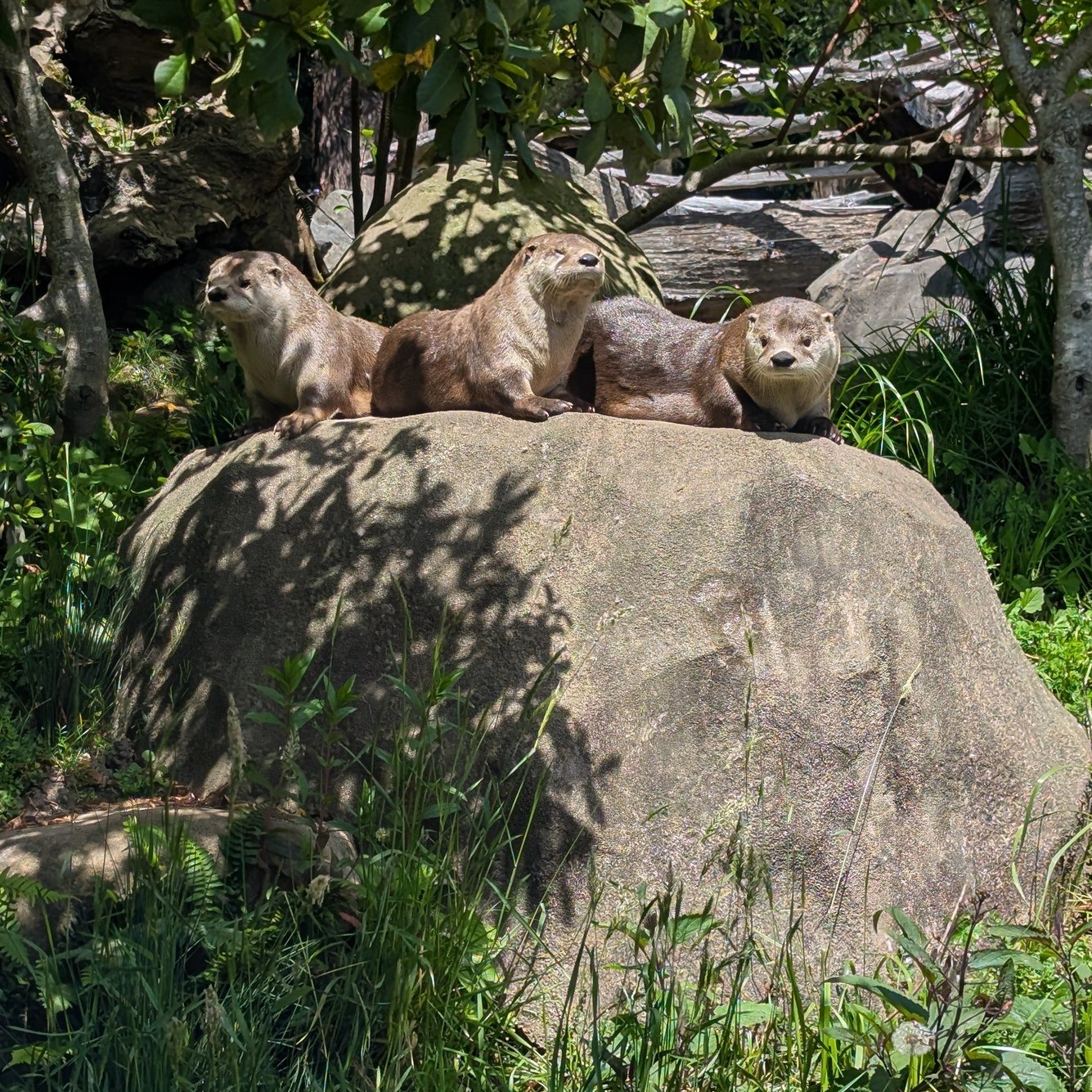
River otters, specifically the North American species like Etu, Takoda, and Toby, are notable for spending significant time both in water and on land. While they are often seen frolicking in rivers and streams, they possess anatomical and physiological traits that enable them to thrive equally on terra firma. Their streamlined bodies are built for efficient swimming, while their powerful legs and dexterous paws are suited for terrestrial movement.
The adaptability of river otters is not just about physical characteristics. These otters have an extraordinary ability to find food across diverse habitats. Their diet includes fish, crustaceans, and small mammals, which they hunt both in water and on land. This omnivorous diet is essential for survival, particularly in habitats where food sources can vary with the season.
During warmer months, river otters like Etu, Takoda, and Toby tend to spend more time resting and sunbathing on land. This behavior is thought to help regulate their body temperature and conserve energy. In contrast, colder months may see these otters more active in water, as the insulating properties of their fur and body fat allow them to endure lower temperatures.
From a zoological perspective, understanding the behavioral patterns of otters can be crucial for effective conservation strategies. These patterns highlight the need for preserving both aquatic and terrestrial habitats. As natural habitats are threatened by urban expansion and pollution, conservation efforts must focus on maintaining the ecosystems on which otters depend.
Modern zoos play a pivotal role in the preservation and education regarding river otters. By recreating natural habitats and studying otter behavior, zoos contribute to global conservation efforts. They also serve as educational hubs, raising awareness about the importance of protecting these and other wildlife species. Zoos can house research programs that look into the breeding, health, and behaviors of otters in settings that mimic their natural environments.
Moreover, zoos serve as platforms where the public can learn about the intricate balance of ecosystems. Encounters with otters at zoos can foster a connection and a sense of responsibility toward environmental conservation. Engaging visitors with information about the challenges river otters face in the wild can encourage actions that support habitat conservation.
Human activity poses significant risks to river otter populations. Habitat destruction, water pollution, and climate change all impact the environments these creatures rely on. Conservationists emphasize the importance of clean waterways and wetlands, which are vital not just for otters but for entire ecosystems.
Efforts to mitigate human impact include restoring riverbanks, cleaning up polluted bodies of water, and establishing protected areas to provide safe havens for otters and other wildlife. Legislation and conservation agreements play a role in these efforts, aiming to curb activities that threaten biodiversity.
In addition to traditional conservation efforts, public engagement is crucial. Educating local communities about river otters’ habitats and behaviors can lead to increased protective measures. Citizen science initiatives, where the public participates in data collection and monitoring, can enhance conservation projects.
River otters occupy a niche that links aquatic and terrestrial environments, underscoring the interconnectedness of ecosystems. Their presence in various habitats symbolizes the health of the environment. Therefore, the preservation of river otters aligns with broader ecological conservation goals. Understanding where river otters thrive and how they live is a step towards securing their future and the vitality of the ecosystems they inhabit.
*****
Source Description
🦦 Where are the river otters!? 🦦
Although we usually imagine otters in the water – did you know North American river otters like Etu, Takoda, and Toby spend almost equal amount of time on land?
During the warmer months the otter brothers might spend more time napping than playing – so be sure to keep an eye out for them both on land and in their pond during your next visit!
