
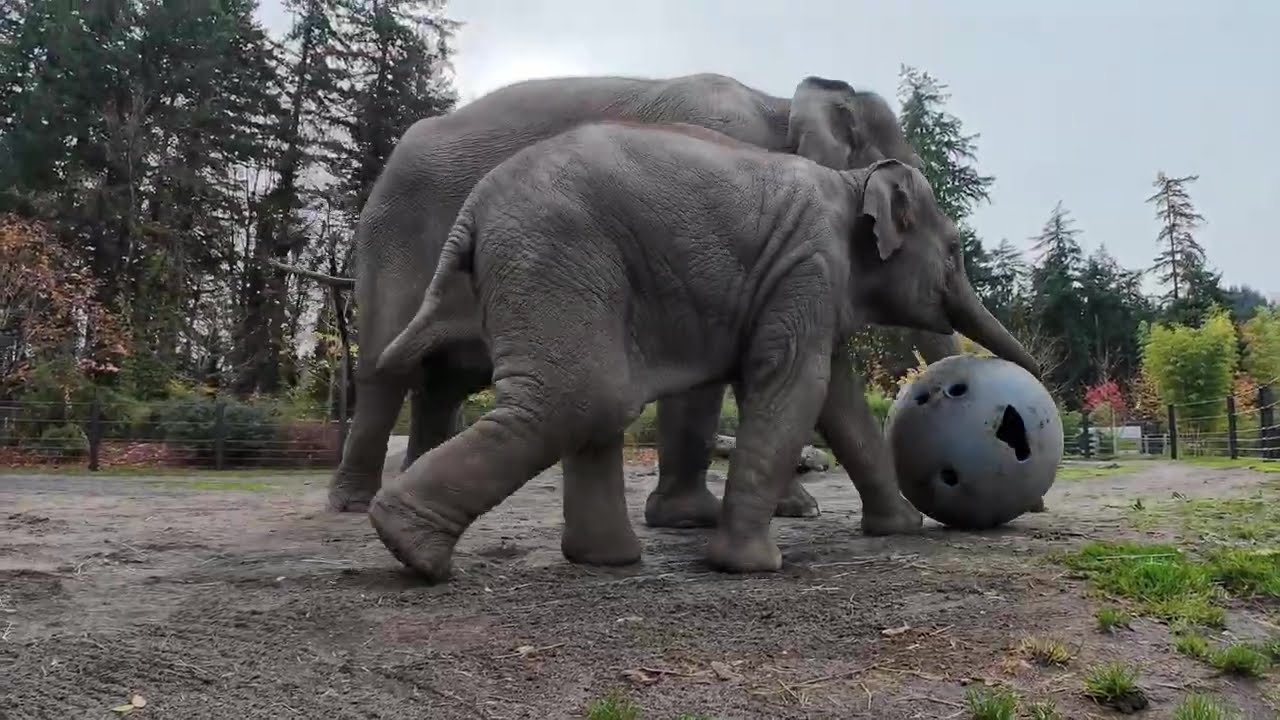
- Exploring the playful nature and behavior patterns of elephant calves through the specific example of Tula-Tu and her ball.
- Understanding the veterinary care protocols for elephant calves, emphasizing the role such checkups play in health maintenance.
- Insight into zoo management practices, specifically focusing on the daily care and enrichment activities for elephants.
- Discussing wildlife conservation efforts related to elephants, underscoring the importance of zoos in these endeavors.
- Highlighting the ethical considerations surrounding captive elephant management and their welfare in zoological setups.
At the heart of this article, we find Tula-Tu, an elephant calf who captures attention and highlights broader topics such as animal behavior and wildlife conservation. Tula-Tu’s delightful interaction with her ball not only serves as a charming video subject but also as an entry point into understanding the intricate behaviors of elephant calves. Play is an essential aspect of an elephant calf’s life. It isn’t all fun and games; it is fundamental to their social learning and physical health. Through play, calves like Tula-Tu learn critical social skills, develop muscles, and understand environmental interactions. The joy evident in Tula-Tu’s play is a reflection of her well-being and the stimulation provided by her habitat.
Veterinary care for elephant calves involves thorough checkups that go beyond routine assessments. Such health checks include monitoring vital signs, assessing growth rates, and ensuring proper nutrition. For Tula-Tu, these checkups provide essential insights into her development and allow veterinarians to preemptively address any health issues. This proactive approach is crucial, given the complex biological needs of elephants. Elephants require a balanced diet rich in fibers and specific nutrients that are often supplemented by nutritionists and caregivers. These healthcare routines are vital for maintaining the physical and psychological well-being of captive animals.
Zoo management practices today extend beyond the rudimentary housing of wildlife. Emphasis is placed on creating enriched environments that mimic natural habitats as closely as possible. Enrichment activities, like Tula-Tu playing with her ball, are carefully designed to stimulate both mental and physical aspects. For Tula-Tu, her ball is more than a toy; it’s instrumental in her cognitive development and emotional stability. Such practices are supported by extensive research in animal behavior and welfare science, ensuring elephants receive the care that meets their multifaceted needs.
The role of zoos in wildlife conservation cannot be overstated. They serve as important outposts for research, breeding programs, and public education. In the case of elephants, zoos contribute to conservation efforts by participating in breeding programs and supporting in-situ conservation initiatives. Tula-Tu represents not just a single elephant, but an integral part of a larger conservation narrative aimed at creating sustainable wildlife populations. Zoos often collaborate with conservationists globally to ensure that these majestic creatures have a sustainable future both in the wild and under human care.
Ethical considerations around the management of elephants in captivity are intense topics of discussion. It is crucial that the welfare of elephants such as Tula-Tu remains a priority. These considerations include providing sufficient space, social opportunities, and enrichment to simulate natural behaviors. While zoos play a key role in conservation, the ethical obligations towards captive elephants require continuous evaluation and improvement of living conditions and care practices. Ensuring the well-being of animals like Tula-Tu involves advocacy and adherence to best practices and newly established welfare standards.
Through Tula-Tu’s playful moments and veterinary checkups, we gain insight into the larger context of elephant behavior, health, and conservation. Her lighthearted antics serve as a reminder of the profound work being done within zoos and conservation circles to preserve and understand these remarkable creatures. As the narrative of Tula-Tu unfolds, it not only captures our fascination but also compels a reflection on our roles in supporting and safeguarding wildlife for future generations.
*****
Source Description
She’s on a roll! Tula-Tu is on the road to recovery from her recent illness. She’s back to snacking, playing and running around like her usual little elephant self 💕
“At last, we can say she is out of the woods,” said Dr. Carlos Sanchez, the zoo’s director of animal health. “Her white-cell counts are normal, and her viral load continues to decrease. She’s been eating well, running around and looking like her usual self.”
Since being diagnosed with elephant endotheliotropic herpesvirus, or EEHV, two weeks ago, Tula has received antiviral medications, fluids and a series of plasma transfusions to fight the virus.
“Tula’s recovery owes everything to the incredible care she’s received and the power of teamwork and careful planning,” Sanchez said. “We’ll continue monitoring for any signs of illness, but for now she no longer needs treatment. We’re just going to step aside and let her get back to being a joyful little elephant.”
