
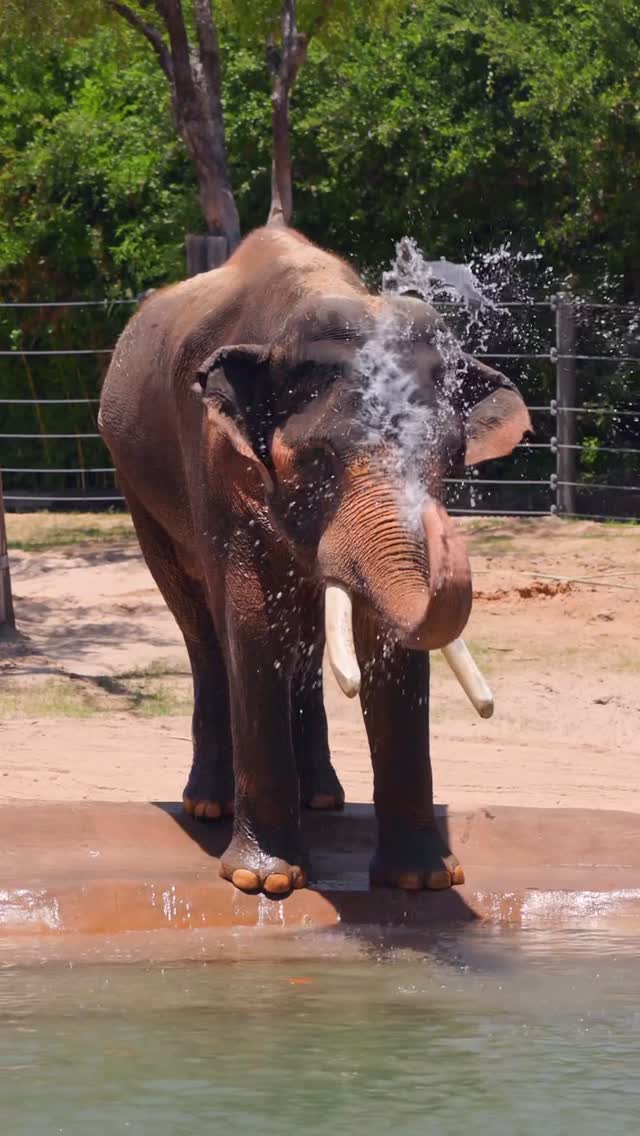
- Trunk mechanics: how an elephant’s trunk functions as a water hose, with anatomy, musculature, suction, and spray mechanics.
- Functions of splashing: thermoregulation, skin care, parasite control, play, and communication.
- Behavioral variation and development: differences by age, sex, species, individual learning, and cultural transmission.
- Zoo management and welfare: pool design, water quality, enrichment strategies, training, and health monitoring.
- Conservation implications: water availability in the wild, human-elephant conflict, climate impacts, and research priorities.
“Splish splash!” captures a familiar sight: an elephant lifting its trunk, drawing water, and sending an arcing spray across its head and body. Observers smile. Scientists study the behavior. In zoos and sanctuaries, staff design pools and routines to promote safe water use. This article explains how elephants perform that spray, why they do it, and what it means for captive care and conservation.
Trunk mechanics and hydraulics
The elephant trunk is a hybrid organ. It is an elongated fusion of the nose and upper lip. It contains no bone and is comprised of roughly 40,000 to 60,000 muscle fascicles. Those muscles operate in longitudinal, radial, and transverse arrays. The result is extreme flexibility and force. Muscles contract to shorten, lengthen, or bend the trunk. Fine motor control comes from independent muscle groups and dense innervation.
Suction begins with a sealed trunk tip. Elephants close their external nostrils at the trunk tip to create negative pressure. They then expand the trunk’s interior volume while the trunk tip remains sealed against the water surface. The pressure drop draws water upward. Adult African elephants can draw more than 9 liters in a single intake; Asian elephants generally take slightly less, but figures vary with size and method. The trunk acts like a hand and a straw at once.
Splashing depends on controlled expulsion. Elephants modulate trunk aperture and velocity to vary droplet size and spray distance. A quick, narrow aperture produces a jet that reaches far. A broad opening yields a curtain-like spray that covers more surface area. Muscular coordination controls acceleration and release timing. This combination of suction and projected stream is the core hydraulic action behind every “Splish splash!” moment.
Thermoregulation and skin health
One major function of splashing is cooling. Elephants live in climates where ambient temperatures often exceed their thermal comfort zone. They have relatively low surface-area-to-volume ratios, which limits passive heat loss. Sweating is minimal. Instead, elephants use behavioral methods to shed heat.
Water applied to the skin increases conductive and evaporative heat loss. Wet skin cools faster than dry skin, especially if elephants combine splashing with flapping their ears. Ear flaps have a rich vascular supply. Blood flows near the surface while cooling increases when splashed and fanned. The coordinated behavior—splash, flap, stand in shade—yields measurable reductions in core temperature. Field studies using thermography show lowered skin temperatures after bathing and spraying.
Skin maintenance is another benefit. Elephant skin is thick, multilayered, and folded. Those folds can harbor bacteria, parasites, and debris. Water loosens detritus and allows sand or mud to adhere, which then acts as a protective sunscreen and insect repellent once dry. Controlled rinsing removes parasites and reduces irritation. In zoos, caretakers observe that regular access to water correlates with fewer dermatitis cases and improved overall skin condition.
Hygiene and parasite control
Beyond cooling, splashing targets ectoparasites. Ticks, flies, and mites irritate elephant skin and can transmit pathogens. Water and mud treatments help dislodge these pests. Elephants often follow splashing with dust or mud throws. The mud forms a physical barrier that deters biting flies and offers UV protection. This sequence—water then mud—is a combined hygienic strategy.
Researchers have documented seasonal patterns. In wet seasons, elephants bathe more frequently and have lower parasite loads. In dry seasons, they concentrate at remaining waterholes, increasing contact rates and disease transmission risks. Monitoring parasite prevalence alongside bathing behavior provides insight into herd health and vectors of disease.
Play, social bonding, and communication
Splashing serves social functions. Juveniles learn by watching elders. Mothers and calves often splash together. Young animals practice trunk suction and spraying as play, refining motor skills while strengthening social bonds. Playful splashing can stimulate cooperation and reduce stress.
Adult elephants also splash in social contexts. Males may demonstrate vigor by producing large sprays during musth or courtship. Group bathing can coordinate movements and reinforce affiliation within family units. Vocalizations often accompany water play. The sound of splashing, combined with low-frequency rumbles, adds a multimodal signal in social interactions.
Researchers classify water-related behaviors into categories: solitary bathing, mutual spraying, play, and ritualized bathing associated with mating. Each category has measurable differences in duration, intensity, and social composition. Ethograms from long-term studies show that social splashing correlates with fewer aggressive encounters and higher rates of affiliative contact afterwards.
Developmental learning and cultural transmission
Trunk use is partly innate and partly learned. Newborns have short, weak trunks. They first use the trunk for tactile exploration. Sucking and spraying water develop over months. Calves watch adults and replicate actions. The precision to draw and expel water improves with experience.
Culturally transmitted techniques emerge in some populations. For example, certain herds specialize in coordinated pool entry or in using particular mud patches. These behaviors persist across generations through social learning. Field researchers use longitudinal observation to map behavior transmission. Such studies reveal how non-genetic factors shape practical survival skills.
Variation by species, sex, and individual
African and Asian elephants show differences in trunk use. African elephants possess two finger-like projections at the trunk tip; Asian elephants have one. These differences alter fine manipulation. African elephants use precise pinching for small objects and subtle water manipulation. Asian elephants rely more on scooping motions.
Sex differences also appear. Male elephants tend to display larger-volume sprays when signaling. Females, especially mothers, prioritize coordinated bathing with calves. Individual personality influences behavior too. Some elephants are frequent bathers; others are more reserved. These preferences impact how caretakers design enrichment and how conservationists interpret water-dependence in wild populations.
Observational methods and measurement
Objective study of splashing combines video analysis, thermography, and physiologic sampling. High-speed videography captures trunk kinematics and droplet formation. Infrared imaging quantifies skin and ear temperature changes before and after bathing. Blood and fecal samples measure stress hormones and parasite loads related to bathing frequency.
Experimental designs test hypotheses about cooling efficiency and social function. Controlled trials in captive settings can manipulate water availability, pool depth, and group composition. Field researchers use telemetry and remote cameras to document natural behavior with minimal disturbance. Together these methods build a robust evidence base on the function and biomechanics of splashing.
Zoo design and water management
For captive elephants, access to water is a core welfare requirement. Pool design must match species and group needs. Pools should allow gradual entry and exit, with non-slip surfaces and varied depth to accommodate different body sizes. Filtration systems must maintain water quality without exposing animals to harmful chemicals.
Hydrology and sanitation matter. Filtration should handle high organic loads typical of large mammals. Systems generally combine mechanical filtration, biological treatment (e.g., biofilters), and disinfection. Chlorine is common but must be applied at concentrations safe for elephants’ mucous membranes and skin. Alternative disinfection—ultraviolet or ozone systems—reduces chemical exposure while maintaining hygiene.
Temperature control is important in temperate climates. Heated pools or warm-water basins support joint health and encourage use in cold weather. In hot climates, shade structures around pools reduce water evaporation and keep cooler microclimates for resting. Smart water meters and recirculation reduce consumption, lowering operational costs and environmental footprint.
Enrichment strategies: promoting natural splashing
Water-based enrichment improves both physical and mental welfare. Care programs can schedule supervised bath times, provide movable sprinklers, or construct shallow channels that encourage walking and foraging while wet. Rotating enrichment items prevents habituation. Enrichment should promote choice: elephants must have control over whether to enter water.
Training with positive reinforcement helps manage supervised bathing and veterinary procedures. Trainers use target behaviors to guide elephants into pools and out again. Training reduces stress and improves the safety of staff. It also allows caretakers to conduct health checks with minimal restraint.
Safety and health monitoring
Water environments can harbor pathogens. Zoos must monitor for bacterial, viral, and parasitic agents. Regular testing of water chemistry and microbial loads detects potential hazards early. Staff should observe elephants for signs of ear infections, skin lesions, or abnormal behaviors following water exposure.
Training protocols include procedures to clean pools between groups when necessary and to quarantine animals showing signs of illness. Preventive veterinary care includes routine skin assessments, topical treatments as needed, and parasite control programs informed by fecal diagnostics.
Conservation implications: water scarcity and habitat change
In the wild, access to reliable water is a determinant of elephant distribution, movement, and survival. Climate change shifts rainfall patterns and increases drought frequency. As waterholes contract, elephants concentrate at remaining sources. That raises the risk of disease transmission, increases competition with livestock and people, and heightens human-elephant conflict.
Restoration of natural water sources and creation of artificial watering points are common conservation tools. Such interventions require careful planning. Artificial waterholes can alter elephant movement patterns and vegetation dynamics. Hydrological modeling and impact studies guide where to place water points to support elephants without damaging ecosystems.
Community-based management is critical. In many regions, local people depend on the same waters. Conservation projects that incorporate shared governance, livestock management, and alternative livelihoods reduce conflict. Offering technical support for water harvesting, storage, and efficient irrigation benefits both humans and elephants.
Research priorities and monitoring
Key research needs include quantifying the energetic and thermoregulatory benefits of splashing across seasons and life stages. Long-term monitoring of bathing sites can reveal links between water access and reproduction, calf survival, and disease dynamics. Genetic and behavioral studies can clarify how water-related behaviors spread among groups.
Remote sensing combined with on-the-ground surveys helps map water availability and elephant movement. Integrating these data into conservation planning improves the placement of corridors and protected areas. Cross-disciplinary collaborations—hydrologists, veterinarians, behavioral ecologists, and social scientists—yield the most practical outcomes.
Public education and storytelling
Splish splash! images of elephants often spark public interest and empathy. Zoos and conservation groups can harness that interest for education. Display materials should explain the scientific functions of splashing, the threats elephants face regarding water, and simple actions people can take—supporting habitat protection, reducing water waste, and backing community conservation programs.
Interactive exhibits that simulate trunk suction or show thermographic images of cooling can deepen public understanding. Programs that link visitors to specific conservation projects increase funding and engagement. Accurate messaging matters: framing splashing as both playful and functional helps audiences appreciate the complexity of elephant behavior.
Ethical considerations in captive and field work
All interventions should respect both elephant welfare and ecosystem integrity. Water provisioning in wild landscapes must avoid creating dependency or ecological imbalance. Captive programs must prioritize naturalistic opportunities for splashing and account for species-specific needs.
Research protocols require ethical review. Studies that involve manipulation of water access must minimize harm and be scientifically justified. Data sharing and collaboration with local stakeholders align research with conservation goals and social responsibility.
Final practical recommendations for caretakers and conservationists
- Provide daily access to water features that allow the full range of bathing behaviors, including trunk suction and spraying.
- Design pools with gradual slopes, varied depth, and accessible exits.
- Implement filtration systems capable of handling large organic loads and compatible with elephant health.
- Use enrichment devices that encourage voluntary interaction with water.
- Monitor skin health, ear condition, and parasite load regularly, linking findings to bathing frequency and water quality.
- In the wild, prioritize water security in landscape planning, integrate local communities into management, and model hydrological impacts before constructing artificial water points.
- Support research on the links between water behavior, thermoregulation, and population dynamics.
“Splish splash!” moments reveal more than play. They show a complex intersection of anatomy, behavior, health, and environment. Whether Colonel at a zoo bathes to cool down or a wild matriarch leads her family to a watering hole, the action carries multiple functions. Interpreting those actions with science leads to better care and smarter conservation.
Ongoing study and careful management will sustain both the delight of seeing an elephant spray and the practical outcomes that protect individuals and populations. “Splish splash!” can be a starting point for education, research, and policy that improve elephant welfare and secure water resources they depend on. Ultimately, supporting natural behaviors like splashing contributes directly to the resilience of elephant populations in a changing world. “Splish splash!” moments are small behaviors with broad implications for biology and conservation.
*****
Source Description
Splish splash! 💦🐘
Elephants, like Colonel here, can use their trunks like a water hose to suck up water and splash it on themselves or others. The splashing can be to cool off or get clean, but other times it’s just for play!
