
- The biology and behavior of the Western lowland gorilla.
- The significance of enrichment activities in zoo management.
- Conservation efforts and the role they play in protecting gorilla populations.
- The emotional and psychological impact of reaching Friday in both humans and gorillas.
The biology and behavior of the Western lowland gorilla:
The Western lowland gorilla, scientifically known as Gorilla gorilla gorilla, is the smallest subspecies of the gorilla but still possesses an imposing presence. Native to the rainforests of Central Africa, these primates are primarily found in countries such as Gabon, the Republic of Congo, and Cameroon. They are distinguished by their dark, dense fur, broad chests, and long, muscular arms, adapted for knuckle-walking. Adult males are marked by a prominent sagittal crest, lending them a distinctive profile.
Gorillas are primarily herbivorous, feeding on a varied diet that includes fruits, leaves, shoots, and occasionally insects. They live in groups called troops, led by a dominant silverback male. This social structure is pivotal to their survival in the wild, offering protection and facilitating learning and communication among members. The Western lowland gorilla’s communication is rich and varied, encompassing vocalizations, body postures, and facial expressions. This intricate communication system aids in the maintenance of social bonds and the avoidance of conflicts.
The significance of enrichment activities in zoo management:
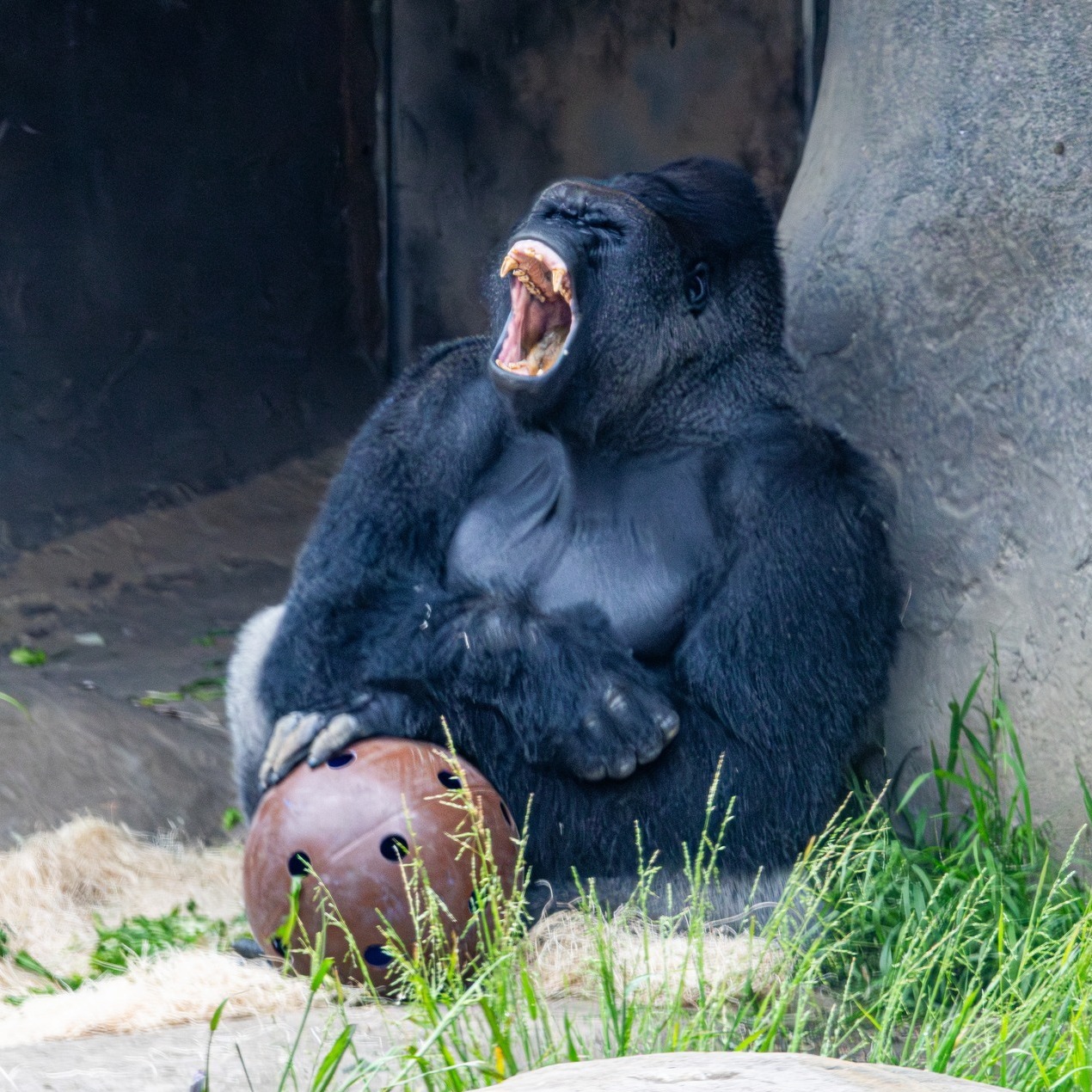
Zoo management plays an important role in simulating natural habitats and behaviors for animals under human care. Enrichment activities, like the puzzle feeder held by Bangori, are crucial to this endeavor. These tools are designed to challenge the cognitive abilities of animals, encouraging natural foraging behaviors and preventing boredom, which could lead to stress or aggression.
For Western lowland gorillas, enrichment activities might include hidden food items in complex feeders, requiring problem-solving and promoting physical activity. This aligns with the overarching goal of preventing stereotypical behaviors often associated with captivity. The enrichment not only attends to physical health but also supports mental and emotional well-being, echoing a key philosophy in modern zoo management: enhancing animal welfare holistically.
Conservation efforts and the role they play in protecting gorilla populations:
The Western lowland gorilla faces significant threats in the wild, including habitat destruction, poaching, and disease outbreaks like Ebola. Conservation efforts are vital in combating these threats and ensuring the species’ long-term survival. Initiatives such as anti-poaching patrols, habitat restoration projects, and public education campaigns are integral components of this mission.
Zoos worldwide participate in breeding programs to create genetically diverse populations that could, one day, bolster wild populations. Conservation awareness campaigns, often spearheaded by zoological institutions, aim to educate the public about the importance of preserving these primates and their habitats. The synergy between in-situ and ex-situ conservation efforts provides a comprehensive approach to wildlife conservation that is critical in preserving biodiversity.
The emotional and psychological impact of reaching Friday in both humans and gorillas:
There’s a universal sense of relief and anticipation associated with reaching Friday, a culmination of the week’s endeavors. For humans, this sentiment is a reminder of deadlines met and challenges overcome. It is an opportunity to unwind, reflecting a balance between work and leisure.
Interestingly, a parallel can be drawn with gorillas in human care. When enrichment activities, like those experienced by Bangori, are incorporated into their daily routines, gorillas also showcase expressions of satisfaction and engagement. The excited yawn observed in Bangori, clutching his puzzle feeder, symbolizes a blend of contentment and stimulation that comes with accomplished tasks.
While non-human primates do not have the same structured weeks as humans, scheduled enrichment mimics this cyclical reward. It offers mental and physical stimuli that engage their natural instincts and satisfy their curiosity. This engagement is vital, as cognitive health has a profound impact on the overall quality of life for animals in captivity.
The "made it to Friday" feeling captures that essence of achievement and anticipation. It is a powerful reminder of the interconnectedness between life’s challenges and the joy of overcoming them, a sentiment shared across species in more ways than one.
*****
Source Description
THAT “MADE IT TO FRIDAY” FEELING! 🎉😝😁
Alt-text: Bangori the Western lowland gorilla lets out a ferocious, excited scream-looking yawn while he clutches a puzzle feeder and lounges against a wall.
