
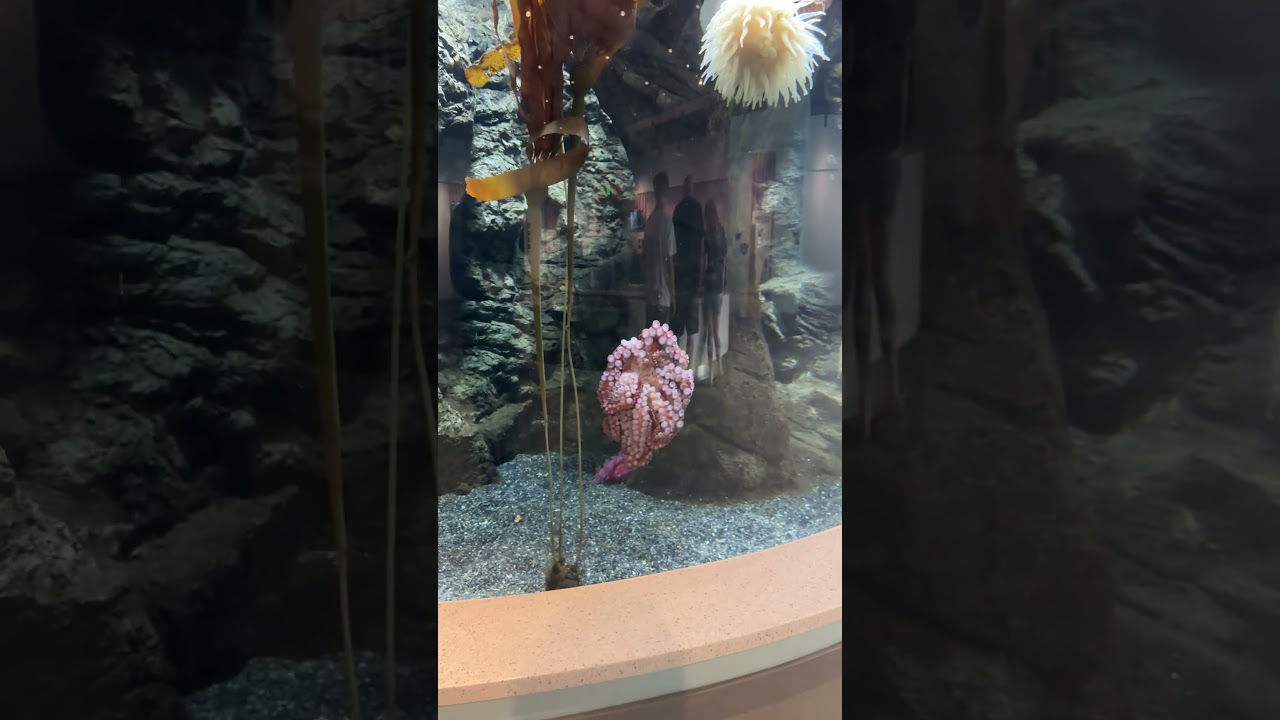
- The biology and lifestyle of the Pacific Octopus with a focus on Pipsqueak’s unique characteristics.
- The role of aquarium settings in supporting marine life and promoting conservation efforts.
- The significance of individual identification and study in advancing our understanding of octopus behavior and ecology.
- Conservation challenges facing the Pacific Octopus and broader marine ecosystems.
- The impact of public engagement and education in promoting wildlife conservation.
The vast oceans hold many marine creatures, and one of the most remarkable is the Pacific Octopus. Delving deeper, we encounter Pipsqueak, an intriguing specimen that serves as a beacon for understanding this fascinating species. Despite its diminutive name, Pipsqueak offers a wealth of insight into the biology and lifestyle of these elusive creatures.
A standard Pacific Octopus can reach up to 16 feet across and weigh about 110 pounds, but Pipsqueak, the not-so-giant, demonstrates that there’s so much more to these creatures than size. Its physical characteristics—such as its ability to change color and texture—offer an engaging exploration into cephalopod capabilities. Octopuses boast arms lined with hundreds of sensitive suckers, each capable of tasting and feeling, providing an intimate interaction with their environment. Their decentralized nervous system is a marvel; most of their neurons reside in their arms, allowing independent actions and intricate problem-solving abilities.
Pipsqueak’s behaviors showcase typical octopus traits, like their extraordinary intelligence and ability to navigate their environment. Known for their problem-solving skills, octopuses can open jars, escape enclosures, and engage with toys, which makes Pipsqueak a fascinating subject for both researchers and visitors alike. In understanding these behaviors, we learn about their complex neural makeup and adaptive strategies necessary for survival in the wild.
Aquarium environments play a crucial role in supporting marine life, acting as both educational platforms and research centers. For creatures like Pipsqueak, these settings offer safe harbor while facilitating in-depth study of their lifecycle, reproduction, and interaction with their surroundings. By maintaining optimal living conditions, aquariums provide a glimpse into how these cephalopods adapt to changes in their environment, from shifting salinity levels to varied diet regimens. Exhibits that feature interactive zones give visitors firsthand insights into the intricacies of octopus behavior, fostering a deeper appreciation of marine life.
The personalized study of individual creatures like Pipsqueak assists in expanding our understanding of octopus behavior and ecology. Each octopus has a distinct personality, and by observing Pipsqueak’s responses to stimuli, researchers can gather data that informs species-wide behavioral theories. This research is critical, as it aids in the development of approaches to improve husbandry practices and environmental enrichment, ultimately enhancing the well-being of both captive and wild populations.
As we investigate the challenges facing the Pacific Octopus, conservation takes center stage. Overfishing, habitat destruction, and ocean acidification are pressing issues impacting these creatures. By raising awareness of these threats, aquariums contribute to larger conservation efforts, working alongside global organizations to implement sustainable practices and protective legislation. Engaging in research that addresses the changing conditions of the ocean environment aids in developing strategies to mitigate negative impacts on marine biodiversity.
Public engagement and education remain vital components in promoting wildlife conservation. By sharing Pipsqueak’s story and showcasing the vital role of octopuses within marine ecosystems, aquariums encourage stewardship and environmental responsibility among visitors. Educational programs, both in-person and virtual, allow diverse audiences to connect with these animals, increasing public support for conservation initiatives.
Understanding the Pacific Octopus through the lens of Pipsqueak’s life provides rich insights into the natural world. Through focused study and public education, we can appreciate the complexity and beauty of these marine creatures, advocating for their protection and inspiring future generations to act as guardians of the ocean.
By caring for creatures like Pipsqueak and translating their stories to the public, we connect with the intricate web of marine life. In doing so, we foster a world that values and protects the ocean’s most extraordinary inhabitants.
*****
Source Description
This tiny octo is making a big splash at the #OregonCoastAquarium! 🐙
Meet Pipsqueak, the newest resident of our Octopus Cave! Weighing just under 5lbs, she’s the smallest octo to occupy the cave so far.
The previous octopus, Arachne, was recently released offshore. When an octopus comes to OCAq, they can grow and thrive under optimal conditions, with no threat from predators while receiving consistent nutrition and medical care. When an octo shows signs that they’ve reached reproductive age, they’re released so they can find a mate and have offspring—and the bigger, stronger, and healthier they are, the more likely they’ll do so successfully.
An average adult giant Pacific octopus usually lives 3-5 years and weighs around 40lbs, with some individuals growing much larger. We can’t estimate Pipsqueak’s age with certainty, but her size leads us to believe she’s young.
Visit our Rocky Coast gallery to see her in person! Between her small stature and master camouflage skills, catching a peep at Pipsqueak is a worthwhile challenge.
📹: Video by Aquarist Abby H.
#YTShorts #JustaBaby #Octopus #CephalopodSquad #NotSoGiantPacificOctopus #oregoncoastaquarium
