
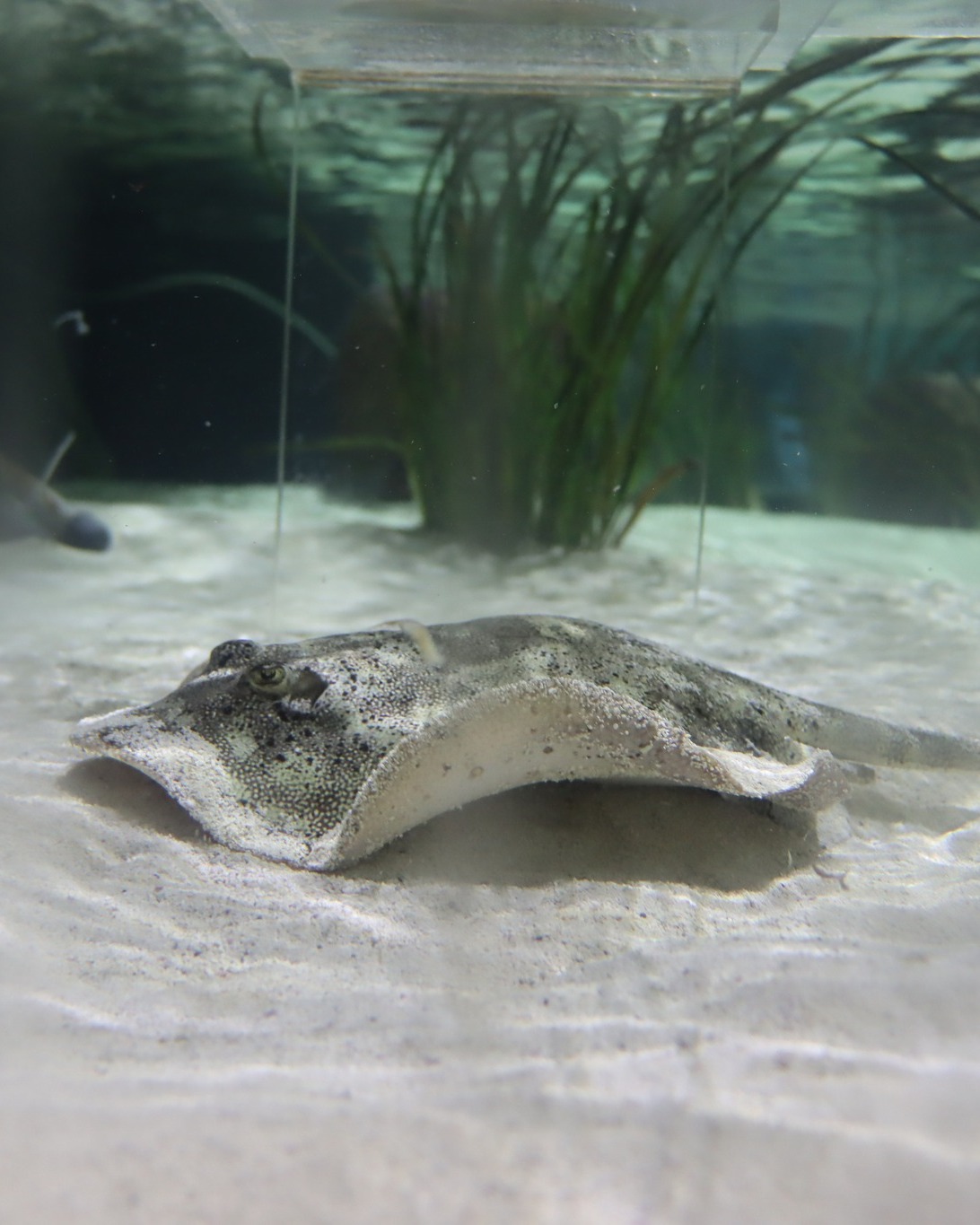
- Understanding the Yellow Stingray’s habitat and physical characteristics.
- Examining the Yellow Stingray’s behavior and diet.
- The importance of conservation efforts for the Yellow Stingray.
- How the Yellow Stingray fits into its ecosystem and its interactions with other species.
- The role of zoos and aquariums in education and conservation, specifically focusing on Yellow Stingrays.
The Yellow Stingray, a fascinating marine creature, is commonly found in shallow coastal waters, particularly in the Atlantic Ocean from North Carolina to Brazil. Known for its striking appearance, it plays a significant role in marine ecosystems and captivates visitors at aquariums worldwide.
Yellow Stingrays are relatively small, reaching about 14 inches in diameter. Their round, flat bodies make them well-suited to life on the ocean floor, where they blend seamlessly with sandy substrates. The top of their bodies is typically yellowish-brown with distinct spots, allowing them to camouflage effectively in their habitat. Unlike many fish, the Yellow Stingray has eyes on top of its head, providing a unique 360-degree view. This adaptation is particularly beneficial in detecting predators and prey.
These stingrays are primarily benthic, meaning they spend most of their time on the sea floor. Their diet mainly consists of small invertebrates and fish, which they detect using electroreceptors. This adaptation aids them in locating prey hidden beneath the sand. Observing their feeding behavior, one notices their incredible agility and speed as they pounce on unsuspecting prey.
Conservation of the Yellow Stingray is crucial due to various environmental challenges. Habitat degradation, pollution, and fishing pressures threaten their populations. Conservation efforts focus on protecting their natural habitats, establishing marine protected areas, and promoting sustainable fishing practices. Public awareness campaigns educate communities about the ecological importance of these rays, encouraging steps toward their protection.
Within their ecosystems, Yellow Stingrays play a pivotal role. They serve as both predators and prey, maintaining the balance of marine life. Their feeding habits help control the populations of smaller marine organisms, ensuring a healthy seabed. Conversely, they are prey for larger species like sharks, contributing to the complex food web.
Zoos and aquariums play an essential role in the education and conservation of the Yellow Stingray. By providing a space for research and public engagement, these institutions foster a deeper understanding and appreciation of marine life. They offer visitors the unique opportunity to observe stingrays in a controlled environment, highlighting their role in marine ecosystems. Moreover, breeding programs help sustain healthy populations and contribute to global conservation efforts.
The Yellow Stingray, found in exhibits like touch tanks, offers interactive experiences that enhance educational outcomes. Visitors gain firsthand insights into the stingray’s life and conservation needs, fostering a connection that inspires action toward ocean conservation. Such interactions underscore the significance of supporting conservation initiatives and contributing to the preservation of biodiversity.
Understanding the intricate balance of marine ecosystems and the role of species like the Yellow Stingray provides valuable insights into broader environmental challenges. As we continue to learn about these creatures, it becomes imperative to enhance efforts toward their protection. By valuing their role and promoting conservation, we ensure that future generations can appreciate the vibrant tapestry of life beneath the waves.
*****
Source Description
May’s Featured Animal is the Yellow Stingray!
You’ve probably spotted these small, circular stingrays on the sandy floor of our stingray touch tank located in the Delta in Rivers to the Sea, right alongside our cownose rays!
Yellow stingrays have periscopic eyes that provide them with a 360-degree view of their surroundings. They are typically found near coastlines and inshore waters, with their range extending from North America to South America.
