
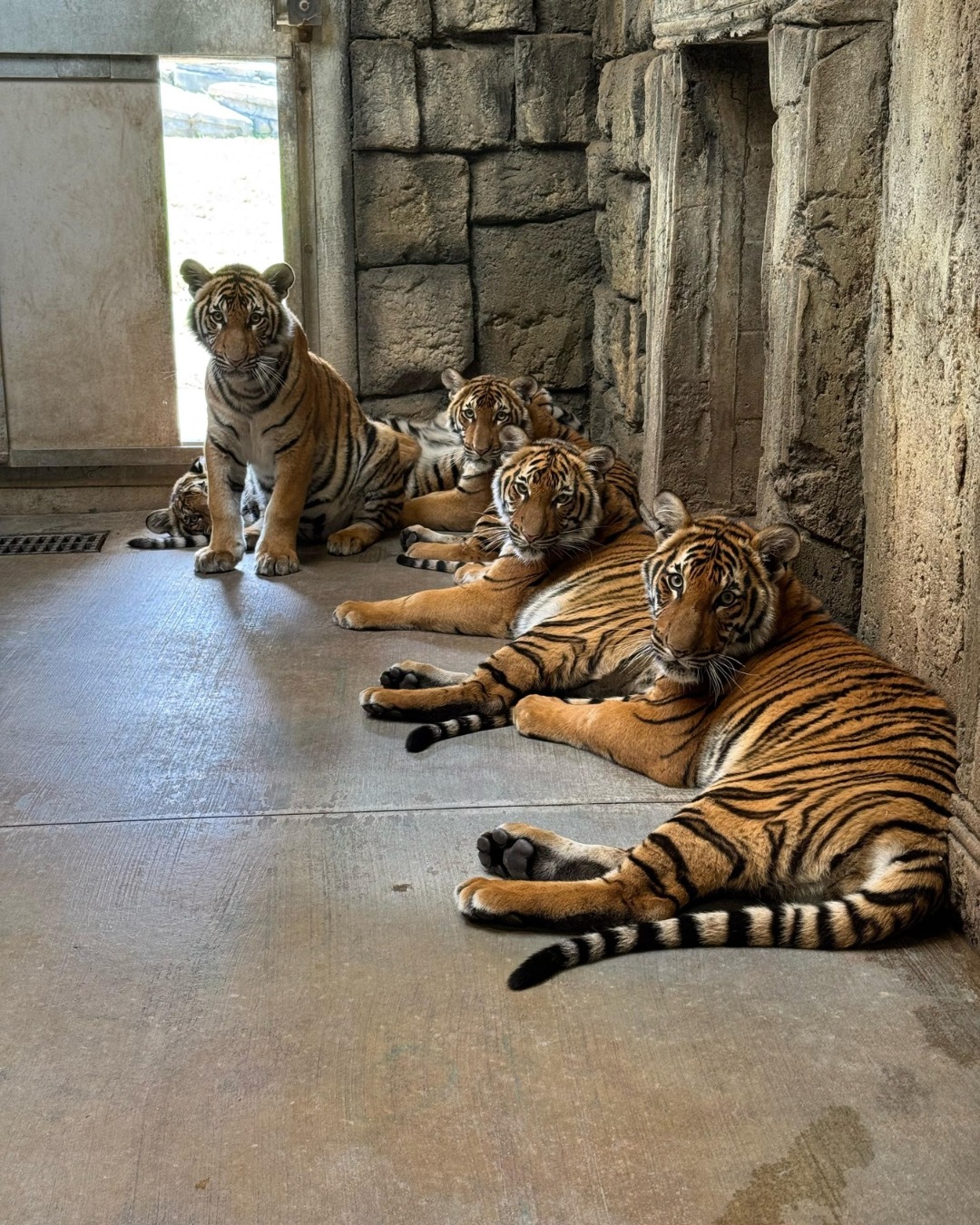
- Physical development and growth of the tiger cubs, including their milestone of reaching over 100 pounds at nine months old.
- Behavioral development and social structure, focusing on interactions with each other and their environment.
- Role of zoo management in ensuring the cubs’ health, safety, and enrichment.
- Importance of wildlife conservation efforts for tigers and how these contribute to broader biodiversity goals.
- Insights from Keeper Paityn on the daily responsibilities and experiences of caring for tiger cubs.
The first few months of life are critical for any animal, and for tiger cubs, it’s a time of rapid growth and development. At nine months old, these five tiger cubs have already surpassed 100 pounds each, showcasing their remarkable rate of physical development. Tiger cubs are born weighing about two to three pounds, and their journey to 100 pounds involves significant physiological changes. Muscle development, bone growth, and the strengthening of their sensory abilities all progress rapidly during this time. The cubs’ increased weight highlights healthy growth, crucial for their future survival in both captivity and the wild.
This growth also signifies their transition from relying solely on their mother’s milk to consuming more substantial prey-based diets. Such dietary shifts are managed carefully by zookeepers to mimic the nutritional balance they would receive in the wild. High-protein diets support their energy needs and muscle growth, critical for developing the strength necessary to act as top predators. These physical milestones are crucial for their development into mature, capable adults.
Behaviorally, these tiger cubs are also experiencing significant development. At nine months, their playfulness is both a natural exploration of their environment and a critical learning stage. Play behaviors, such as stalking and pouncing, replicate hunting tactics essential in the wild. These interactions are not just entertaining but serve as practical training. The cubs also start defining their social dynamics within the litter, establishing hierarchies and personal bonds. Social roles are often evident during feeding and play, where dominance and submission might emerge as natural behaviors.
Their interactions with their surroundings offer vital cognitive stimuli. Enrichment activities designed by zookeepers, such as puzzle feeders and varied terrain within their habitat, play an essential role in promoting mental and physical health. These activities challenge the cubs to think critically and maneuver physically, enhancing their skill sets.
Zoo management plays a pivotal role in ensuring that the tiger cubs thrive. From health checks to dietary planning, the zoo staff focuses on creating a balanced lifestyle for the young tigers. Veterinarians conduct regular examinations to monitor growth, prevent diseases, and administer vaccinations. Environmental enrichments designed by animal care experts contribute to mental stimulation and physical exercising, both vital for maintaining overall health. By offering a mix of challenges and comfort, zookeepers facilitate the cubs’ adaptability and resilience.
The staff’s involvement extends to ensuring safety protocols and creating a supportive environment for both the animals and visitors. Such efforts often require innovative solutions to address challenges unique to raising big cats in captivity. A particular focus is on creating spaces that allow for natural behaviors while ensuring that the cubs remain accessible for veterinary care and visitor education. Keeper Paityn, who spends daily time with the cubs, provides insights into her experiences caring for these remarkable animals. Her work includes not only feeding and routine cleaning but also participating in enrichment activities that encourage playful learning and growth.
Paityn’s reflections reveal the dedication required to maintain the cubs’ well-being, emphasizing the blend of science, care, and observation necessary for effective animal management. Her close relationship with the cubs allows for detailed observations of their behaviors, which can indicate health and such developmental issues early on. Keeping the cubs engaged and healthy requires a balance of professional discipline and personal passion.
Wildlife conservation is intricately linked with the survival of tigers, both within zoological settings and in the wild. Tigers are considered endangered across much of their natural range, and conservation efforts are crucial for their long-term survival. Zoos serve as critical players in breeding programs that help sustain viable populations. The genetic diversity preserved in zoos helps combat the threats of inbreeding and genetic bottlenecks present in wild populations.
Education and awareness are essential components of conservation efforts. By showcasing tiger cubs, zoos help educate the public about the importance of protecting these majestic animals and their habitats. Conservation messaging often extends beyond the zoo visit, encouraging visitors to support and contribute to broader environmental initiatives. This engagement is vital for fostering a culture that values and strives for ecosystem preservation and biodiversity enhancement.
A profound commitment to wildlife conservation, effective zoo management, and understanding animal behavior underscores the journey of these five tiger cubs. Their growth from tiny newborns to robust young predators is a testament to the collaborative efforts of keepers like Paityn, conservationists, and the entire zoo community. They are not just emblematic of their species but also ambassadors for their wild counterparts, reminding us of the ongoing need for commitment to preserving our planet’s biodiversity.
*****
Source Description
Five tiger cubs, all in a row 🐯🐾 Can you believe they’re already 9 months old and have all reached over 100 pounds? 🥹
📸: Keeper Paityn
