
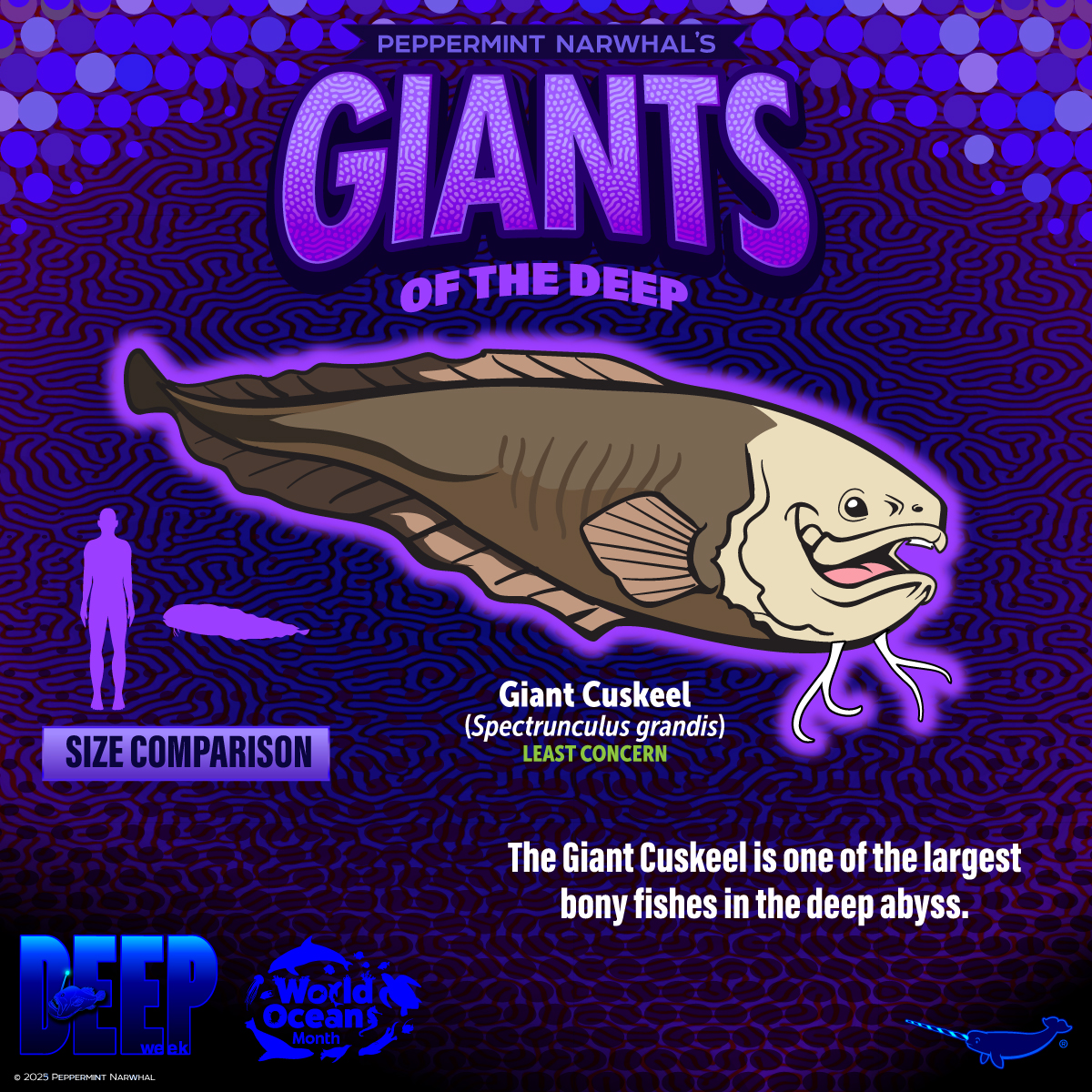
- Introduction to the Giant Cuskeel and its significance in deep-sea biodiversity.
- Detailed exploration of the biology, behavior, and habitat of the Giant Cuskeel.
- Conservation status and ecological importance of deep-sea species.
- The role of scientific research in understanding and preserving deep-sea ecosystems.
- Ways the public can engage in ocean conservation and support biodiversity.
The deep sea, a vast and largely unexplored frontier, is home to innumerable fascinating creatures. Among the more remarkable is the Giant Cuskeel (Spectrunculus grandis), one of the largest bony fishes residing in oceanic depths. This species exemplifies how life has adapted to thrive in extreme environments, offering insights into biodiversity that challenge our understanding of marine biology.
The Giant Cuskeel’s biology is uniquely adapted for the abyss. It thrives at depths where light barely penetrates, pressures are intense, and temperatures are near freezing. The Giant Cuskeel is believed to reach lengths of up to 6 feet, an impressive size that contrasts with the smaller dimensions of most deep-sea fauna. Its elongated body and fused fins streamline its movement, allowing it to navigate efficiently through deep waters. Bioluminescence, a common trait among deep-sea inhabitants, is not actively used by the Giant Cuskeel, a detail that speaks volumes about its hunting strategy. Instead, it relies on advanced sensory organs to detect the faintest movements of prey.
This fish’s habitat is as significant as its biological features. The deep sea remains one of the most isolated and stable ecosystems on Earth. It is here, amidst the darkness and silence, that the real stories of adaptation and survival unfold. The Giant Cuskeel’s environment provides both challenges and opportunities that shape its life cycle. The absence of sunlight and limited availability of food sources necessitate evolutionary adaptations focused on efficiency and endurance. The abyss offers a unique perspective on the intricate balance of marine ecosystems and underscores the need to preserve these environments from increasing threats.
Conservation of deep-sea species like the Giant Cuskeel is of critical concern. The deep sea is not immune to human impact; trawling, mining, and pollution pose significant risks to its fragile habitats. Understanding the ecological roles these species play is essential for maintaining ocean health. The Giant Cuskeel might serve as both predator and prey, influencing the population dynamics of other organisms. Protecting such species is key to conserving the complex food webs in these isolated ecosystems.
Scientific explorations have provided glimpses into the life of the Giant Cuskeel. Advancements in technology, such as deep-sea submersibles and remote-operated vehicles, have revolutionized our ability to study these depths. However, much remains to be learned. Continued research is imperative for unlocking the secrets of such species and formulating effective conservation strategies. Collaborative efforts among scientists globally are required to map unexplored regions and document biodiversity.
Public engagement in ocean conservation is crucial. Awareness initiatives, such as World Oceans Month, aim to educate people and emphasize the importance of protecting marine life. Simple actions, like reducing plastic use, supporting sustainable seafood choices, and advocating for marine protection policies, can have tangible benefits. Engaging with organizations focused on ocean conservation can amplify these efforts.
Merchandise promoting awareness, like those offered by organizations such as Peppermint Narwhal, can further engage the public. They serve as conversation starters, raising awareness about deep-sea species and their conservation needs. Social media platforms also provide spaces for sharing knowledge and inspiring others to participate in crucial preservation efforts.
The Giant Cuskeel represents more than just a biological curiosity. It is a symbol of the deep sea’s potential and the urgent need for conservation. Understanding its life and habitat not only enriches our knowledge but also highlights the interconnectedness of all marine life. As we continue to explore and learn from these depths, the imperative to protect such environments becomes increasingly evident. The preservation of the Giant Cuskeel and its enigmatic world is vital for sustaining the biodiversity that ultimately supports planetary health.
*****
Source Description
GIANTS – The Giant Cuskeel (Spectrunculus grandis) is one of the largest bony fishes in the deep abyss.
GIANTS MERCH: https://www.peppermintnarwhal.com/s/search?q=giants
Happy Deep Week! Stay connected with us for a daily spotlight from the abyss.
June is World Oceans Month!
We will be celebrating World Oceans Month throughout June so stay connected.
Shop
www.peppermintnarwhal.com
International Shoppers (outside of the USA and Canada) visit our store on Etsy:
www.etsy.com/shop/PeppermintNarwhal
