
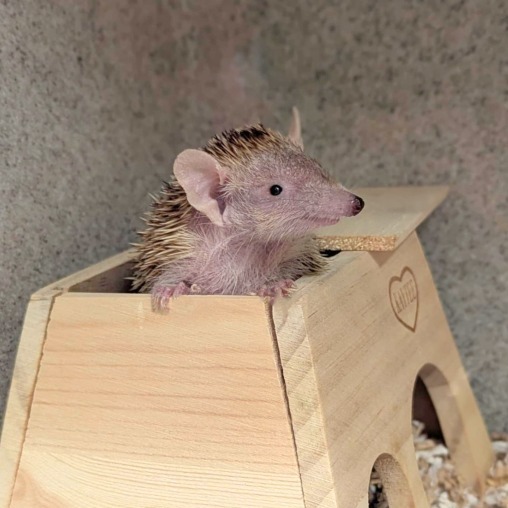
- The biological classification and unique characteristics of the tenrec.
- The evolutionary relationship between tenrecs and elephants.
- The habitat and natural behavior of tenrecs in the wild.
- The role of zoos in conserving tenrec species and promoting awareness.
- The significance of wildlife conservation and the broader implications for biodiversity.
When you encounter the phrase "Good morning from Katika, the tenrec!", many might envision an encounter with a hedgehog-like creature. However, these small mammals are surprisingly more akin to elephants in evolutionary terms, which is a surprising connection in the animal kingdom.
To grasp the wonder of tenrecs, let’s explore the specifics of their biological classification and characteristics. Originating from Madagascar, tenrecs are a diverse group with over 30 species, belonging to the family Tenrecidae. What makes tenrecs fascinating is their variability. They can range vastly in size from just a few grams to over a kilogram, showcasing an extraordinary range of adaptations.
Tenrecs have distinct physical features, including a lengthened snout and small eyes. Unlike hedgehogs, their spines are softer and less uniform. This diversity is mirrored in their ecological roles, as some are insectivorous, while others may have omnivorous diets. They possess the ability to enter torpor, a state similar to hibernation, allowing them to survive during food shortages.
The relationship to elephants is not visible at first glance but emerges in their genetic lineage. Tenrecs belong to the Afrotheria clade, a group composed of elephants, manatees, and other unique mammals. This connection highlights the evolutionary pathways that can yield unexpected familial links, emphasizing the importance of genetic analysis in understanding species’ origins.
In the wild, tenrecs inhabit the varied landscapes of Madagascar, from rainforests to montane forests. Their adaptability is essential for survival in environments that can be both lush and austere. They are primarily nocturnal and often solitary, relying on acute senses to navigate and hunt.
Their role within the ecosystem is significant. By controlling insect populations and serving as prey for larger animals, tenrecs maintain balance within their habitats. Their behavior and adaptations reveal insights into the importance of ecological diversity.
Zoos play a vital role in the preservation and study of tenrec species, like Katika. Through captive breeding programs and public educational initiatives, zoos highlight the importance of conserving lesser-known species. The presence of tenrecs in zoos aids scientific research and fosters a deeper connection between visitors and the natural world.
The sphere of wildlife conservation extends beyond individual species like tenrecs, touching on broader biodiversity challenges. Preserving unique species is crucial in maintaining ecological balance and diversity. Each creature contributes to its ecosystem’s stability, and tenrecs are no exception.
Conservation efforts require a strategic approach. Protecting habitats and mitigating human impact are fundamental. While Madagascar faces deforestation pressures, conservationists work relentlessly to sustain its natural heritage. Awareness programs and global cooperation are essential pillars supporting these endeavors.
Interesting ecological insights emerge from studies of animals like tenrecs. They teach us about adaptation, resilience, and the intricate web of life. Tenrecs’ survival adaptation strategies inspire conservation techniques, showing how life can endure under challenging circumstances.
In the grand tapestry of biodiversity, species such as tenrecs remind us of nature’s complexity and its interconnected networks. By appreciating and studying tenrecs, along with their surprising evolutionary kinship with elephants, we gain perspective on the interwoven fabric of life. Preserving this biodiversity is a legacy for future generations, ensuring the planet’s vitality.
Good morning from Katika, the tenrec, becomes more than just a greeting. It’s a call to acknowledge, appreciate, and protect the diverse and dynamic natural world we share.
*****
Source Description
Good morning from Katika, the tenrec!
Did you know that, despite their appearance, tenrecs are more closely related to elephants than they are to hedgehogs? 🦔👀
Photo Credit: Keeper Marissa G.
