
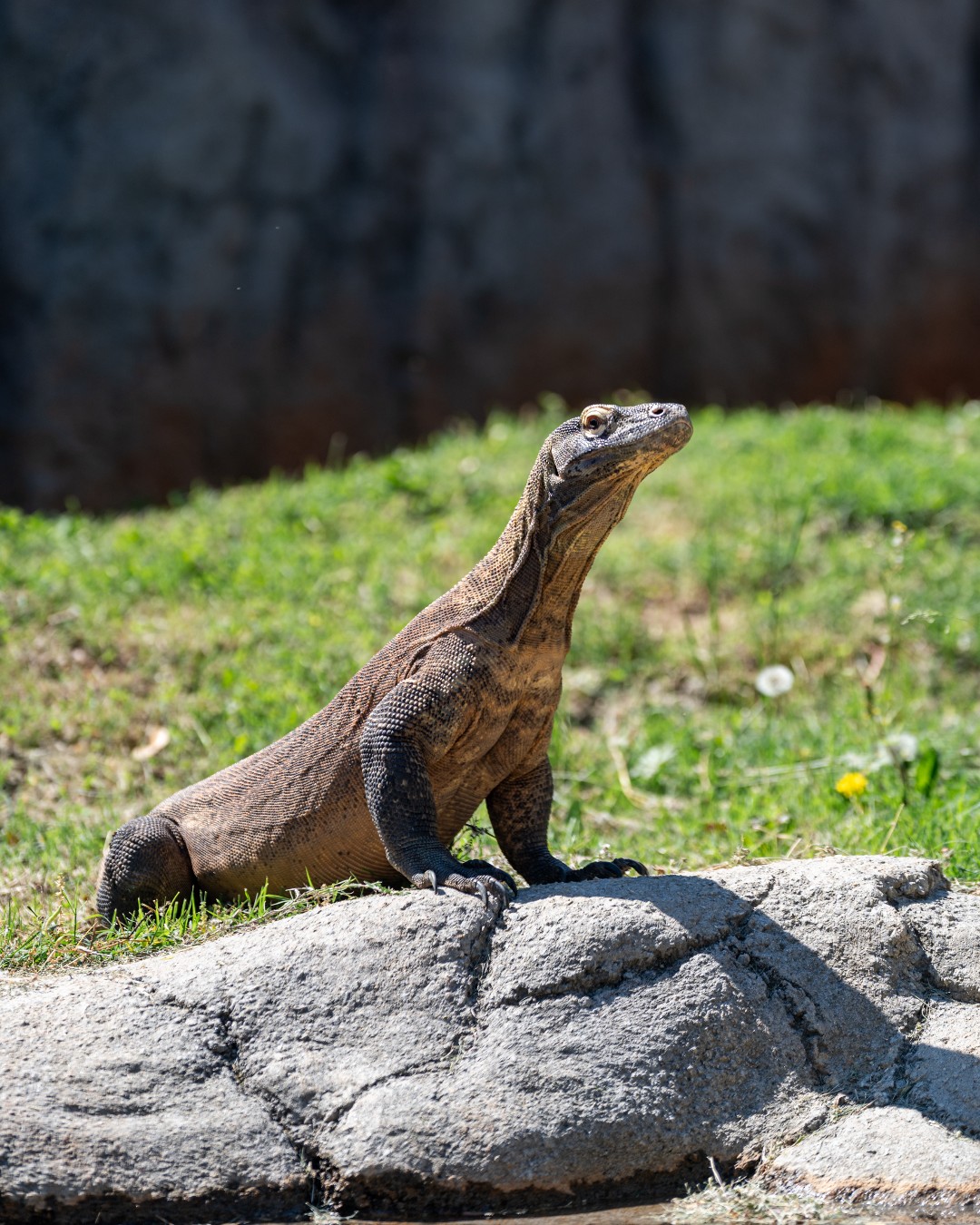
- Introduction to Hannibal and his first steps into the outdoor exhibit, emphasizing his behavior and natural instincts.
- Exploration of Komodo dragons’ habitat needs and behavioral characteristics crucial in zoo management.
- Discussion on the significance of zoos in wildlife conservation and breeding programs for Komodo dragons.
- Insights into the ecological role of Komodo dragons in their natural environment and how zoos aid in replicating these conditions.
- Interaction opportunities for zoo visitors and the educational value of observing Komodo dragons in captivity.
Today marks an exciting milestone for Hannibal, our Komodo dragon, as he explored his outdoor exhibit for the first time. His exploration was not just a spectacle but also a crucial part of our ongoing commitment to providing environments that stimulate the natural behaviors of our residents. Observations of Hannibal’s movements, reactions, and interactions with his new space give us invaluable insights into his well-being and adaptation process.
Komodo dragons, native to the Indonesian islands, require specific conditions that mimic their natural surroundings. These reptiles are known for their powerful limbs and keen sense of smell. In crafting Hannibal’s exhibit, we focused on factors like temperature regulation, terrain diversity, and environmental enrichment. It’s vital to replicate aspects of their natural habitat to promote physical activity and mental engagement. Designing such an environment involves careful consideration of their predatory instincts and social behaviors.
Zoos play an essential role in the conservation of species like the Komodo dragon. With populations dwindling in the wild due to habitat loss and poaching, zoos become refuges for breeding programs and genetic diversity preservation. Hannibal’s exhibit is also part of a broader conservation effort to spark awareness and educate the public about the challenges facing these magnificent creatures. By understanding their needs better, we can contribute significantly to their preservation.
In their natural habitats, Komodo dragons are apex predators and crucial to maintaining ecological balance. They control prey populations and scavenge carcasses, which aids in nutrient cycling. Our goal is to emulate these dynamics within zoo environments, fostering natural behaviors and encouraging similar ecological interactions. By doing so, we help maintain not just the physical health of the Komodo dragons, but their mental acuity as well.
For visitors, observing Hannibal in his new setting offers more than just a chance to view a living dragon. It provides an educational platform to learn about Komodo dragons’ roles in the ecosystem and the importance of conservation efforts. Engaging with wildlife this way fosters a deeper understanding and appreciation, highlighting zoos as vital centers for conservation, education, and scientific research.
Thus, Hannibal’s debut in his outdoor exhibit symbolizes more than just a new chapter for him. It reiterates our dedication to the species and underscores the instrumental role zoos play in the conservation and awareness of endangered species globally.
*****
Source Description
Today, Hannibal, our Komodo dragon, stepped into his outdoor exhibit for the very first time, and he wasted no time exploring every inch! Come say hi and see him in action next time you visit 🦎
