
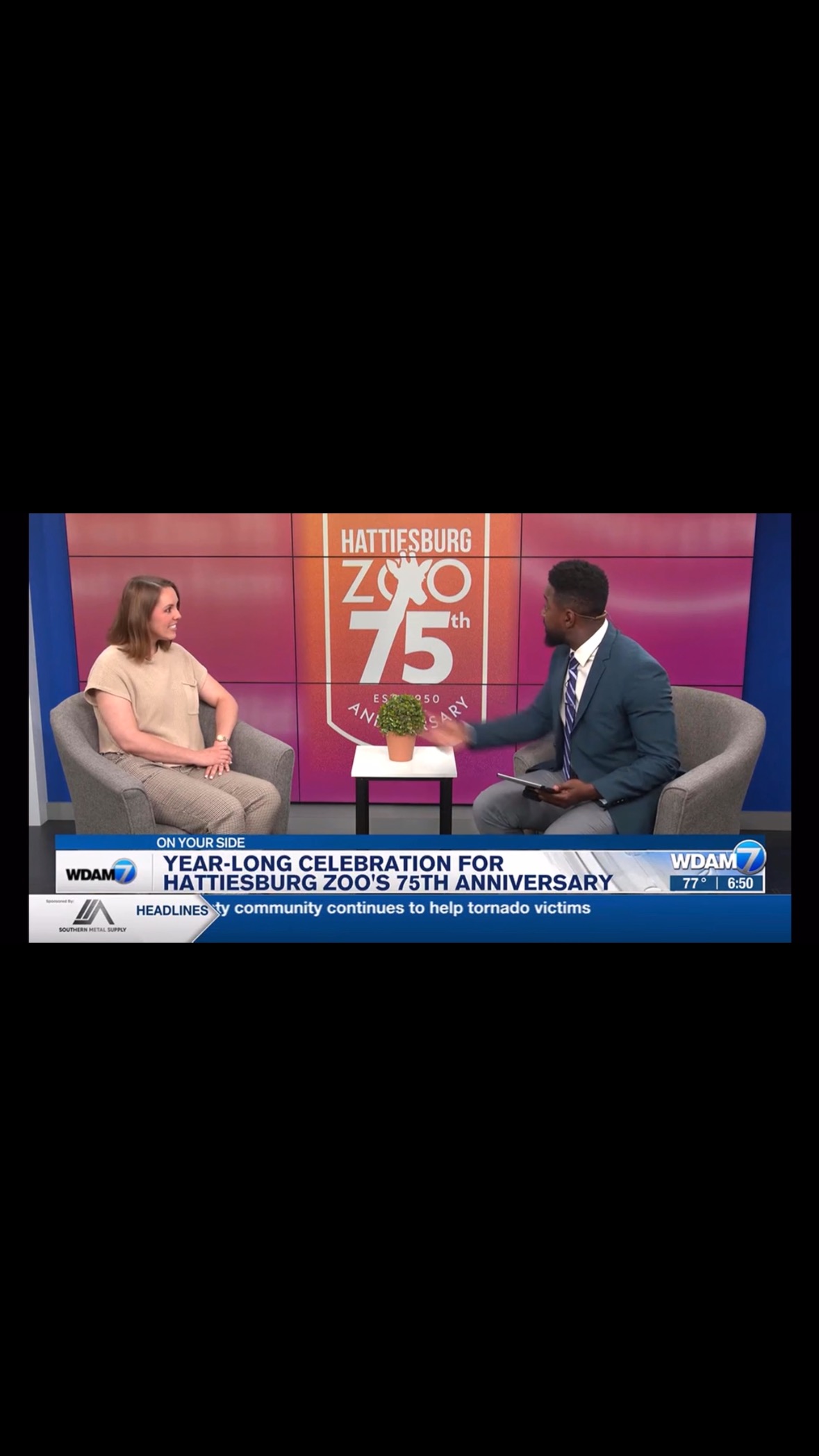
- Hattiesburg Zoo has been part of the community since 1950, and the 75th anniversary campaign invites guests to contribute personal stories and photos that document that history.
- The WDAM feature and Instagram clip help expand public awareness of the anniversary project and the role of zoo outreach in community engagement.
- Zoo history matters because public institutions can preserve local memory, connect generations, and strengthen support for animal care and conservation.
- Submitted stories and images can become part of a living archive, and published entries may enter a drawing for a behind-the-scenes zoo tour for four people.
- Community participation supports education, conservation awareness, and a stronger connection between visitors and the animals and staff at Hattiesburg Zoo.
Hattiesburg Zoo has long held a place in the daily life of the Pine Belt. Since 1950, it has served as a local destination for family visits, school outings, and first experiences with wildlife. The current 75th anniversary effort places that history at the center of a community-wide memory project. The call is direct and practical. People are invited to submit a short story of 500 words or less and a photo by email at zoostories75@gmail.com or through the zoo’s website at https://hattiesburgzoo.com. Guests who have photographs but no written account are also encouraged to send those images. Published entries will be entered into a drawing for a behind-the-scenes zoo tour for a group of four.
The recent WDAM appearance helped bring wider attention to the campaign. Gabrielle Nordan represented the zoo and spoke on its behalf, giving the community a public reminder that the anniversary is not just a celebration of age. It is also a record-keeping effort. Zoos often preserve the visible part of their mission through exhibits and programming. They also hold less visible history in visitor memories, staff experiences, and old photographs. A project like this collects that social history before it disappears from living memory. That matters in any city, but especially in a place where a zoo has supported community identity for 75 years.
The Hattiesburg Zoo anniversary project is educational because it shows how institutions can use storytelling to document change over time. A zoo is not a static property. Animal collections change. Exhibits are renovated. Conservation priorities shift. Animal care standards advance as veterinary science develops. Public expectations also change. A story from a visitor in the 1960s may describe a different zoo experience than one from a family visiting today. Both accounts are useful. Together they create a timeline of how public zoological parks evolve along with the communities they serve.
That historical perspective is especially important in zoology. Modern zoo management relies on animal welfare science, behavioral assessment, preventive medicine, nutrition, reproductive planning, and habitat design. Earlier zoo models often focused more on display than on welfare. Over time, best practices have shifted toward spaces that promote species-appropriate behavior and reduce stress. Visitor memories from different decades can reflect those changes. A long-time resident may remember older exhibit layouts. A younger guest may remember educational signage, enrichment devices, or conservation messaging. These comparisons help people understand progress in animal care.
The 75th anniversary also highlights the public education role of zoos. Good zoos do more than house animals. They translate biological science into daily learning. They help children and adults understand anatomy, diet, social behavior, adaptation, and species threats. They can make abstract conservation issues concrete. A child who sees an otter, a reptile, or a bird in person may later remember that animal when learning about freshwater habitat loss, invasive species, or illegal wildlife trade. That connection between direct experience and scientific understanding is one reason zoos remain relevant in conservation education.
The Hattiesburg Zoo story collection is also a form of participatory history. Many communities rely on archives, museums, and newspapers to preserve records. Personal stories add another layer. They capture emotion, context, and detail that formal records often miss. One person may describe a first date at the zoo. Another may recall a school field trip. A parent may remember taking a child to see an animal for the first time. These accounts are valuable because they show how the zoo has functioned as a place of learning, recreation, and family tradition. A photograph can add evidence of exhibit design, visitor style, local fashion, and even landscape changes over time.
From a conservation communications standpoint, campaigns like this are useful because they deepen public attachment. People are more likely to support animal care and habitat protection when they feel personally connected to an institution. Emotional connection can lead to stronger attendance, more volunteer interest, greater program participation, and more donations. It can also increase public attention to species loss, habitat fragmentation, and the need for responsible wildlife stewardship. A memory project gives the zoo a way to strengthen that bond through shared experience rather than through abstract messaging alone.
The behind-the-scenes tour prize also has educational value. Visitors often want to know how zoos operate beyond the guest path. A behind-the-scenes experience can show food preparation, keeper routines, enrichment planning, quarantine areas, and veterinary support systems. That visibility helps the public understand that animal care involves routine science, documentation, and coordination. It is labor-intensive work. Keepers monitor appetite, weight, behavior, and social dynamics. Veterinarians and animal care teams track health indicators. Facilities staff maintain enclosures, filtration systems, and safety barriers. The prize therefore reinforces the zoo’s educational mission by connecting public storytelling with real animal care practices.
The anniversary effort also invites reflection on how zoos contribute to local economies and civic life. A zoo can support tourism, school programming, seasonal events, and family recreation. It can become a consistent gathering place across generations. When institutions reach a milestone like 75 years, they also signal durability and public trust. That trust is earned through safe operations, clear communication, and responsible care. The call for stories helps preserve that trust by involving the community in the celebration rather than keeping it internal.
The social value of the Hattiesburg Zoo can be measured in both data and memory. Attendance records, educational program numbers, and animal care outcomes describe institutional performance. Stories and photographs describe lived experience. Together they present a fuller picture. A zoo anniversary project benefits from both. It creates a public archive that future staff, researchers, and residents may use to understand how the zoo shaped local life. It also honors the people who helped build that history through visits, support, and attention.
The Instagram reel and WDAM coverage also show how modern outreach works. Social media and broadcast news extend the reach of a local campaign. They make it easier for former visitors, alumni, and out-of-town families to participate. This matters because many people have moved away but still retain strong ties to childhood places. A digital submission process allows them to share memories without returning in person. That accessibility broadens the archive and reflects current communication habits. It also helps the Hattiesburg Zoo connect with audiences across age groups.
At a scientific level, zoos have a place in conservation only when they combine education with responsible animal management. Public institutions must keep species-specific needs in focus. That means appropriate enclosure size, climate considerations, diet formulation, environmental enrichment, and veterinary oversight. It also means communicating honestly about conservation status and habitat pressures. A community history project does not replace that work. It supports it by building public interest and goodwill. When people care about a place, they are more likely to care about the animals and conservation goals associated with it.
The anniversary invitation is also notable for its simple submission rules. A 500-word limit encourages concise, accessible writing. That choice helps a broad range of people participate, including children, older adults, and those who may feel unsure about formal writing. The option to submit a photo alone further lowers barriers. In many heritage projects, ease of participation determines success. A complicated submission process can reduce contributions. A straightforward request increases the chance that important memories are captured while they are still available.
For educators, this campaign offers a useful classroom or family discussion topic. Students can examine how a zoo changes over time and why community institutions collect oral history. They can compare past and present exhibit practices. They can also study how zoos communicate conservation issues to the public. This makes the Hattiesburg Zoo anniversary more than a local event. It becomes a practical example of how zoology, public history, and environmental education intersect.
The celebration also reinforces the idea that conservation begins with attention. People who notice animals, ask questions, and remember experiences are more likely to value biodiversity. A first visit to a zoo may spark interest in birds, mammals, reptiles, or amphibians. Later, that interest may grow into coursework, volunteering, habitat restoration, or support for wildlife protection. Many conservation careers begin with a single memorable encounter. A local zoo can play that role by making science visible and accessible.
The Hattiesburg Zoo anniversary project gives residents a chance to record that connection in a lasting way. It honors the institution’s 75-year presence. It preserves stories that might otherwise fade. It recognizes the role of staff, guests, and media partners like WDAM in sustaining public awareness. It also shows that a zoo is more than an attraction. It is a site of memory, education, and civic value. For anyone who has walked its paths, seen an animal for the first time, or shared a family day there, this is an opportunity to add a personal piece to a much larger history.
*****
Source Description
Did you catch us on WDAM yesterday? The Hattiesburg Zoo, a beloved part of many lives since 1950, invites you to share your memories for a special project to celebrate our 75th anniversary!
Submit a story (500 words or less) and photo via email at zoostories75@gmail.com or on our website, https://hattiesburgzoo.com.
If you have zoo photos but no story, send those too! Published entries will be entered into a drawing for a Behind-the-Scenes Zoo Tour for a group of four. 🎉
Special thanks to Gabrielle Nordan for representing us so well!
