
- Understanding the properties of Oobleck
- Exploring the mechanics of Spot’s movement
- How Spot’s design interacts with non-Newtonian fluids
- The implications of Spot walking on Oobleck for robotics
- Applications of similar technologies in other fields
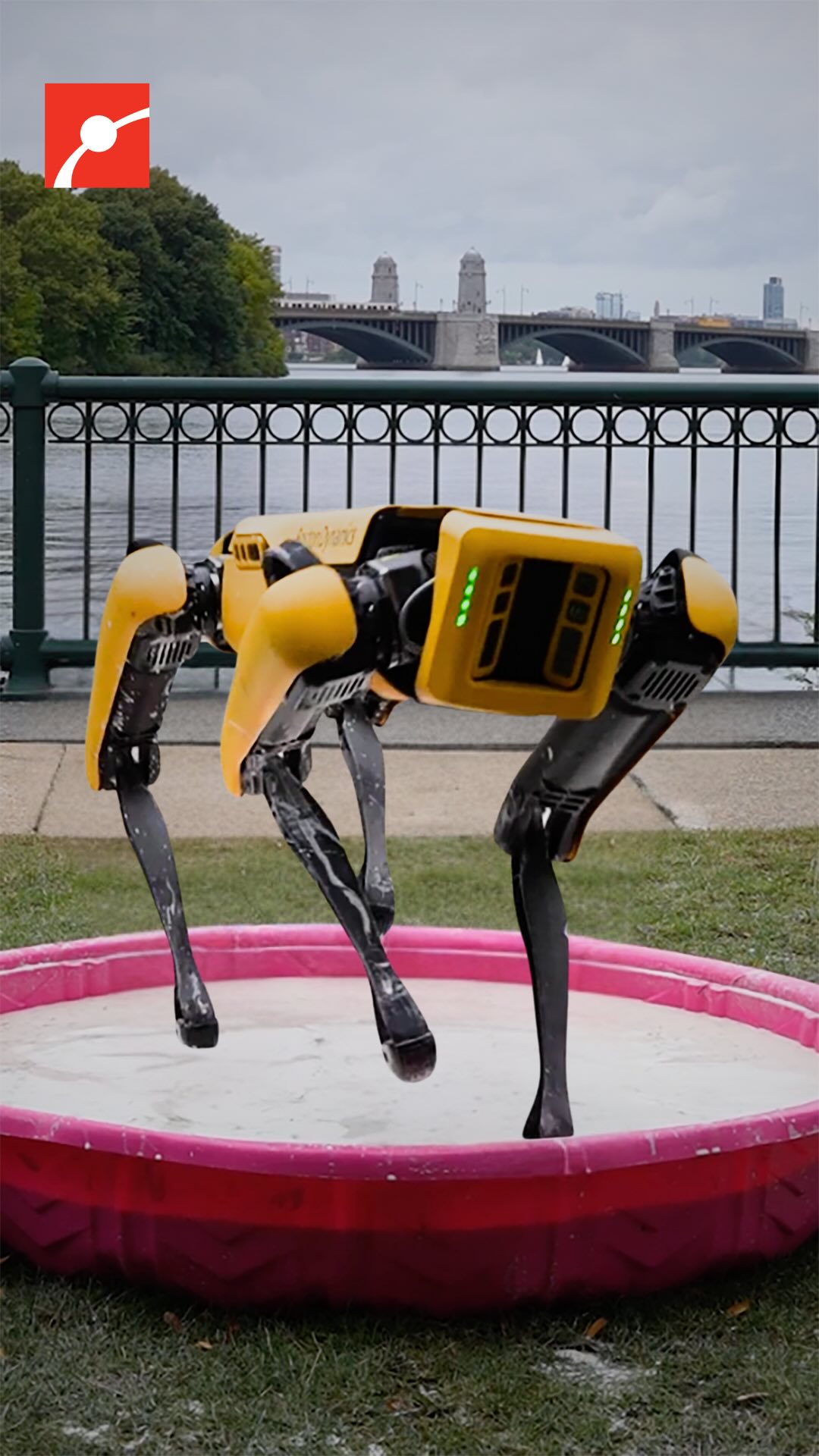
Oobleck is a fascinating substance known for its non-Newtonian fluid properties. This means that its viscosity changes under stress or pressure. When you apply a force, Oobleck behaves like a solid. However, when left undisturbed, it flows like a liquid. This unique behavior allows Oobleck to create interesting interactions with objects, including Boston Dynamics’ robot dog, Spot.
Spot is engineered to adapt to different terrains, showcasing its versatility in locomotion. Its ability to traverse Oobleck highlights an important aspect of fluid dynamics and robotics. Spot’s design includes specialized sensors and algorithms that help it maintain balance and locomotion stability. As Spot walks, it exerts enough force on the Oobleck, which prevents it from sinking. This is fundamentally different from a heavy object like a kettlebell, which would sink because of its inability to displace the fluid effectively while remaining stationary.
The mechanics of Spot’s movement involve a variety of sophisticated technologies. Its legs are articulated like those of a real dog, allowing for dynamic movement patterns. Spot can adjust its speed, gait, and weight distribution. When Spot walks on Oobleck, the rapid movement of its legs creates a force sufficient to maintain its position on the fluid’s surface. This action generates enough pressure to keep the Oobleck from flowing beneath it immediately. The combination of speed and leg placement allows Spot to effectively and safely traverse this interesting fluid.
Spot’s interaction with non-Newtonian fluids like Oobleck also reflects broader principles in robotics. The algorithmic adjustments Spot makes while walking help in maintaining balance, even on unstable surfaces. The sensors in Spot collect real-time data, enabling the robot to adapt its movements continuously. These technologies lead to insights that extend beyond merely walking on Oobleck. They represent progress in creating machines that can navigate unpredictable environments.
Moreover, Spot’s ability to walk on Oobleck can have implications across various sectors, including industries, research, and even societal applications. Robotics that can traverse challenging terrains could assist in search and rescue operations or be used in construction and maintenance in areas difficult for humans to reach. Understanding how robots can adapt to non-Newtonian fluids could influence the development of new materials or fluid applications in technology.
In summary, Spot’s capability to walk on Oobleck serves as a compelling example of how robotic technology can interact with complex physical properties. It demonstrates the engineering principles at play in the design of robotic systems and offers a glimpse into the potential future applications of this technology. Spot exemplifies how careful engineering can produce machines capable of remarkable feats, pushing forward the boundaries of what robots can achieve.
*****
Source Description
How does @BostonDynamicsOfficial’s robot dog Spot walk on oobleck without sinking?
Oobleck is a non-Newtonian fluid, meaning it acts like a solid under pressure. Spot’s constant motion creates enough force to keep it above the surface, unlike a still kettlebell, which sinks.
