
- Understanding the Tesla Coil’s Functionality
- Historical Context of the Tesla Coil
- Practical Applications Today
- Scientific Principles Behind Wireless Energy Transfer
- Safety Considerations with Tesla Coils
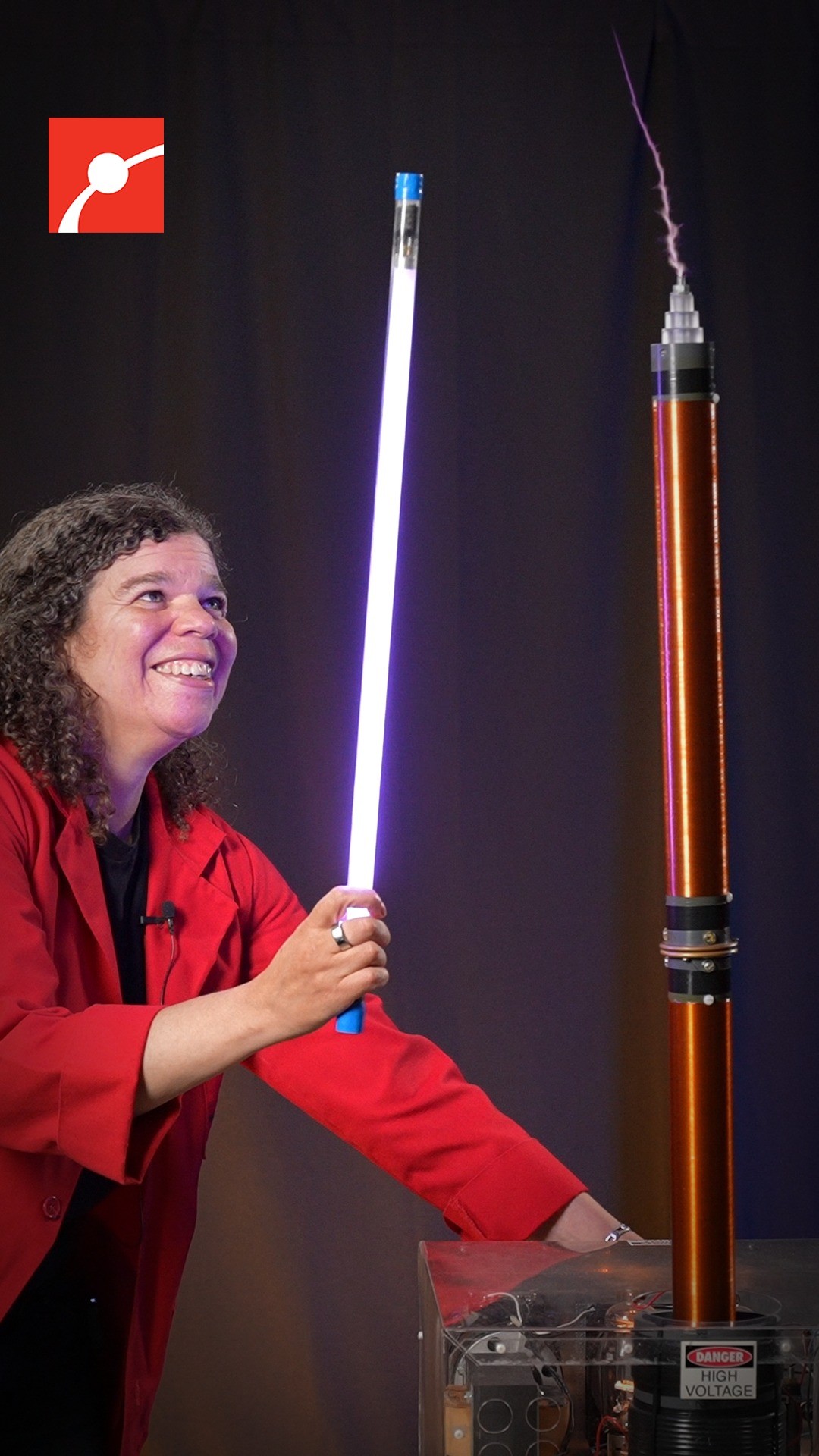
The glowing light bulb without being plugged in is a captivating demonstration of the Tesla coil, an invention attributed to Nikola Tesla in 1891. This device illustrates fundamental principles of electricity, magnetism, and energy transfer. Museum Educator Jeannine explains how it operates, shedding light on both its historical significance and contemporary applications.
Understanding the Tesla Coil’s Functionality
The Tesla coil is a transformer designed to produce high-voltage, low-current, high-frequency alternating current electricity. It generates electric arcs and produces high-voltage electrostatic fields. At the core of its operation lies the principle of resonance. When electricity oscillates at a specific frequency, it creates a standing wave in the secondary coil, allowing the energy to be transferred without direct contact between the power source and the bulb.
When a Tesla coil is activated, it produces an electric field surrounding it. This surrounding field can induce voltage in nearby objects, such as a light bulb. The induced voltage causes the gas inside the bulb, usually noble gases like neon or argon, to emit light. Thus, the bulb glows despite not being directly wired to an electric source.
Historical Context of the Tesla Coil
Nikola Tesla invented the Tesla coil in 1891 during his extensive research on high-frequency electrical currents. His experiments aimed to explore wireless transmission of electricity, a concept ahead of its time. Tesla envisioned a world where power could be transmitted without wires, paving the way for modern technologies, including radio, Wi-Fi, and Bluetooth.
Despite the revolutionary potential of Tesla’s work, it faced skepticism and limited adoption during his lifetime. However, in recent years, interest in Tesla coils has surged, particularly in educational settings where demonstrations serve to illustrate complex scientific concepts. The revival of interest underscores Tesla’s influence on modern technology and highlights the significance of his inventions in shaping our current understanding of electricity.
Practical Applications Today
Tesla coils have found broader applications beyond demonstrations in museums and classrooms. They play a significant role in various fields, including telecommunications and medicine. In telecommunications, Tesla coils have influenced developments in wireless transmission technologies. The principle of resonance resonates across platforms that rely on wireless communication.
Moreover, the technology behind Tesla coils is utilized in various medical devices, such as electrotherapy equipment and certain imaging machines. These applications showcase how the underlying principles can be harnessed for advancement in different sectors. The ability to manipulate high-voltage electricity safely and effectively finds utility in applications that can improve quality of life and enhance medical practices.
Scientific Principles Behind Wireless Energy Transfer
The phenomenon by which light bulbs illuminate without being physically connected to a power source is rooted in the scientific concepts of electromagnetic fields and energy transfer. When a Tesla coil generates high-frequency alternating current, it creates a rapidly oscillating electromagnetic field. This field can induce an electric current in nearby conductive materials.
The light bulb glows not because of direct electrical connection but due to the high-voltage field produced by the Tesla coil. This inductive coupling allows energy to be transferred between the coil and the bulb through a process known as electromagnetic induction. Basic physics principles govern this phenomenon. The brilliance comes from the ionization of gas within the bulb, which occurs due to the induced current.
Safety Considerations with Tesla Coils
While Tesla coils present fascinating opportunities for learning and experimentation, safety is crucial. High-voltage electricity can lead to severe injuries or even fatalities if not handled correctly. Proper precautions should be taken when operating a Tesla coil, including wearing insulated gloves, maintaining a safe distance, and ensuring that the surrounding environment is free from flammable materials.
Educators demonstrating Tesla coils must adhere to strict safety guidelines. Ensuring that audiences understand the inherent risks is vital to promoting safe learning environments. Further, individuals experimenting with Tesla coils should receive proper training and supervision, emphasizing that even though the coils are a learning tool, they can also be dangerous if mismanaged.
The glowing of a light bulb without being plugged in is not merely an impressive display of electric magic; it is rooted in significant scientific principles laid out over a century ago. Tesla’s visionary ideas continue to influence our modern electrical systems and wireless technologies, reminding us of the importance of innovation in shaping the future. By understanding the scientific foundation behind the Tesla coil, we gain insight not only into the past but also into the countless possibilities for future technological advancements.
*****
Source Description
How is this light bulb glowing without being plugged in? 💡
Museum Educator Jeannine explains how this electrifying Tesla coil works—Tesla’s 1891 invention that STILL powers Wi-Fi, Bluetooth, and more today.
