
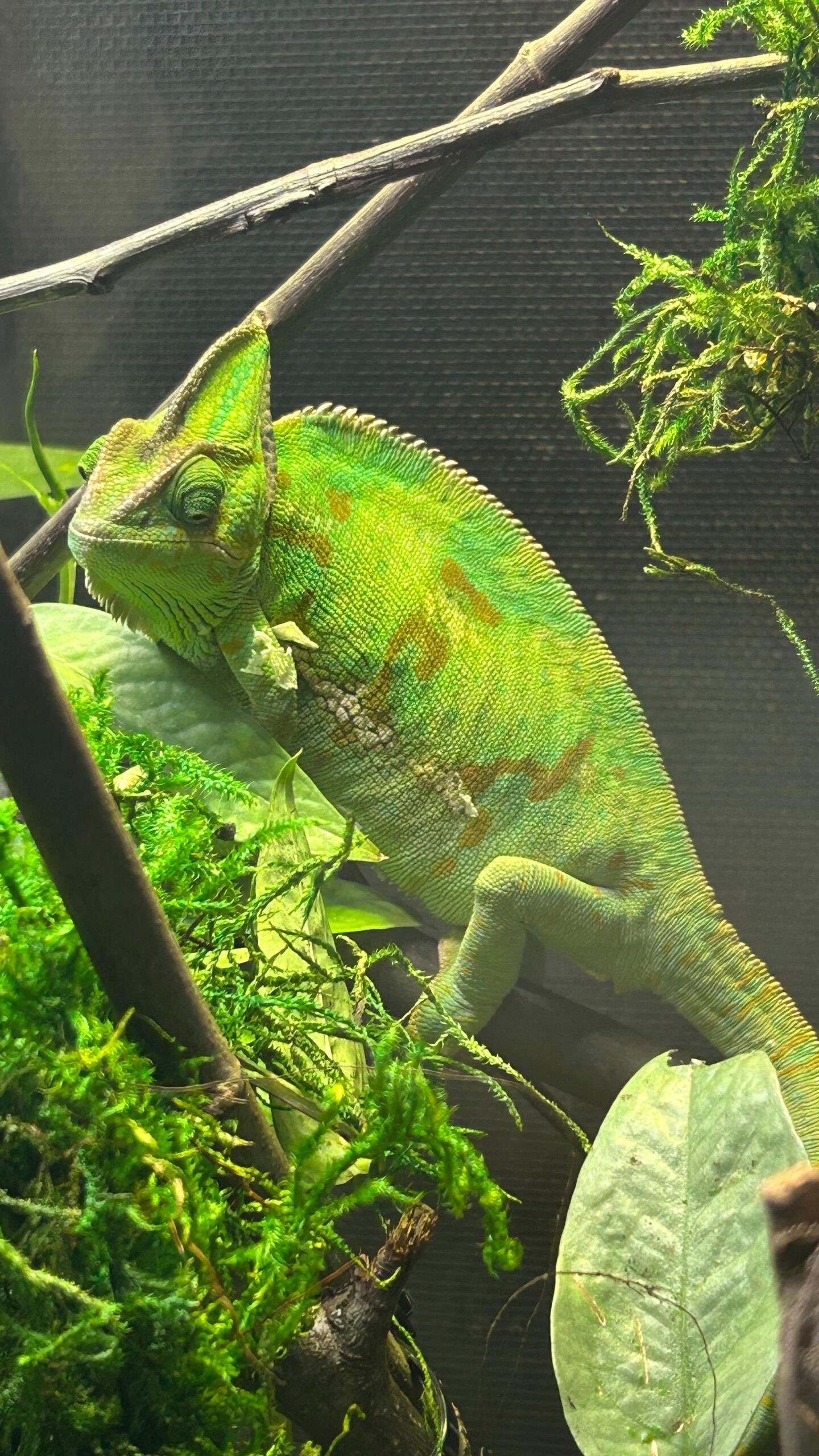
- Overview of the biology and ecology of veiled chameleons
- Meet Cleo: her background and characteristics
- Essential care requirements for veiled chameleons
- Responsible pet ownership and conservation
- The role of reptiles in biodiversity and ecosystems
Veiled chameleons, known scientifically as Chamaeleo calyptratus, are fascinating reptiles that capture the attention of both casual observers and zoology enthusiasts. They are native to the Arabian Peninsula, particularly Yemen and Saudi Arabia. These chameleons are distinct for their ability to change color, a feature that serves multiple purposes, including camouflage, communication, and temperature regulation. Their unique anatomy, including a prehensile tail and independent eye movement, plays a critical role in their survival in various habitats.
Cleo, specifically, is a captivating representative of her species. At four years old and weighing about 125 grams, she demonstrates the typical size and weight for a healthy veiled chameleon. Her coloration is striking, with vibrant greens and subtle yellows that not only reflect her health but also allow her to interact seamlessly with her environment. The color changes of veiled chameleons can range widely, as they often shift shades to match their surroundings, indicating mood and comfort. Although these processes might seem simple, they involve complex physiological and biochemical mechanisms.
In discussing Cleo’s characteristics, it’s imperative to note her exemplary cricket-catching skills. Veiled chameleons are insectivorous and rely heavily on live prey, which includes crickets. Cleo’s precision and speed when targeting her food demonstrate her specialized hunting abilities. Her long, sticky tongue can extend to capture prey with great accuracy, making her an efficient hunter and an exemplary model of how these reptiles thrive in the wild.
Caring for Cleo requires knowledge of her environmental needs. As a pet owner, it’s crucial to recreate her natural habitat as closely as possible. A well-structured environment involves appropriate temperature gradients, humidity levels, and access to UVB lighting to support her metabolic functions. For veiled chameleons, a temperature gradient of 75°F to 85°F in the cooler zones and 95°F to 100°F basking spots is ideal. Given their sensitivity to humidity, maintaining levels between 40% and 70% is essential. Regular misting, along with a proper water source, can help achieve this balance.
Feeding Cleo properly also plays a crucial role in her overall health. A varied diet rich in gut-loaded insects ensures she receives necessary vitamins and minerals. Crickets are a staple, but other insects like mealworms, roaches, and silkworms can provide nutritional variety. Supplements, particularly calcium and multivitamins, should be administered to ensure Cleo thrives.
As a responsible pet owner, promoting wildlife conservation should remain a key focus. Many veiled chameleons are collected from the wild for the pet trade, contributing to population declines in their native habitats. Supporting ethical breeders and advocating for captive-bred pets help reduce harvesting pressures on wild populations. Moreover, fostering awareness about habitat destruction and sustainable practices can contribute to the long-term survival of these reptiles in their natural settings.
The ecological significance of reptiles, such as veiled chameleons like Cleo, cannot be overstated. They occupy crucial roles in their ecosystems, acting as both predators and prey. These interactions help maintain balanced food webs and contribute to biological diversity. As ectothermic creatures, reptiles also play vital roles in energy transfer and nutrient cycling within their habitats.
In summary, Cleo exemplifies the beauty and complexity of veiled chameleons. Understanding her biology and ecology enhances our appreciation for these reptiles. This knowledge also fosters a deeper commitment to their care and the broader implications of wildlife conservation. Through informed actions and responsible practices, we can actively contribute to preserving these remarkable creatures and their vital roles in their ecosystems.
*****
Source Description
Meet Cleo, our gorgeous new veiled chameleon! She’s 4 years old, weighs 125 grams, and is a deadshot when it comes to catching crickets!
Thanks to Keeper Johnny for the 🎥
