
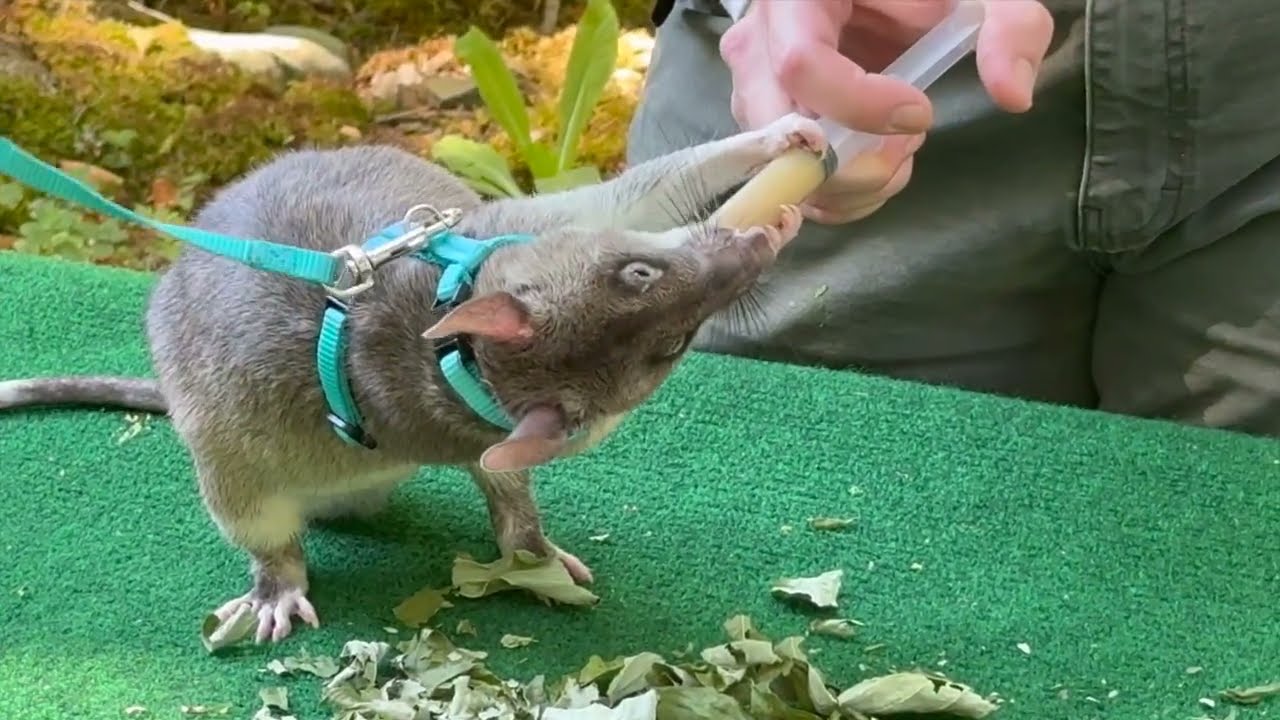
- Overview of Giant East African Savannah Pouched Rats’ anatomy and characteristics.
- Behavioral patterns and ecological role in their natural habitat.
- Importance in scientific research and conservation efforts.
- Contributions of these rats to human society, including landmine detection.
- Challenges and considerations in zoo management and captive breeding.
Giant East African Savannah Pouched Rats, scientifically known as Cricetomys ansorgei, are fascinating creatures that have intrigued both researchers and animal enthusiasts. Native to the savannahs of East Africa, these rodents display a range of unique traits and have captured attention for their remarkable contributions to both ecosystems and human societies.
Anatomy and Characteristics
Giant East African Savannah Pouched Rats are aptly named for their distinctive cheek pouches. These pouches can hold a large quantity of food or materials, assisting them in food collection and transportation. On average, they measure about 24-36 inches in length, including their tail, and weigh between 2 to 4 pounds. Their coarse fur, typically gray or brown, provides camouflage within their natural habitat, offering protection from predators.
Equipped with sharp claws and powerful hind legs, these rats are adept diggers. Their sensory capabilities are highly developed, particularly their sense of smell, which surpasses many other rodents. This olfactory acuity allows them to locate food sources and detect danger efficiently.
Behavior and Ecological Role
In the wild, Giant East African Savannah Pouched Rats are primarily nocturnal. During the day, they retreat to underground burrows to escape the heat and predators. Their diet is omnivorous, comprising seeds, fruits, insects, and small vertebrates. This varied diet plays a critical role in balancing the ecosystem by dispersing seeds and controlling insect populations.
Socially, these rats exhibit a semi-territorial nature. They can be solitary but occasionally share territories and resources with other rats, especially during breeding seasons. Communication among them involves a series of vocalizations, scents, and tactile interactions, vital for mating and territory defense.
Importance in Science and Conservation
These rats have garnered international interest for their contribution to scientific research, particularly in the detection of landmines and tuberculosis. Organizations like APOPO have leveraged their keen sense of smell to train them in identifying explosive devices and detecting TB bacteria in samples. This not only highlights their intelligence but also their potential to save human lives and help conserve wildlife habitats affected by landmines.
The conservation of Giant East African Savannah Pouched Rats is crucial. Habitat destruction, due to agricultural expansion and deforestation, threatens their natural ecosystems. Conservation efforts are underway, focusing on habitat preservation and the study of their behavior and genetics to enhance understanding and improve captive breeding programs.
Role in Human Society
Beyond conservation and ecological importance, these rats have significantly impacted human society. Their training in detecting landmines has proven cost-effective and efficient, given their size, weight, and olfactory skills. This innovative use has been instrumental in clearing mined areas, thus allowing safe restoration and use of land in post-conflict regions.
Moreover, their contributions to public health through tuberculosis detection show potential for broader applications in disease control. Given the growing interest in their capabilities, research is ongoing to explore additional ways these animals can benefit human societies globally.
Zoo Management and Captive Breeding
Managing Giant East African Savannah Pouched Rats in captivity poses unique challenges. Although they are adaptable, providing an environment that mimics their natural habitat is crucial to their well-being. This includes ensuring adequate space for digging and exploration, along with a diet that replicates their nutritional needs in the wild.
Captive breeding programs have focused on maintaining genetic diversity and understanding their behavior to improve breeding success rates. These programs are vital for sustaining populations in the face of declining wild numbers. Education and public awareness efforts in zoos are also essential in highlighting their role in biodiversity and conservation.
In summary, Giant East African Savannah Pouched Rats embody a unique intersection of biological intrigue and practical application. From their anatomical features to their critical roles in ecosystems and society, they continue to captivate the attention of scientists, conservationists, and the general public alike. As we deepen our understanding of these remarkable creatures, we unlock insights that can foster collaboration between human needs and wildlife conservation.
*****
Source Description
Which animal at the zoo has the keenest nose? Asian elephants, African painted dogs or black bears probably come to mind — but a new pair of sniffers might have them beat. Capri and Sun are East African savannah pouched rats, a species known throughout the world for its smarts, size and sense of smell. The duo arrived at the zoo earlier this year, and they’re already showing off their remarkable skills to visitors.
“Pouched rats are very intelligent, and they have some of the best noses in the world,” said Eliza Lee, who oversees the zoo’s ambassador animal area. “In Africa, these rats are trained to sniff out landmines and signs of illegal wildlife trafficking.”
