
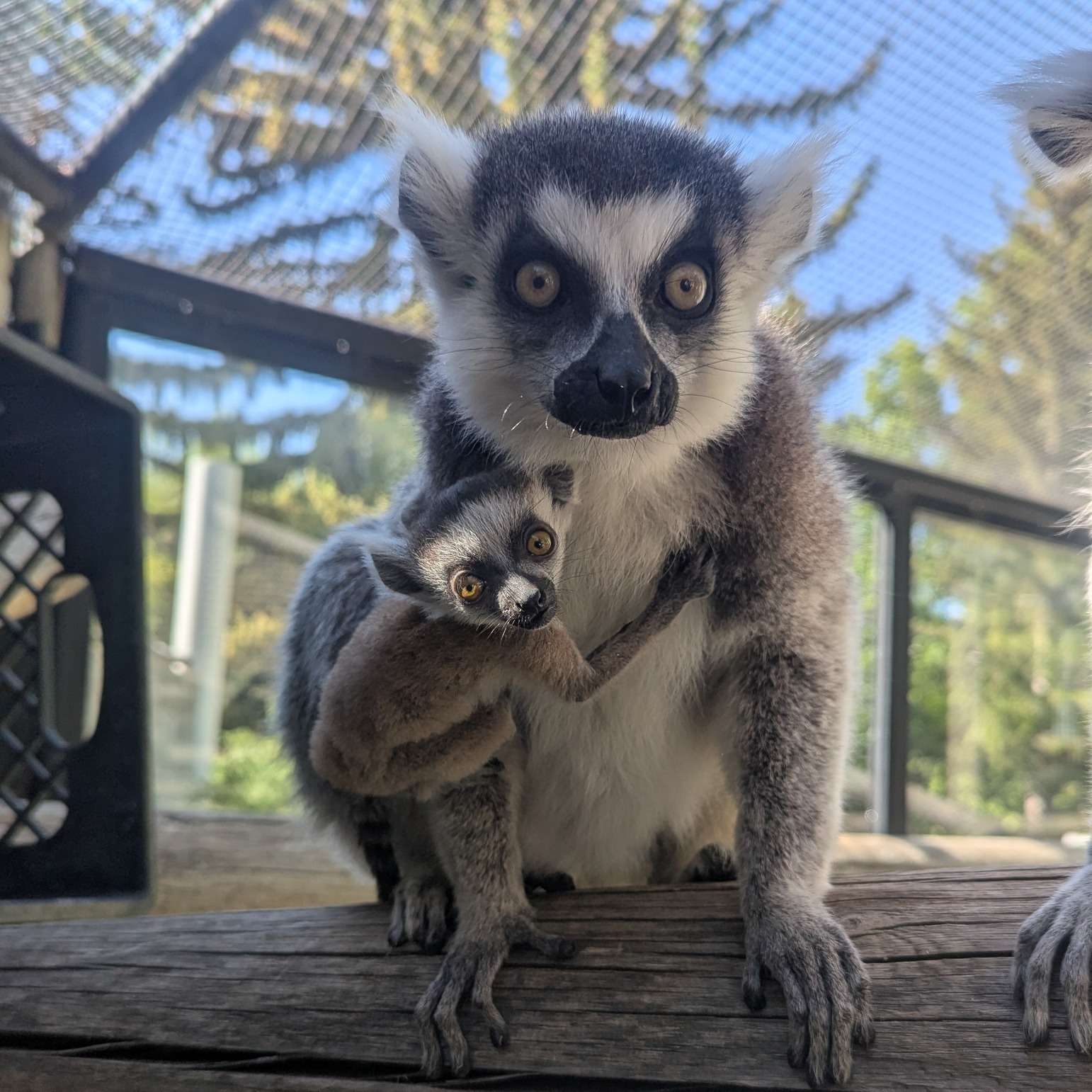
- Introduction to Nessy, the baby ring-tailed lemur, and her significance at the zoo.
- Biological characteristics and behaviors of ring-tailed lemurs.
- The role of Tupal, Nessy’s mother, in fostering Nessy’s early development and survival.
- Conservation status of ring-tailed lemurs and efforts to protect them.
- The educational importance of zoos in promoting wildlife conservation and awareness.
We’re thrilled to introduce the sweetest spring surprise: Nessy, a baby ring-tailed lemur, whose appearance has become a cherished addition to the local zoo. The birth of Nessy is not just a delightful occurrence but also a vital opportunity to educate people about zoology, conservation efforts, and the species’ remarkable biology.
Nessy is capturing visitors’ hearts with her expressive eyes and inquisitive nature. Observing her interactions provides a window into the fascinating life of ring-tailed lemurs. These primates are native to southern Madagascar and fall under the category of strepsirrhine primates, renowned for their unique adaptation and social behaviors.
Ring-tailed lemurs are easily identifiable with their striking black and white tail rings, a feature that provides balance and communication cues within their group, known as a troop. They exhibit a matriarchal social structure, with females holding a dominant role, unlike many primate societies.
Nessy’s early life is characterized by a strong dependency on her mother, Tupal. In the initial weeks, Nessy is predominantly found clinging to Tupal’s belly, which is essential for learning and protection. As weeks progress, she’ll transition to riding on Tupal’s back, offering a broader view of her surroundings and escalating her learning experiences. This development stage is crucial for Nessy, allowing her to learn social norms, foraging skills, and vocal communication unique to lemurs.
Lemurs vocalize using various sounds ranging from grunts to alarm calls, aiding in expressing emotions and warnings about potential threats. Understanding vocalization is pivotal for Nessy as it helps secure her role within the troop.
The birth of Nessy also sparks conversations around the conservation status of ring-tailed lemurs. They are currently classified as endangered due to habitat loss, hunting, and environmental changes in Madagascar. Deforestation and human encroachment are significant threats to their survival. Conservation programs are imperative for their preservation, involving habitat restoration, anti-poaching measures, and captive breeding programs to boost population numbers.
Zoos play a vital role in conservation education, serving as a bridge to awareness for people who might never witness such animals in the wild. Exhibiting animals like Nessy helps illustrate the broader narrative of conservation needs, fostering a deeper understanding and empathy towards different species. Educational programs and interactive exhibits inform the public about the importance of biodiversity and the impact of human actions on various ecosystems.
Visitors are encouraged to observe Nessy and learn from her behavior and interactions, gaining insights into the urgency of preserving her species. As Nessy grows, she symbolizes hope and continuity, reminding us of our responsibilities toward wildlife conservation.
The zoo invites everyone to welcome Nessy, engaging both online with supportive comments and in-person visits. Each interaction enhances awareness and commitment to the survival of ring-tailed lemurs and other endangered species.
The transition of Nessy from a dependent infant to a young lemur is a spectacle of nature that widens understanding of lemur dynamics. Such experiences at zoos enrich our knowledge and ignite an interest in zoological and conservation studies, pivotal for safeguarding our planet’s future.
As Nessy continues to thrive under the care of Tupal, this young lemur becomes an ambassador for her species, promoting critical awareness about the delicate balance of natural ecosystems. Embracing Nessy’s journey encourages a concerted effort to protect her kind, urging society to act conscientiously for wildlife conservation.
*****
Source Description
We’re thrilled to introduce the sweetest spring surprise: Nessy, a baby ring-tailed lemur!
Nessy is the daughter of proud mama Tupal, and she’s already stealing hearts with her big eyes, tiny hands, and growing curiosity. Right now, you’ll likely spot her clinging tightly to mom’s belly or riding on her back as she learns the ropes of lemur life.
Next time you visit, be sure to stop by and see if you can spot Nessy exploring with her mom.
🎉 Help us welcome Nessy with lots of love in the comments below!
