
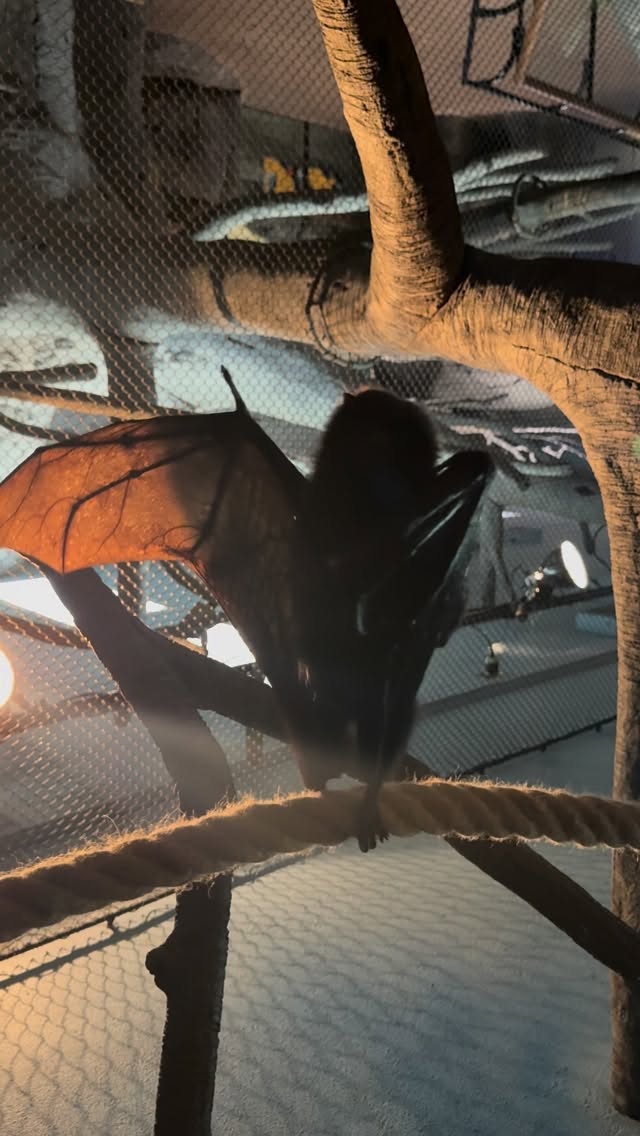
- Bats are adapted to an upside-down lifestyle and their physical features support this behavior.
- The importance of bats in ecosystems and their roles in pest control and pollination.
- Understanding bats’ behaviors, communication, and social structures.
- The impact of habitat loss and other threats facing bat populations.
- Conservation efforts and what individuals can do to help protect bats.
Bats are extraordinary creatures that have evolved to thrive in environments where many would find themselves in peril. Their ability to hang upside down is not a mere quirk but a fundamental aspect of their biology. Bats possess unique adaptations that allow them to grip onto surfaces with their strong feet. This evolutionary feature is critical as it allows them to roost efficiently and avoid predators while resting. Unlike many animals that may evolve to be right-side up, bats have turned this idea on its head—literally and figuratively. When they hang, the positioning is advantageous for their lifestyle, enabling easy takeoff.
Bats’ wings are also engineered for their upside-down existence. Unlike birds, bats’ wings are constructed with elongated fingers covered by a thin membrane. This not only affords them the ability to fly but also assists them in dropping straight into the air from a hanging position without encountering significant disorientation. When bats are observed flipping into flight, it often resembles a dance, showcasing both grace and agility. It’s important to appreciate these behaviors, as they reflect an animal perfectly adapted to its ecological niche.
Beyond their physical characteristics, bats serve crucial roles in terrestrial ecosystems. As pollinators, they support the growth of many plants, including those that produce fruits consumed by humans. Some species are specifically known for pollinating agave, which is integral to tequila production. Additionally, bats are powerful allies in pest control. They consume vast quantities of insects, including mosquitoes and crop-damaging pests, often consuming thousands of insects in a single night. This natural pest control can provide significant economic benefits in agriculture, reducing the need for chemical insecticides.
In understanding bats, we also need to look at their social behaviors and communication methods. Many bat species are social creatures, living in colonies that can number in the thousands. Their social structures can be quite complex, featuring intricate hierarchies and relationships. Bats use a variety of vocalizations, echolocation, and even scent to communicate with one another. Echolocation allows them to navigate and hunt efficiently, emitting sounds that bounce back from objects, effectively creating a sonic map of their environment. This ability significantly aids in their foraging strategies and helps them evade predators.
However, despite their importance and adaptability, bats face significant threats, primarily due to habitat loss. Deforestation, urban development, and agricultural expansion shrink their natural habitats and disrupt their roosting sites. Additionally, climate change poses challenges, as shifting weather patterns impact food availability and foraging conditions. Bats are also vulnerable to diseases, and outbreaks like White-nose Syndrome—an epidemic caused by a fungal infection—have devastated populations across North America. The impact of such threats is compounded for species that already have low reproductive rates, making recovery difficult.
Conservation efforts focused on bats are critical for ensuring their survival. Various organizations and initiatives work to protect bat habitats, raise public awareness, and encourage responsible practices. Installing bat houses is a practical step individuals can take to provide safe roosting sites. Moreover, educating communities about the benefits bats bring to agriculture and ecosystems is essential for fostering coexistence.
There are various strategies that can be employed on a broader scale. Habitat protection, such as preserving forests and wetlands, is paramount. Furthermore, promoting sustainable agricultural practices that minimize pesticide use will help create a healthier environment for bats and their prey. Research initiatives also play a key role in understanding bat behaviors, population dynamics, and disease responses, enabling targeted conservation efforts.
Engaging with local communities can amplify conservation impacts. Collaborative projects that emphasize the economic benefits of bats for pest control may garner support for protective measures. Awareness campaigns can also pivot public perception of bats from fear to appreciation. They are often misunderstood creatures, labeled as pests or harbingers of disease. By shedding light on their ecological importance, we can inspire more people to participate in bat conservation.
As we observe the activities at the zoo today, it is impossible to miss the fascinating behaviors of bats. Surprisingly, for these creatures, flipping between upside down and right side up is simply part of their routine. The upside-down lifestyle of bats is not only an adaptation but a testament to the wonders of evolution and biodiversity. By supporting educational and conservation efforts, we can help ensure these vital mammals continue to thrive, benefiting both ecosystems and humanity.
Through this multifaceted approach—promoting habitat preservation, public awareness, research, and community engagement— we can protect the biodiversity that bats provide. They may live their lives upside down, but their significance to our environment is firmly grounded on solid earth.
*****
Source Description
Things are a bit upside down at the zoo today…
But for our bats, is it the Upside Down — or right side up?
Fun fact: Bats are naturally adapted to an upside-down lifestyle, from their strong gripping feet to wings built for an easy drop-and-go takeoff. It’s simply how their world works — no fear of Demogorgons here.
And when they do flip right-side up, it almost looks like they’re doing a little dance! 🦇💃
