
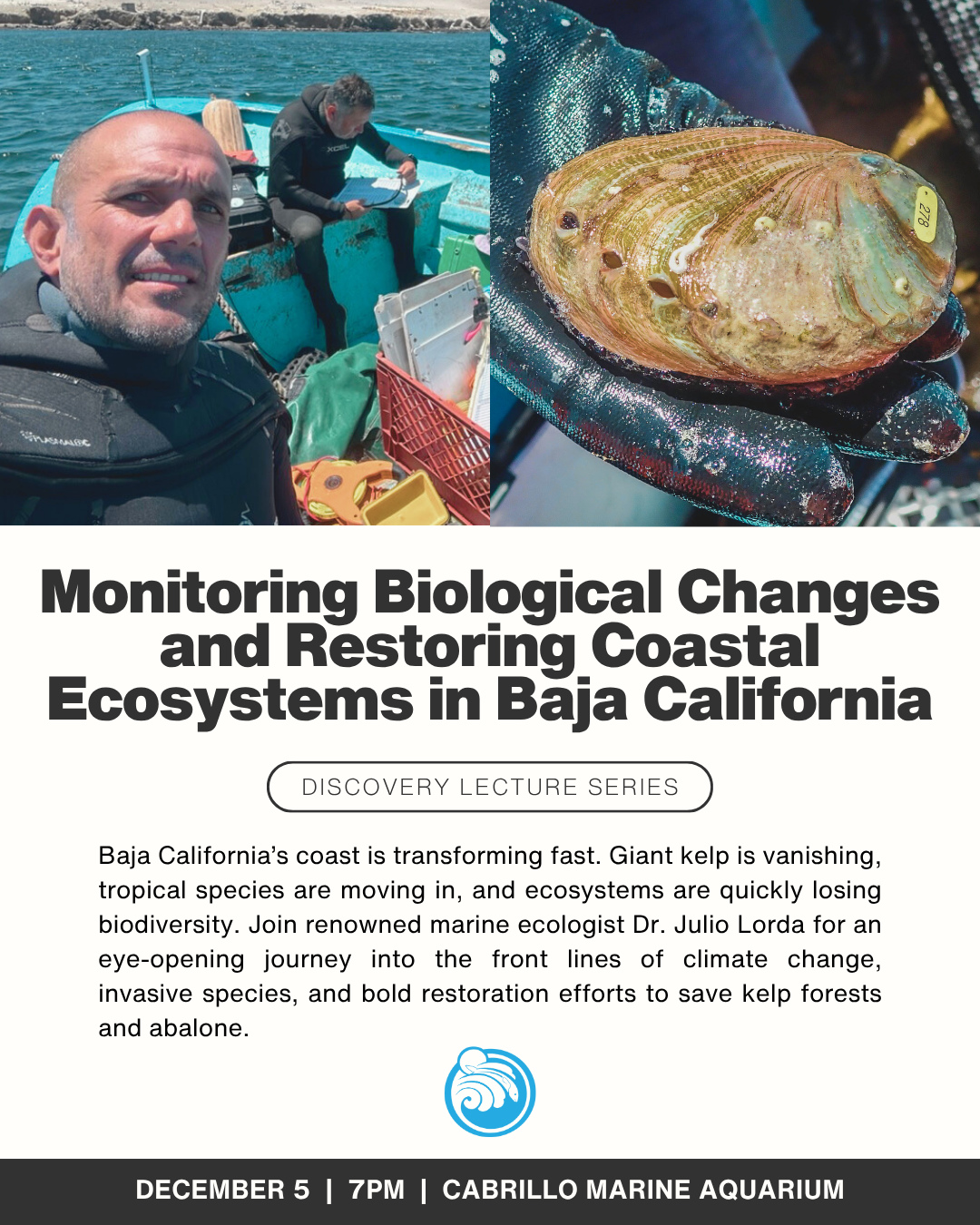
- Explore the significance of marine ecology in conservation efforts.
- Introduce Dr. Julio Lorda and his contributions to marine science.
- Highlight the role of kelp and abalone habitats in marine ecosystems.
- Discuss the impact of climate change on marine biodiversity.
- Examine the importance of cross-border collaborations in conservation.
Marine ecology plays a crucial role in understanding and conserving underwater ecosystems. It studies the interactions between marine organisms and their environments. The health of these ecosystems directly impacts biodiversity, fisheries, and climate regulation. Marine environments, particularly those along coastlines, face numerous threats. Pollution, habitat loss, and climate change exacerbate these challenges, making the work of marine ecologists essential.
Dr. Julio Lorda is a prominent figure in the field of marine science. He is a marine ecologist affiliated with the Universidad Autónoma de Baja California (UABC) and a co-founder of the initiative Managing Ecosystems across the Californias (MexCal). His research focuses on the restoration of kelp forests and abalone populations, both crucial components of marine ecosystems. Through his work, Dr. Lorda has made significant strides in addressing the challenges faced by these ecosystems. His insights into marine ecology are invaluable, particularly as they relate to the conservation of biodiversity along the Californian coast.
Kelp forests are one of the most productive ecosystems on the planet. They provide habitat and food for a diverse range of marine organisms, including fish, invertebrates, and marine mammals. These underwater forests serve as critical breeding and nursery areas for many species. Abalone, a key species within these habitats, has faced declining populations due to overfishing and environmental changes. Restoration efforts spearheaded by experts like Dr. Lorda aim to revitalize these populations, thereby supporting the entire ecosystem.
Climate change poses serious threats to marine biodiversity. Rising sea temperatures and ocean acidification are altering the dynamics of marine habitats. Species that cannot adapt quickly enough face the risk of extinction. For instance, kelp forests are sensitive to temperature changes, which can affect their growth and resilience. Moreover, changes in ocean chemistry impact shellfish, such as abalone, making them more vulnerable. Understanding these dynamics is critical for developing effective conservation strategies.
Collaboration across borders is becoming increasingly important in marine conservation. The interconnected nature of marine ecosystems means that actions taken in one region can significantly affect another. Dr. Lorda’s work with MexCal exemplifies this collaborative approach. By uniting scientists, policymakers, and conservationists from both sides of the California-Mexico border, efforts can be more effectively coordinated. This cooperation enhances the capacity to address shared challenges and promotes sustainable practices.
The upcoming FREE Discovery Lecture featuring Dr. Lorda is an excellent opportunity to learn more about these topics. The event will focus on how scientific research and collaboration contribute to the protection of biodiverse ecosystems in Baja California. Those interested can reserve their free tickets through the link in the bio provided in promotional materials.
Marine ecosystems, particularly those surrounding Baja California, are repositories of immense biodiversity. These areas not only support a wide variety of species but also serve vital functions for local economies. Fisheries, tourism, and recreation depend on healthy marine environments. Protecting these ecosystems ensures they can continue to provide invaluable resources and services.
Dr. Lorda’s research emphasizes the need for proactive management strategies to protect marine resources. By studying the socio-economic implications of conservation efforts, his work highlights how communities can benefit directly from healthy ecosystems. For example, sustainable fishing practices can enhance fish stocks, supporting local livelihoods while promoting biodiversity.
Abalone restoration initiatives are particularly noteworthy in this context. These mollusks have cultural and economic significance, especially for coastal communities that rely on fishing. Conservation strategies aimed at rebuilding abalone populations can spur community engagement and awareness. Educating local populations about sustainable practices is vital for long-term success.
The impacts of climate change are not uniform across all marine ecosystems, but they can have far-reaching consequences. For example, warmer waters can lead to the displacement of species, altering predator-prey relationships and food web dynamics. This can destabilize entire ecosystems. Understanding these relationships is essential for devising effective management plans that take these changes into account.
Dr. Lorda’s work on kelp forest dynamics also includes investigating the effects of nutrient runoff and pollution. High nutrient loads can lead to harmful algal blooms, which suffocate kelp forests and disrupt marine food webs. By addressing these issues proactively, conservation initiatives can mitigate some of the most pressing threats facing marine biodiversity today.
In light of the significant challenges facing marine ecosystems, outreach and education become pivotal. University initiatives, such as the upcoming Discovery Lecture, are instrumental in raising public awareness. They also encourage community participation in conservation activities. Engaging with stakeholders, from local fishers to policymakers, can foster a sense of stewardship that is essential for sustaining marine resources.
In summary, the combination of scientific research, community engagement, and international collaboration serves as the backbone of effective marine conservation efforts. The work of scientists like Dr. Lorda exemplifies how critical these elements are in addressing today’s environmental challenges. Attending events such as the Discovery Lecture amplifies this message, demonstrating that collective action is vital for preserving the biodiversity of our oceans.
As we turn our attention to marine conservation and the upcoming Discovery Lecture, it is worth reflecting on the interconnectedness of all species and their environments. The understanding gained from the work of experts can spur action and motivate individuals and communities to embrace environmental stewardship. The lecture offers a chance to connect with these ideas, understand the science behind them, and learn how collaborative efforts are being made to protect essential ecosystems.
Furthermore, the relationship between ecology and socioeconomic dynamics cannot be overstated. Healthy ecosystems support multiple livelihoods and are the foundation of food security for many communities. Integrating ecological integrity into economic planning can yield sustainable benefits for all stakeholders. The research presented by Dr. Lorda aims to bring this perspective to the forefront.
By learning about marine ecosystems through lectures and discussions, individuals can develop a well-rounded understanding of the complexities involved in conservation. This knowledge creates informed advocates who can contribute to the dialogues surrounding environmental policies and sustainable practices. It fosters a sense of agency and responsibility among attendees, empowering them to engage in meaningful conservation initiatives.
The need for continuous research and monitoring of marine ecosystems is critical, given the rapid pace of climate change. Marine ecologists must remain vigilant and flexible in their approaches to conservation. This adaptability will facilitate the development of innovative strategies that can respond to emerging challenges, ensuring that marine environments are resilient for future generations.
Engaging with experts during events like the Discovery Lecture allows individuals to grasp the real implications of scientific findings. It cultivates a deeper appreciation for marine life and its essential services. Such awareness can even lead to grassroots movements advocating for stronger conservation measures.
The interconnectedness of ocean health and human well-being is becoming more apparent. Protecting marine ecosystems is not merely an environmental issue; it is a social and economic imperative. Efforts aimed at conservation can lead to enhanced quality of life, food security, and sustainable economic growth.
The opportunity to hear from Dr. Julio Lorda is invaluable. His expertise and dedication to marine ecology embody the principles of effective conservation. Join the community in learning how collective knowledge and mutual support can foster significant changes in the protection of vulnerable marine ecosystems. It’s a chance to contribute to a larger movement that seeks to uphold the integrity of the planet’s water bodies.
*****
Source Description
Join us Friday, December 5, for a FREE Discovery Lecture with our first international guest speaker, Dr. Julio Lorda!
Dr. Lorda is a marine ecologist from the Universidad Autónoma de Baja California (UABC) and co-founder of Managing Ecosystems across the Californias (MexCal). His work focuses on kelp and abalone restoration, climate change impacts, and cross-border conservation.
Visit the link in our bio to reserve your FREE tickets today. Come learn how science and collaboration are helping protect the biodiverse ecosystems of Baja California. 🌊
