
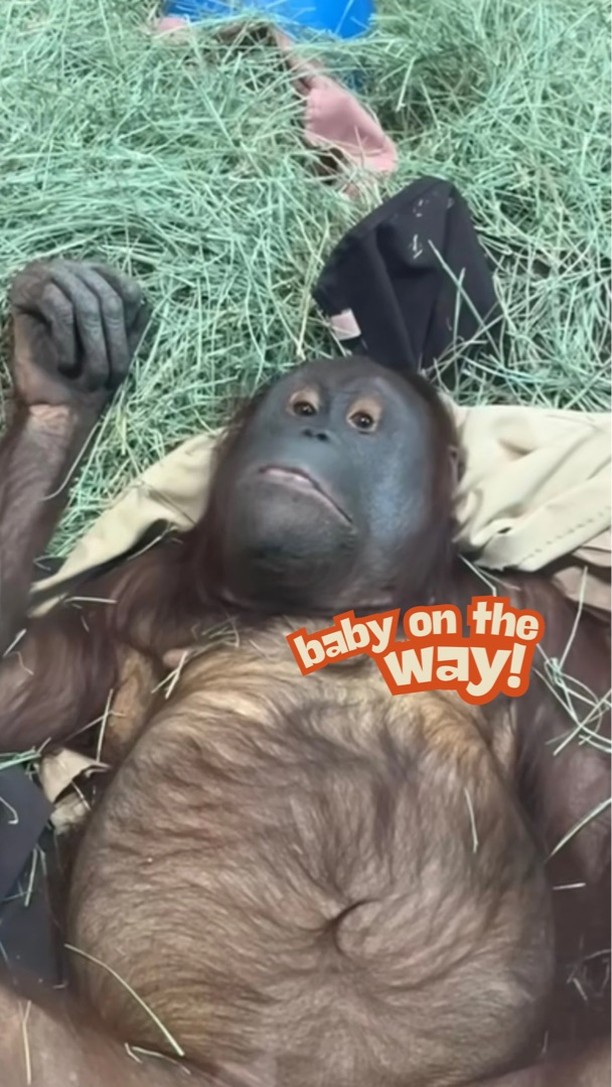
- Kawan’s pregnancy and the significance of Bornean orangutan conservation.
- The breeding program and potential paternity test.
- Kawan’s history with her previous offspring and the challenges that may arise.
- The role of the care team and fostering strategies at Hogle Zoo.
- The broader implications of orangutan births for conservation efforts.
The news of Kawan the Bornean orangutan expecting a baby at Hogle Zoo is a momentous event, underscoring both the joys and challenges of wildlife conservation. As Kawan prepares for motherhood, the implications resonate far beyond the zoo, touching on critical aspects of species preservation and zoo management strategies.
Bornean orangutans, classified as critically endangered, are facing dwindling populations, primarily due to habitat loss and poaching. The birth of a new orangutan, therefore, holds immense importance. This event highlights the ongoing efforts dedicated to preserving these majestic creatures and ensuring their survival in the wild and captivity.
Kawan arrived at Hogle Zoo in 2021, responding to a breeding program recommendation. Pairings such as these are part of a carefully coordinated effort to maintain genetic diversity within captive populations. The possibility of paternity uncertainty adds an intriguing layer to this breeding plan, with resident males Mia and Tuah both potential fathers. A paternity test will be conducted after the baby’s birth to determine the father definitively.
Kawan’s past experience with motherhood introduces a level of concern. In her previous zoo, despite undergoing maternal training, she did not engage in caretaking after giving birth. This history alerts the zoo’s team to the potential need for intervention. However, every effort will be made to support Kawan in bonding with her newborn. The zoo’s comprehensive animal care protocols are in place to provide whatever level of support is necessary, with human intervention as a backup plan if she doesn’t exhibit maternal behaviors.
The role of fostering is pivotal in such situations. Acara, another orangutan at the zoo, has previous experience as a foster mother, successfully caring for her younger brother Tuah. Her strong bond with the care team and proven nurturing instincts make her an excellent candidate should fostering become necessary. Interestingly, in some cases, male orangutans have also demonstrated nurturing abilities. Such adaptability can be crucial for ensuring the young orangutan’s well-being.
The eventual birth of Kawan’s baby represents more than a personal milestone for the orangutan. It is a critical step in the global efforts to conserve an endangered species. Bornean orangutans are vital to their ecosystem, playing a significant role in seed dispersal and forest health. Every successful birth in captivity contributes to the broader aim of species survival and genetic diversity.
This story of Kawan, Mia, and Tuah is a testament to the intricate balance of nurturing wildlife within a controlled environment while striving for conservation breakthroughs. The efforts at Hogle Zoo highlight a commitment to animal welfare and the continuation of species that face an uncertain future in the wild. By focusing on every detail, from breeding programs to potential fostering, the zoo exemplifies a proactive approach to wildlife management.
As Kawan nears her due date, the anticipation grows not only within the zoo community but also among conservationists worldwide. Her pregnancy is a beacon of hope and a reminder of the interconnected efforts required to protect our planet’s biodiversity. The unfolding events at Hogle Zoo serve to educate, inspire, and underscore the essential role zoos play in the global conservation narrative.
*****
Source Description
Something sweet is swinging our way—Bornean orangutan Kawan is expecting a baby in June! 🧡🦧
Kawan came to Hogle Zoo in 2021 as part of a breeding recommendation with resident males Mia and Tuah. With both males included in that pairing, either could be the father. A paternity test after the baby’s birth will confirm who the dad is!
This pregnancy is both an incredible and potentially challenging event. Kawan had a baby once before at her previous zoo, but despite maternal training, she did not care for it after birth. Because of her history, our team is aware that she may not care for her second baby. While we’re hopeful Kawan will bond with and raise her baby, our animal care and animal health teams are prepared for whatever path Kawan chooses.
If Kawan doesn’t care for her infant, our team is prepared to step in with human care, followed by placing the baby with a foster caretaker.
Acara, our other female orangutan, successfully served as a foster for her younger brother, Tuah. Because of Acara’s strong bond with her care team and her past experience, she would be our first choice.
In some cases, even male orangutans can serve as nurturing fosters, and our teams will consider every possibility to ensure the baby is well cared for.
Our goal is always the best possible outcome for both mom and baby. This birth is not only a meaningful step for Kawan—it’s also a significant moment for the conservation of critically endangered Bornean orangutans. 💚
Read the full story on our website for more on what comes next.
