
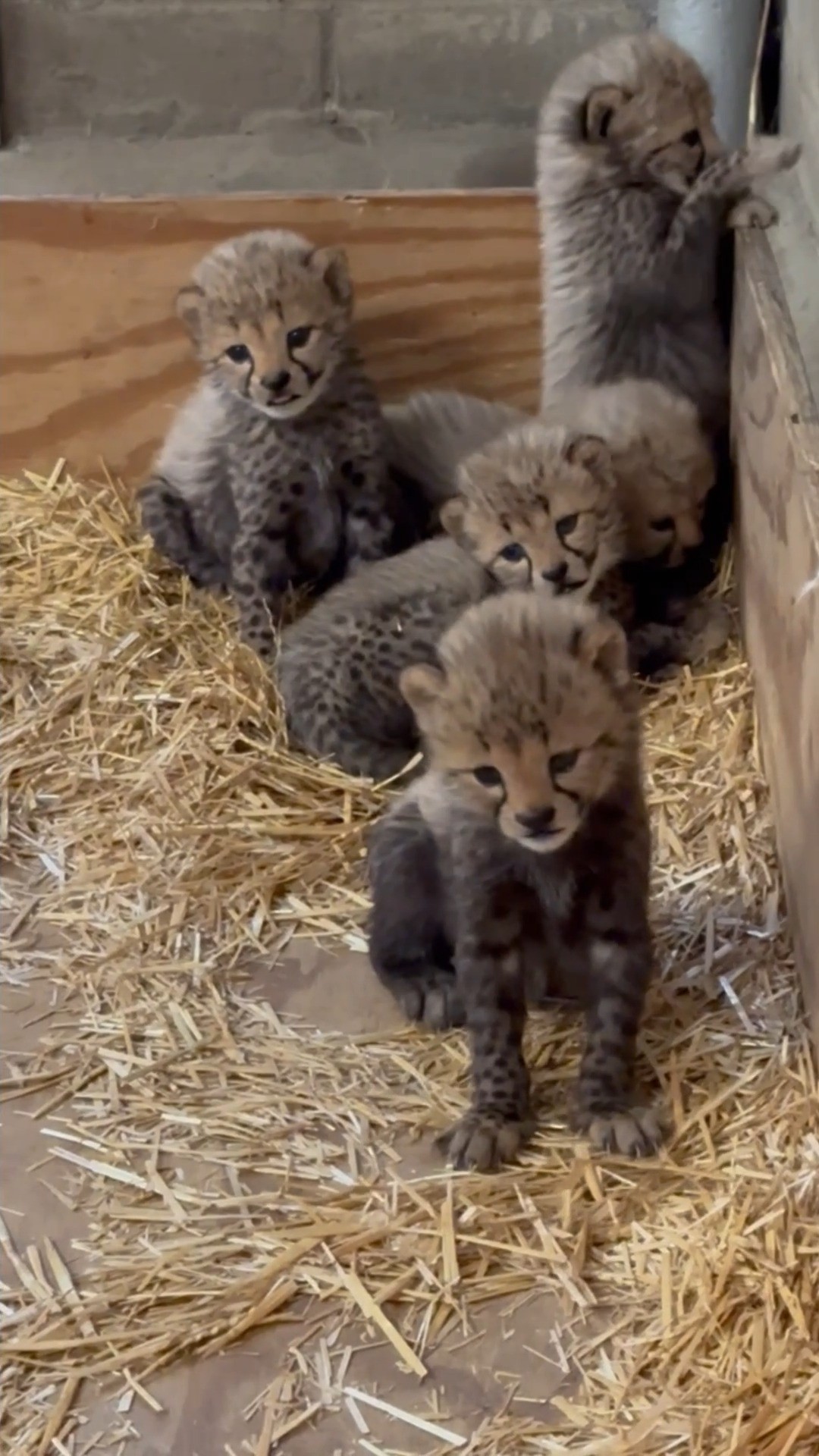
- Introduction to the birth of five cheetah cubs at the Saint Louis Zoo and their parents.
- Importance of these births for conservation efforts and genetic diversity.
- Cheetah biology and the challenges faced by the species in the wild.
- Details of the zoo’s breeding and care programs for cheetahs.
- Future plans and public debut of the cheetah cubs.
On May 5, the Saint Louis Zoo celebrated a significant milestone with the birth of five cheetah cubs, the offspring of proud parents Cora and Vader. These adorable cubs mark the first successful cheetah births at the zoo in over seven years, making them a critical addition not just for the zoo but for the wider efforts of cheetah conservation. With Cora nurturing her young in a private maternity den, the cubs are thriving, and their eventual public debut is anticipated with excitement.
Cheetahs, known for their speed and grace, are iconic species but face numerous threats in the wild. The birth of these cubs offers a much-needed boost to their global population and highlights the zoo’s role in safeguarding cheetah genetics and promoting conservation.
These newborns, affectionately dubbed “Cora’s Quints,” will be named after their sexes are determined by zoo veterinarians. Their arrival is not only a joyous occasion but also sheds light on the meticulous planning and dedication required for successful cheetah breeding programs.
Cheetah Conservation and Genetic Diversity
Cheetahs are classified as vulnerable on the IUCN Red List, with wild populations declining due to habitat loss, human-wildlife conflict, and illegal wildlife trade. The successful birth of cubs like Cora’s provides valuable genetic diversity, vital for the species’ long-term survival. By fostering a diverse gene pool, zoos can help mitigate the risks posed by inbreeding and genetic bottlenecks, which are critical concerns for small populations.
Programs such as the Species Survival Plan (SSP), in which the Saint Louis Zoo participates, are instrumental in coordinating breeding efforts among zoos. These initiatives meticulously manage the genetics of endangered animals, ensuring healthy and viable populations both in captivity and possibly in the wild.
Understanding Cheetah Biology
Cheetahs are built for speed; their slender bodies, lightweight frames, and powerful leg muscles enable them to reach speeds of up to 60-70 miles per hour. Their unique physiology also includes a large liver, oversized adrenal glands, and a specialized respiratory system, all working efficiently to support their rapid bursts of speed.
Despite these adaptations, cheetahs face critical challenges in the wild. Limited genetic diversity, primarily due to a historic population bottleneck, makes them susceptible to illnesses and environmental changes. These challenges underscore the importance of breeding programs, like those at the Saint Louis Zoo, which aim to bolster their numbers and genetic health.
Breeding and Care at the Zoo
Breeding cheetahs in captivity is a complex process requiring significant expertise and resources. Cora and Vader’s successful mating is a testament to the Saint Louis Zoo’s advanced animal care protocols and environment. The zoo provides enclosures that replicate the cheetahs’ natural habitat, which is critical for their physical and mental well-being.
Cora is currently bonding with her cubs in a secluded maternity den to ensure they develop essential survival skills. This private setup allows the mother to nurture her young without unnecessary stress and interference, crucial for the cubs’ developmental progress.
Zoo staff closely monitor the health and growth of the cubs, using data to adjust care practices to meet their evolving needs. Veterinary teams are on hand to assess and provide any medical care required, ensuring that the cubs grow into healthy adults.
Public Debut and Future Plans
While the cheetah cubs will remain in their maternity den for the time being, they are expected to make their first public appearance later this year. This timing is aligned with their natural development stages in the wild, where cubs would begin exploring beyond the den, strengthening their physical abilities and social interactions.
The public introduction of the cubs will not only delight zoo visitors but also serve as an educational opportunity to raise awareness about cheetah conservation. The Saint Louis Zoo plans to integrate these cubs into broader conservation education programs, highlighting the critical need to protect cheetahs and their habitats.
Zoo staff, alongside global partners, continue to actively participate in international cheetah conservation projects, providing expertise, resources, and support for wild populations. By showcasing these efforts and the success of captive breeding, the zoo hopes to inspire a new generation of conservationists and animal lovers.
The heartwarming addition of these five cheetah cubs reflects the dedication and resilience of wildlife conservationists at the Saint Louis Zoo and around the world. Through careful management, education, and global collaboration, there is hope for a brighter future for cheetahs—a future where these majestic animals continue to roam the savannas and captivate hearts.
*****
Source Description
Say hello to five adorable cheetah cubs born May 5 at the Saint Louis Zoo! 👋
These cuties are the first litter for parents Cora and Vader and the first successful cheetah births at the Zoo in more than seven years. “Cora’s Quints” are all doing well bonding with mom in a private maternity den at the Zoo.
The cubs are expected to make a public debut later this year when they reach the age when cubs would naturally leave their den.
This crew will be named once Zoo vets determine each cub’s sex in the coming weeks.
Check back here for more “Cora’s Quints” updates soon! 🐆
