
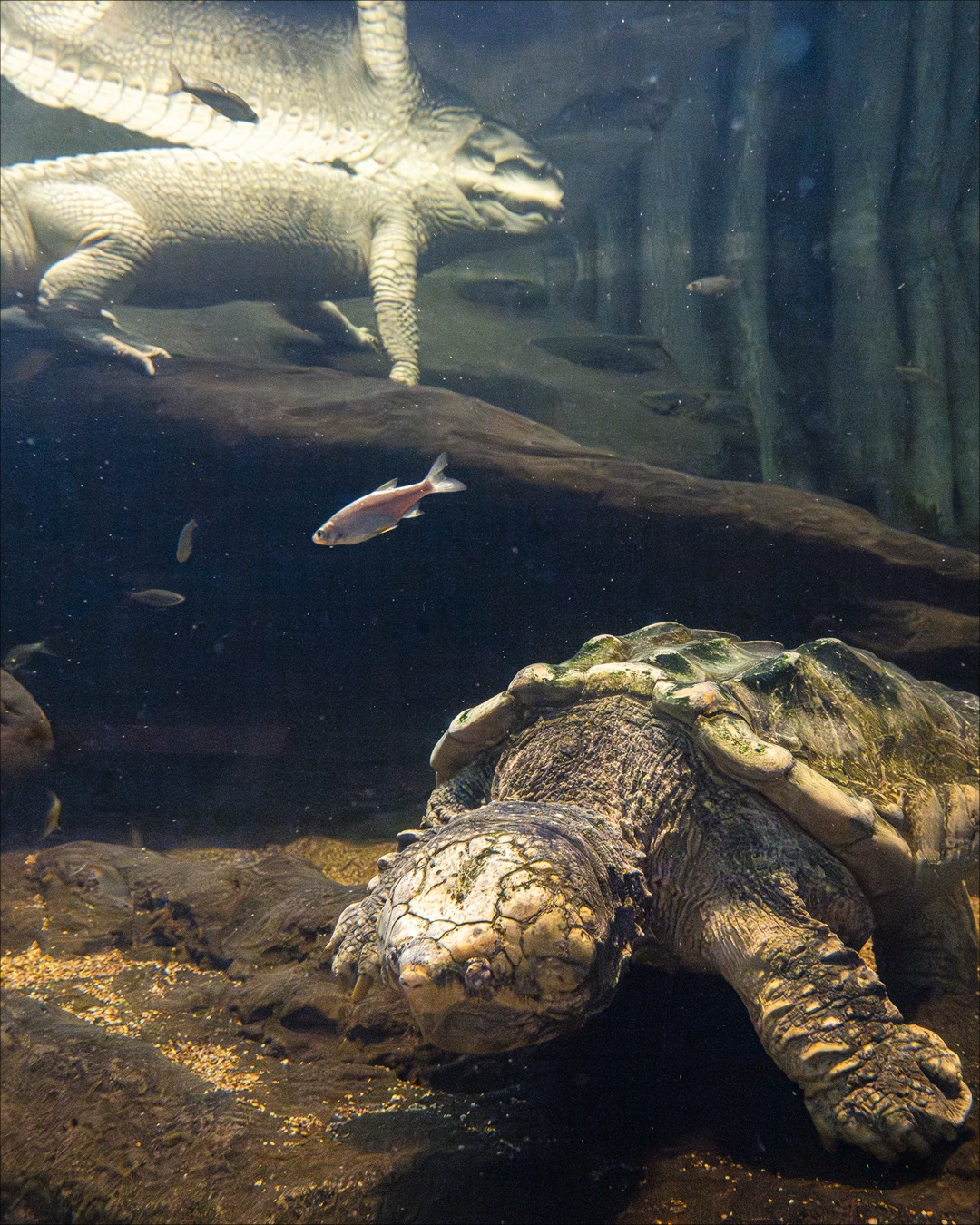
- Overview of Alligator Snapping Turtles
- Profiles and Dimensions of Raphael, Donatello, and Morla
- Conservation and Habitats: Keeping Alligator Snapping Turtles in Zoos
- The Unique Relationship Between Turtles and Their Environment
- Educational Importance and Conservation Efforts
Alligator snapping turtles, representing the largest freshwater turtles in North America, captivate wildlife enthusiasts and zoologists alike. These fascinating reptiles are known for their prehistoric appearance and remarkable features. Among their ranks are Raphael, Donatello, and Morla, all residing at the same institution since 1972. With Morla standing out at an impressive 152 pounds, these turtles offer an intriguing glimpse into the life of these ancient creatures.
Overview of Alligator Snapping Turtles
Characterized by their massive jaws, rugged shell, and distinctive hooked beak, alligator snapping turtles are formidable predators in freshwater ecosystems. Found primarily in the southeastern United States, they favor river systems and swamps, where they inhabit murky waters. These turtles can weigh over 200 lbs, with Morla being an excellent representative of their size potential.
In the wild, these turtles rely on their exceptional camouflage and patient hunting techniques. They often lie motionless on the riverbed, using their tongue as a worm-like lure to attract fish. This facility for patience and surprise makes them highly efficient hunters. The natural longevity of alligator snapping turtles can extend over a century, though many face threats due to habitat destruction and human encroachment.
Profiles and Dimensions of Raphael, Donatello, and Morla
The trio of turtles, comprising Raphael, Donatello, and Morla, presents a unique opportunity to observe these turtles up close. Morla, weighing 152 lbs, is the largest and most striking of the group. Her considerable size underscores the potential for growth within the species, reflecting both age and habitat suitability. Meanwhile, Raphael and Donatello, each weighing 71 lbs and 76 lbs, display their species’ characteristic resilience and adaptability.
Having been part of their residing institution since 1972, these turtles have provided countless educational encounters, raising awareness on species conservation. Their cohabitation allows them to demonstrate non-aggressive interactions, a departure from the occasionally solitary behavior seen in the wild.
Conservation and Habitats: Keeping Alligator Snapping Turtles in Zoos
Housing alligator snapping turtles like Raphael, Donatello, and Morla in controlled environments involves detailed zoo management strategies. Creating an environment that simulates their natural habitat is crucial. This involves maintaining water quality, space for roaming, and sufficient dietary provisions.
Zoos play an essential role in the conservation of alligator snapping turtles, not only through safeguarding individuals but also by educating the public about threats these reptiles face. Habitat disruption, pollution, and illegal poaching are critical issues impacting their wild populations. Providing a safe haven in zoo settings, these turtles can thrive while bringing attention to the broader concern of wildlife conservation.
The Unique Relationship Between Turtles and Their Environment
Alligator snapping turtles exhibit an intriguing interaction with their environment. Renowned for their adaptability, these turtles effectively blend into their surroundings. Their physical attributes, such as their spiky shells and camouflaged skin, enable them to disappear into the muddy riverbeds where they live.
The turtles’ dependence on water systems for hunting and nesting highlights the critical need for preserving their natural habitats. In captivity with Raphael, Donatello, and Morla, habitat simulation is performed with conscientious attention to water parameters and structural enrichment. Understanding and replicating their natural surroundings are crucial for their well-being.
Educational Importance and Conservation Efforts
Educational programs centered around creatures like Raphael, Donatello, and Morla significantly impact conservation awareness. Zoos utilize these turtles to engage visitors, offering insights into the life history of alligator snapping turtles and their ecological importance. Such programs underscore the necessity of conserving freshwater ecosystems and the diverse species they support.
Active conservation efforts, including habitat restoration and legal protection against hunting, are paramount for their survival. Public support and funding garnered through educational initiatives help bolster conservation efforts, ensuring that ecosystems can sustain future generations of these magnificent creatures.
In drawing attention to creatures like Morla, Raphael, and Donatello, institutions fulfill a critical role in global wildlife conservation. By maintaining healthy environments for these turtles in captivity, zoos can inspire a broader commitment to protecting their counterparts in the wild. Through dedicated conservation and educational initiatives, we can help secure a future for the largest freshwater turtles in North America.
*****
Source Description
Happy from our three alligator snapping turtles: Raphael, Donatello and… Morla! 🥷🐢
Alligator snapping turtles are North America’s largest freshwater turtle, and Morla is a prime example weighing in at 152 lbs! (Raphael and Donatello get honorable mentions at 71 lbs and 76 lbs respectively, Morla is just easily the biggest.)
The turtles, all female, have been at the Academy since 1972 — 36 years longer than their beloved swamp-mate, Claude. The four of them can occasionally be seen resting very close to each other. 🤍
