
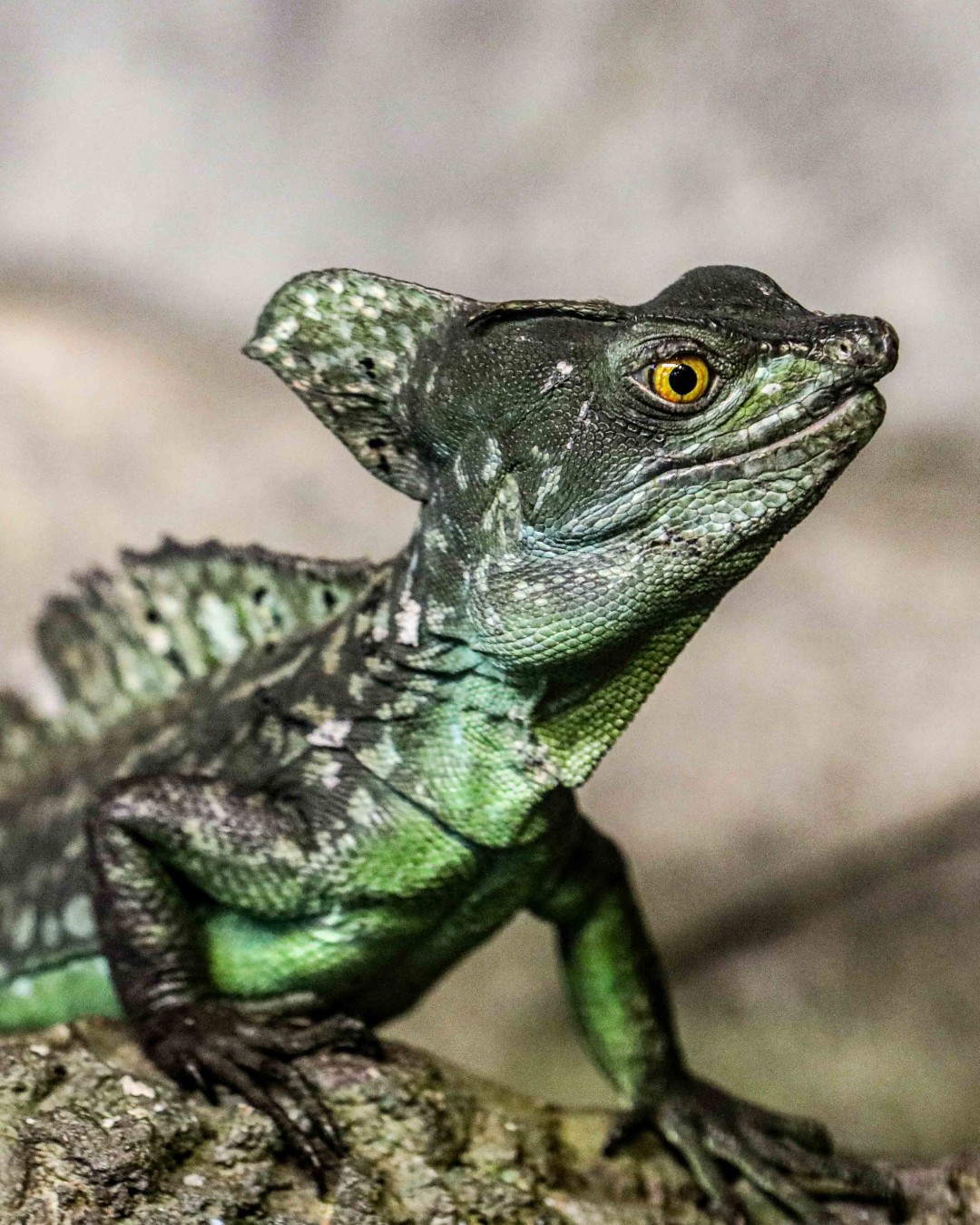
- Green basilisks, or "Jesus Lizards," are fascinating reptiles often mistaken for dinosaurs due to their distinctive appearance.
- These reptiles display sexual dimorphism, with males exhibiting prominent crests absent in females.
- Green basilisks are adept swimmers and can literally run on water, a unique survival mechanism.
- Their diet consists of fruits, insects, and small vertebrates, highlighting their role as omnivores in the ecosystem.
- Threats to their survival arise primarily from the illegal pet trade, making conservation efforts critical.
Green basilisks, often referred to as "Jesus Lizards," are captivating reptiles that are frequently mistaken for dinosaurs due to their striking appearance. These creatures, now part of the Indo-Malaya pavilion, have intrigued both scientists and visitors with their remarkable traits. Montgomery and Diana, the basilisk pair now residing with us, exemplify the unique characteristics that define this species.
Green basilisks are known for their ability to grow up to 2–3 feet long. One of their most distinctive features is the sexual dimorphism they display. Males like Montgomery have four prominent crests along their heads, backs, and tails. These crests serve as an impressive visual display during mating seasons and can intimidate rival males. In contrast, females like Diana are mostly crest-free, though they may have smaller, less pronounced ones. This difference between genders is not just cosmetic but plays a crucial role in their behaviors and interactions.
One of the most remarkable abilities of the green basilisk is its capacity to "walk" on water, earning it the name "Jesus Lizard." This skill is more than just a party trick; it’s a crucial survival technique. When threatened, these basilisks can drop from trees and sprint across the water’s surface at an impressive speed of five feet per second. This innate ability allows them to escape predators swiftly and effectively, showcasing their adaptation to their environment. Additionally, they can hold their breath underwater for over 10 minutes if needed, further enhancing their chances of evading danger.
As omnivores, green basilisks have a varied diet that includes fruits, insects, and even small vertebrates. This diet is pivotal for their survival in the wild. By consuming a diverse range of foods, they maintain the ecological balance within their habitats. Their foraging behaviors contribute to seed dispersal and control of insect populations, highlighting their ecological importance.
However, these fascinating reptiles face significant threats, primarily from the illegal pet trade. Despite their captivating presence, keeping basilisks as pets is fraught with challenges and often leads to their premature death in captivity. This trade not only endangers individual lizards but also impacts wild populations, leading to potential long-term effects on biodiversity. Conservation efforts are essential to mitigate these threats and preserve their natural habitats.
The presence of Montgomery and Diana in the Indo-Malaya pavilion provides a unique opportunity for education and awareness. Visitors can observe these modern-day "dinosaurs" and learn about their natural histories and the challenges they face. This exhibits an engagement with wildlife conservation, promoting responsible stewardship of our planet’s diverse species.
In summary, green basilisks are remarkable creatures with dinosaur-like traits that never fail to capture the imagination. Their ability to run on water, the unique sexual dimorphism, and their omnivorous diet all play significant roles in their survival strategy. However, the looming threat of the illegal pet trade emphasizes the need for sustained conservation efforts. The story of Montgomery and Diana invites us to appreciate and protect the rich tapestry of life on Earth.
*****
Source Description
They may not technically be dinosaurs… but they sure look the part! 🦖
Meet the newest residents of our Indo-Malaya pavilion- a pair of green basilisks! This dynamic duo, Montgomery, a five-year-old male, and Diana, a three-year-old female, joined us from @ontariosciencecentre early last year.
Green basilisks can grow up to 2–3 feet long. Males sport four dramatic crests along their heads, backs, and tails, while females are crest-free (or may have just small ones), making them sexually dimorphic. These omnivores snack on fruit, insects, and even small vertebrates, and can hold their breath underwater for over 10 minutes to avoid predators!
Though they face natural predators in the wild, the biggest threat to this species is the illegal pet trade.
The coolest fact about these little dinos may be that they are often referred to as the “Jesus Lizard, and when frightened, they drop from trees and run on water at five feet a second!
You can spot these two new “dinos” on your next visit now that they’ve settled in nicely to their Indo-Malaya habitat 🦖
