
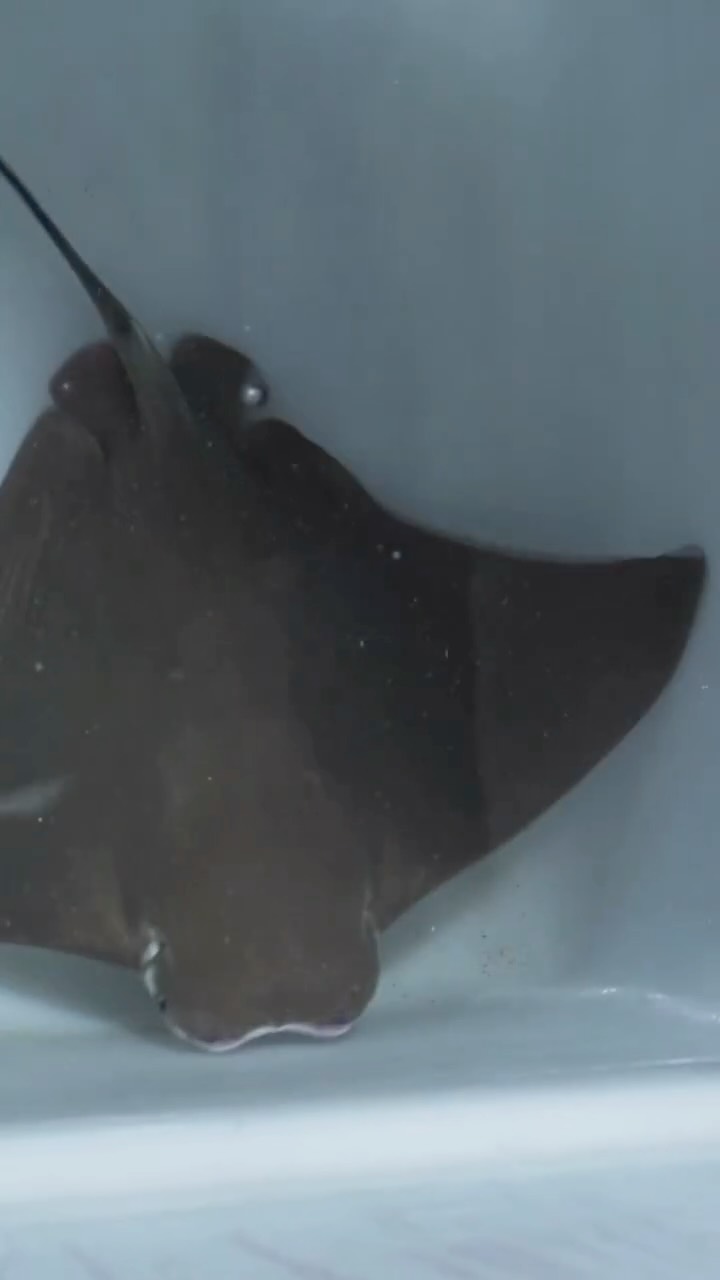
- The significance of the birth of the critically endangered ray, 𝘙𝘩𝘪𝘯𝘰𝘱𝘵𝘦𝘳𝘢 𝘮𝘢𝘳𝘨𝘪𝘯𝘢.
- Overview of the conservation status and threats faced by 𝘙𝘩𝘪𝘯𝘰𝘱𝘵𝘦𝘳𝘢 𝘮𝘢𝘳𝘨𝘪𝘯𝘢.
- Role of aquariums like Oceanogràfic in species conservation and public education.
- Importance of habitat protection and sustainable fishing practices for marine species.
- Future prospects for 𝘙𝘩𝘪𝘯𝘰𝘱𝘵𝘦𝘳𝘢 𝘮𝘢𝘳𝘨𝘪𝘯𝘢 and what can be done to protect this and other threatened species.
The birth of the first ray, 𝘙𝘩𝘪𝘯𝘰𝘱𝘵𝘦𝘳𝘢 𝘮𝘢𝘳𝘨𝘪𝘯𝘢, at the Oceanogràfic is a milestone in marine conservation. This species is classified as critically endangered by the International Union for Conservation of Nature (IUCN). The significance of this event extends beyond the enclosed space of the aquarium; it highlights the crucial role of captive breeding programs in safeguarding marine biodiversity.
As part of the Mediterranean and eastern Atlantic ecosystems, 𝘙𝘩𝘪𝘯𝘰𝘱𝘵𝘦𝘳𝘢 𝘮𝘢𝘳𝘨𝘪𝘯𝘢 faces significant threats that contribute to its declining population. Overfishing places immense pressure on this species, leading to diminished numbers in their natural habitat. Bycatch—unintentional capture of non-target species during fishing activities—further exacerbates their situation. Additionally, the degradation of coastal habitats due to urban development, pollution, and climate change compounds these threats.
Aquariums like Oceanogràfic play an integral role in species conservation. They not only provide a safe environment for threatened species but also serve as education hubs where the public can learn about marine life and the environmental challenges it faces. Raising awareness about critically endangered species like the 𝘙𝘩𝘪𝘯𝘰𝘱𝘵𝘦𝘳𝘢 𝘮𝘢𝘳𝘨𝘪𝘯𝘢 prepares the groundwork for broader conservation initiatives. Engaging with the public fosters a sense of stewardship for the oceans and encourages responsible behaviors that contribute to marine health.
Habitat protection cannot be overlooked when discussing strategies for conserving 𝘳𝘩𝘪𝘯𝘰𝘱𝘵𝘦𝘳𝘢 𝘮𝘢𝘳𝘨𝘪𝘯𝘢 and other marine species. Safeguarding coastal ecosystems like seagrass beds, wetlands, and mangroves is pivotal. These environments serve as breeding grounds and nurseries for various marine species. Moreover, sustainable fishing practices must be adopted globally to alleviate the pressure on overexploited species. Governments, policymakers, and local communities must collaborate to create and enforce regulations that focus on responsible fishing, habitat restoration, and pollution control.
The future of 𝘙𝘩𝘪𝘯𝘰𝘱𝘵𝘦𝘳𝘢 𝘮𝘢𝘳𝘨𝘪𝘯𝘢 hinges on the collective efforts of conservationists, governmental bodies, and the public. Continued captive breeding programs, such as the one at Oceanogràfic, are essential for maintaining genetic diversity and bolstering population numbers. The anticipated arrival of a second juvenile underscores the positive trajectory of these efforts.
Collaborative research initiatives must also play a role in better understanding the biology, behavior, and ecology of the 𝘳𝘩𝘪𝘯𝘰𝘱𝘵𝘦𝘳𝘢 𝘮𝘢𝘳𝘨𝘪𝘯𝘢. Gathering data on their life cycle, reproductive habits, and habitat preferences can foster effective conservation strategies. Ongoing monitoring of the species in both captive and wild settings can inform critical management decisions.
Educational programs aimed at school children and marine enthusiasts can shape the perceptions of future generations. By promoting awareness of the threats facing species like 𝘳𝘩𝘪𝘯𝘰𝘱𝘵𝘦𝘳𝘢 𝘮𝘢𝘳𝘨𝘪𝘯𝘢, these initiatives motivate younger audiences to engage in conservation initiatives. Field trips to aquariums and marine reserves can spark interest and inspire action among students, encouraging them to advocate for marine protection.
Innovative technological solutions can further enhance conservation efforts. The use of remote sensing, environmental DNA (eDNA) sampling, and other advanced methodologies can contribute to more effective monitoring of populations and habitats. These tools provide critical real-time data that can inform conservation strategies and help identify areas in need of protection.
Collaboration among various stakeholders is paramount. Academic institutions, non-governmental organizations, aquariums, and local communities can join forces to conduct impactful research, establish marine protected areas, and implement community-led conservation projects. This multi-faceted approach can tackle the challenges faced by critically endangered species like the 𝘳𝘩𝘪𝘯𝘰𝘱𝘵𝘦𝘳𝘢 𝘮𝘢𝘳𝘨𝘪𝘯𝘢 effectively.
In summary, the birth of the critically endangered ray, 𝘙𝘩𝘪𝘯𝘰𝘱𝘵𝘦𝘳𝘢 𝘮𝘢𝘳𝘨𝘪𝘯𝘢, at Oceanogràfic serves as a beacon of hope for this species. It emphasizes the importance of proactive conservation measures and the role of aquariums in preserving marine biodiversity. By addressing the detrimental factors that threaten their survival, implementing sustainable practices, and raising public awareness, we can work towards securing a bright future for this iconic species. The effort to protect 𝘳𝘩𝘪𝘯𝘰𝘱𝘵𝘦𝘳𝘢 𝘮𝘢𝘳𝘨𝘪𝘯𝘢 requires not only dedicated individuals but also informed communities advocating for responsible environmental stewardship. Through education, innovative strategies, and strong partnerships, we can take significant strides towards bringing this remarkable species back from the brink of extinction.
*****
Source Description
🦈✨ Nace una raya en Peligro Crítico de extinción en Oceanogràfic.
Estamos muy felices de anunciar el nacimiento de la primera cría de raya 𝘙𝘩𝘪𝘯𝘰𝘱𝘵𝘦𝘳𝘢 𝘮𝘢𝘳𝘨𝘪𝘯𝘢𝘵𝘢, una especie catalogada ⚠️ En Peligro Crítico de extinción por la UICN.
🔹 Este nacimiento supone un avance fundamental para la conservación de la especie, cuya presencia en el Mediterráneo y el Atlántico oriental ha disminuido drásticamente por la sobrepesca, las capturas accidentales y la pérdida de hábitats costeros.
Además, el equipo de Océanos espera la llegada de un segundo ejemplar en los próximos días, lo que refuerza aún más la importancia de este logro. 🌊
💙 Un motivo de orgullo para todo el Oceanogràfic y un recordatorio del papel esencial que desempeñan los acuarios y su Fundación en la protección de especies amenazadas.
