
- The significance of natural enrichment for wildlife.
- Understanding the behavior and needs of Florida black bears.
- The role of play and exploration in animal welfare.
- Benefits of providing natural materials in captivity.
- Conservation implications of habitat loss and enrichment strategies.
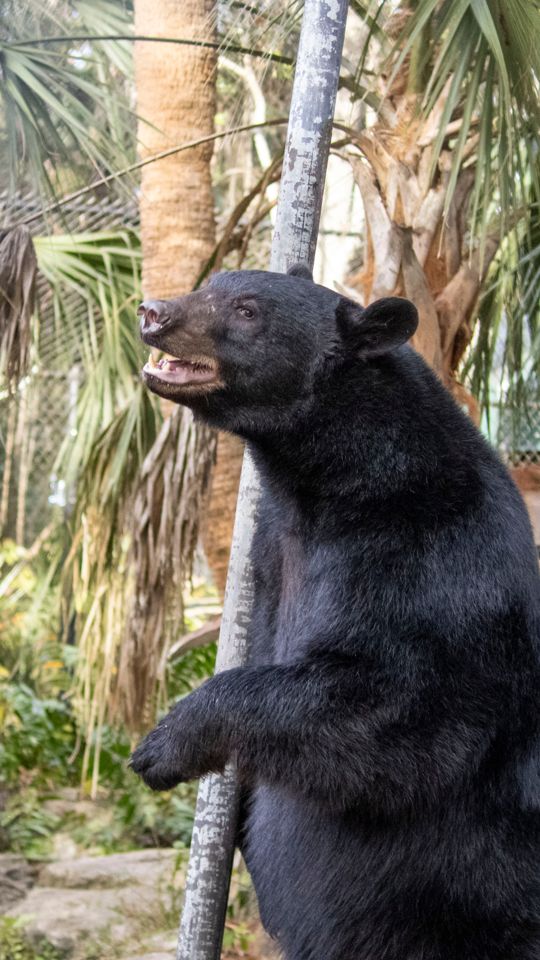
Natural enrichment is vital in wildlife management and animal care, leading to improved well-being for animals such as Florida black bears. The natural environment is full of stimuli that encourage animals to behave and thrive in ways that reflect their wild instincts. By engaging with natural elements like sticks and foliage, animals find joy and fulfillment. Brody, the Florida black bear, demonstrates this beautifully as he interacts with a simple stick, highlighting the profound impact of nature on animal behavior.
Florida black bears (Ursus americanus floridanus) are a subspecies of the American black bear, found primarily in the forests and swamps of Florida. They play a significant role in their ecosystems, acting as seed dispersers and influencing plant communities through their foraging behavior. Understanding their needs requires a clear acknowledgment of their natural habitat—rich forests filled with diverse plant life, berries, and water sources. This habitat offers the foundations for their behavioral needs, making the case for the importance of natural enrichment and habitat preservation.
Natural enrichment encourages species-typical behaviors, allowing animals to express their natural instincts. Florida black bears, for instance, engage in behaviors such as climbing, digging, and foraging. When they work to manipulate their environment, whether it’s through scratching trees, rolling over logs, or foraging for food, they exhibit a host of healthy behaviors that combat boredom and stress. This engagement is not just about physical fitness; it contributes to mental well-being. The opportunity to explore various textures, scents, and food sources is imperative for their cognitive engagement.
The significance of play cannot be overstated. When animals like Brody find a stick, they aren’t just playing; they are honing essential skills for survival—skills that would be naturally acquired in the wild. Play acts as a medium for learning, allowing young animals to practice hunting techniques or social interactions. For cubs raised in captivity, play can simulate experiences they would encounter in natural settings. It helps them understand their physical abilities, interact appropriately with other animals, and develop problem-solving skills. This means that providing natural materials, such as sticks and leaves, is fundamentally more enriching than any manufactured toy.
One key aspect of natural enrichment is that it can be scientifically optimized to promote the welfare of captive animals. The concept of offering animals natural materials aligns with a more ethical approach to wildlife management. In various facilities housing Florida black bears, caretakers are encouraged to incorporate elements of the natural environment. Simple changes, such as providing sticks, logs, or fruits native to Florida, promote exploration, scent-marking, and foraging—all critical behaviors for a bear’s well-being.
Additionally, consistent exposure to natural materials acts as a safeguard against maladaptive behaviors commonly associated with confinement, like pacing or over-grooming. When bears like Brody are given opportunities to interact with their environment, it builds a sense of agency. A bear that can choose how to interact with its surroundings is much less likely to engage in detrimental behaviors.
Addressing the conservation implications of habitat loss is necessary when discussing natural enrichment. Habitat degradation threatens the ability of wildlife to thrive. Black bears in Florida face challenges from urban expansion, agriculture, and climate change. As their habitats shrink, the consequences are profound. Offering natural enrichment within captive settings serves as a temporary solution but is also a call to action for the conservation of their wild habitats. Protecting the natural ecosystem is essential not only for the current bear population but also for future generations.
The provision of natural enrichment extends to the broader topic of wildlife conservation. When animals in captivity are nurtured with the same stimuli and challenges they would find in the wild, it aids in the understanding of their behaviors, ultimately benefiting conservation research. As researchers study how these animals interact with their environment, they can develop better conservation strategies for wild populations.
Moreover, showcasing animals like Brody can inspire public interest in wildlife preservation. People are often captivated by the playful behavior exhibited by bears engaging with their environment. Such interactions foster compassion and promote a desire to conserve wild habitats. Educational programs that feature the natural behaviors of black bears can lead to increased awareness of the struggles they face, further motivating individuals towards conservation efforts.
Natural enrichment is not limited to bears but is applicable to all species in captivity. The principles that underpin natural enrichment advocate for an enriched living environment, catering to the diverse needs of different animal species. From birds to primates, understanding the behaviors and needs specific to each species guides the incorporation of suitable enriching materials. Viewing animals through the lens of their natural behaviors creates a thoughtful perspective on how they should be managed in captivity.
Moreover, myriad studies show that physical structures in animal enclosures can enhance mental stimulation and physical activity. Incorporating natural elements into habitats makes them feel less artificial, encouraging animals to engage socially and physically. The integration of textures, scents, and items commonly found in their natural habitats can effectively mimic environments that stimulate exploration and social interaction.
Captive settings are crucial for education and conservation, making the understanding of natural enrichment ever more significant. Educational institutions, zoos, and wildlife reserves benefit when they prioritize natural enrichment in their supervision of animals. Brody’s play with simple sticks not only reflects his joy but serves as a valuable opportunity for viewers to learn more about black bear behavior. Such visual narratives engage the public in discussions about wildlife and conservation.
Furthermore, the scientific community benefits from exploring the impacts of natural enrichment on animal health. Research has often shown that animals exhibiting stimulated behavior tend to have better physical health outcomes. Understanding the link between enriched environments and animal well-being emphasizes the importance of integrating natural elements into animal care practices, especially for species under threat.
This recognition illuminates the extent to which our interaction with the environment shapes the well-being of captive wildlife. When caretakers provide opportunities for bears like Brody to engage with their environment meaningfully, it enhances their quality of life. This includes the deliberate arrangement of habitats that encourage exploration, foraging, and social interaction.
The well-being of captive Florida black bears and other wildlife hinges on the integration of natural enrichment into their daily lives. Observing species like Brody reminds us that even the simplest of materials—a stick—can be transformative. No elaborate toys can replicate the cognitive and physical engagement that nature offers.
Understanding the practices surrounding natural enrichment shapes discussions around wildlife management and conservation. An appreciation for nature’s offerings fosters a greater understanding of animal care and ecology. The insights gained contribute to a richer dialogue about how we, as custodians of the Earth, contribute to wildlife preservation. Sharing such principles enhances our collective commitment to safeguarding not just bears but all wildlife, pressing for a future where natural habitats are preserved for future generations.
Animals like Brody encapsulate the message that we don’t need fancy alternatives when nature itself offers abundant enrichment. In everything from sticks to leaves, creativity and engagement flourish. By reaffirming our respect for nature, we take important steps to nurture not just individual animals but also the ecosystems they inhabit.
*****
Source Description
Who needs fancy balls and tires when you have ✨nature’s enrichment✨
Brody our Florida black bear loves a good stick, and we love watching him!
