
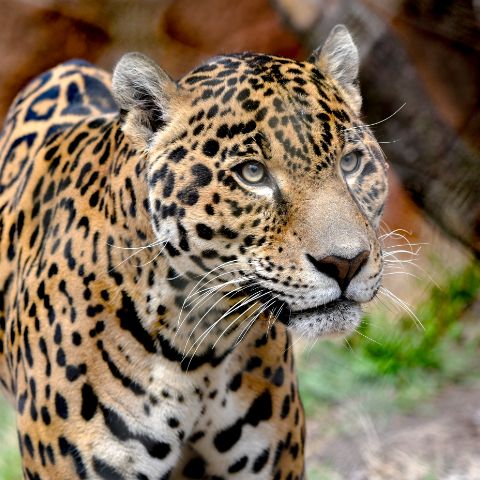
Summary of OKC ZOO ANNOUNCES PASSING OF MALE JAGUAR, RICO:
The Oklahoma City Zoo announced the passing of Rico, an 11-year-old male jaguar, who was euthanized due to severe arthritis and an unexpected fracture. Rico had been part of the zoo since 2024 and was initially treated in New York for his elbow condition. Despite ongoing care, his health deteriorated, impacting his quality of life. Rico was known for his love of food and training sessions. He had come to the zoo as a potential mate for Zia, a female jaguar, under the Species Survival Plan. The zoo plans to identify a new mate for Zia. Jaguars, considered near threatened, have been a focus of conservation efforts since the 1980s. Rico was cherished by staff and visitors and remembered fondly for his playful and gentle nature.
- The Oklahoma City Zoo announced the passing of Rico, an 11-year-old male jaguar, who had battled chronic arthritis and other health issues.
- Rico’s medical background included previous surgical interventions and continuous monitoring for pain management by the zoo’s veterinary team.
- Rico’s life at the zoo involved participation in training programs, reflecting the care practices and engagement strategies used in modern zoo management.
- Conservation efforts by organizations like the AZA highlight the broader challenges facing jaguars, a species currently listed as near-threatened.
- The emotional bond between Rico and his caretakers underscores the importance of human-animal interactions in captive environments.
Rico, an 11-year-old male jaguar and beloved member of the Oklahoma City Zoo community, recently passed away, a loss deeply felt by both zoo staff and visitors. He was euthanized due to severe chronic arthritis and an unexpected fracture in his ulna, conditions that significantly impacted his quality of life. Veterinarian Dr. Gretchen Cole explained that despite efforts to manage his pain, Rico’s health continued to decline, highlighting the intricate care needs of aging animals in captivity.
Rico arrived at the Oklahoma City Zoo following a surgical intervention in New York for his elbow. This procedure was part of ongoing efforts to maintain his health. The zoo’s veterinary team, skilled in addressing complex health issues in wildlife, closely monitored Rico, employing pain management therapies. This reflects the sophisticated medical practices employed in zoos today, where animal health care extends beyond basic needs to encompass specialized treatments for chronic conditions. Such comprehensive health plans are crucial given the increasing age of animals in managed care settings, where longer life spans introduce new medical challenges.
The Oklahoma City Zoo’s announcement underscores the importance of providing proactive and empathetic care to their residents. With expertise in veterinary science, Dr. Cole and her team exemplified the dedication required in zoo management. The collaborative approach with the carnivore care team and the ultimate decision to euthanize Rico demonstrate a commitment to ethical animal welfare practices, where quality of life is the benchmark for care decisions.
Rico was not just an animal living at the zoo; he was an active participant in his environment. Tyler Boyd, the Curator of Carnivores, noted Rico’s role in the Association of Zoos and Aquariums’ Species Survival Plan (SSP), designed to promote genetic diversity and conservation education. This initiative illustrates the role zoos play in global conservation efforts, providing a captive environment where endangered species can thrive and where educational opportunities can stimulate public interest in wildlife conservation.
During his time at the zoo, Rico’s interactions with his caretakers became a notable aspect of his daily life. Training sessions, often considered crucial for both animal enrichment and care, allowed Rico to exercise both body and mind. These activities demonstrate modern zoos’ commitment to creating enriching environments where animals can exhibit natural behaviors. Rico’s fondness for treats, especially goat’s milk, and his gentle demeanor, earned him affection from his caretakers, with stories of his playful antics further solidifying the bond shared between him and his human companions. These interactions serve as a reminder of the connections formed within zoos, where caregivers often develop personal and lasting bonds with the animals in their charge.
The zoo community, notably his primary caretaker Amalia, and Kelly, a senior carer, expressed their adoration for Rico, reminiscing about his playful nature. Amalia fondly remembered how Rico would tilt his head and cross his paws, a display of his unique personality and intelligence. These attributes contribute to our understanding of jaguar behavior and emphasize the significance of individualized care strategies in zoo management.
Jaguars, as a species, are central to many conservation efforts due to their status as near-threatened. The work done by the AZA and its member organizations is pivotal, encompassing fieldwork and conservation projects in South and Central America. This regional focus underscores the importance of preserving natural habitats and the species that depend on them. Jaguars face numerous threats, including habitat loss and poaching, and their conservation is a critical component of broader biodiversity efforts. This context situates Rico’s life within a larger narrative of species preservation, highlighting the role that zoos play in global conservation strategies.
The Zoo’s focus on breeding programs through the Species Survival Plan underscores the importance of genetic diversity. These initiatives are essential for maintaining healthy populations of endangered species, ensuring their survival for future generations. Rico’s arrival as a potential mate for Zia, a female jaguar at the zoo, reflects these strategic efforts to sustain jaguar populations through careful mate selection and genetic management.
Overall, Rico’s story is not just one of an animal in captivity but one of connection, conservation, and care. His life at the Oklahoma City Zoo provides insights into how modern zoos operate as centers of conservation education, animal welfare, and scientific research. Rico’s legacy continues to impact and inspire through the lessons learned and shared by those who cared for him.
