
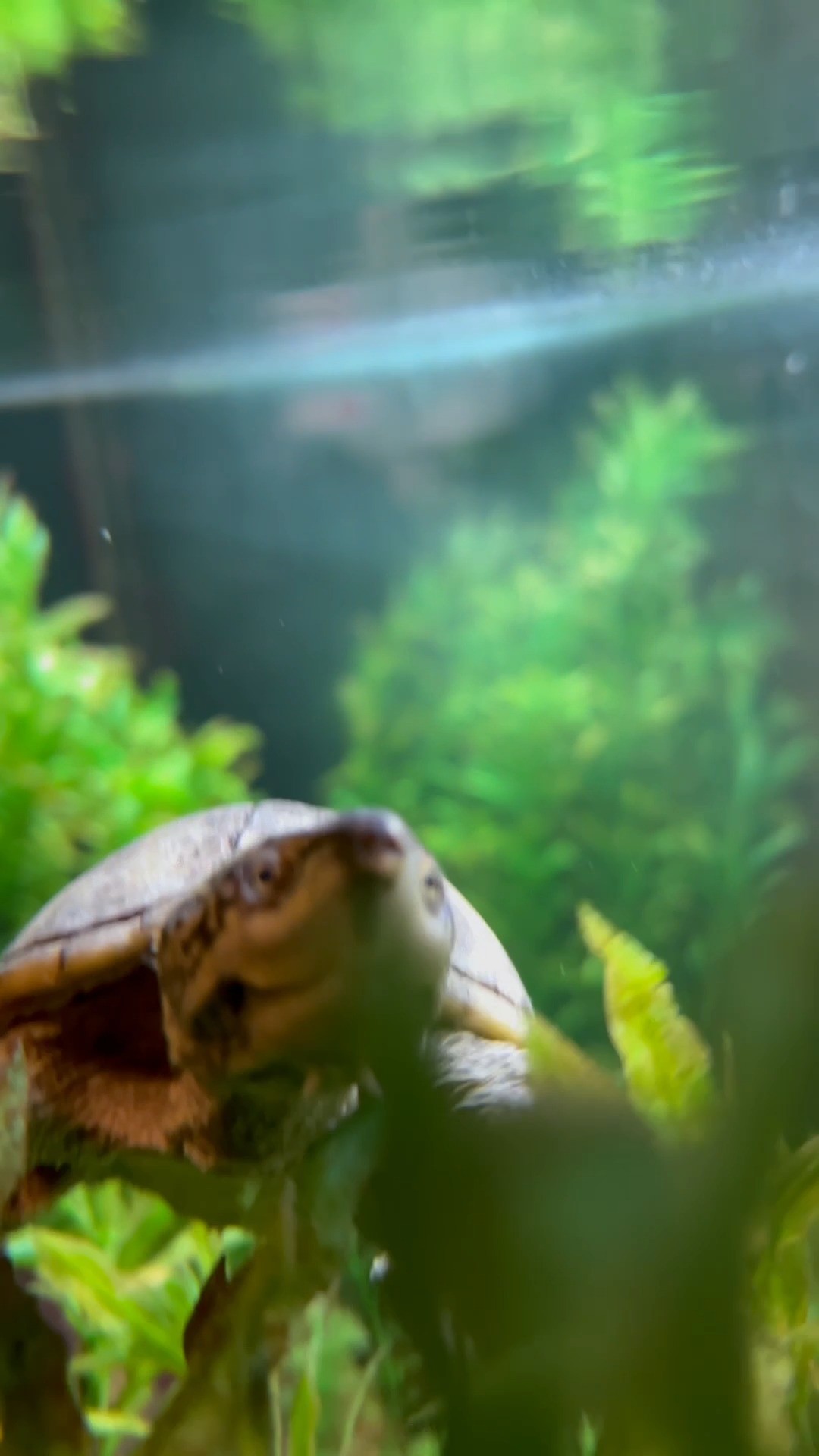
- The intriguing story of Pete the stinkpot turtle and his daily routine.
- The role of positive reinforcement in animal training and healthcare.
- The benefits of involving animals in their healthcare routines.
- Insights into aquarium management and turtle conservation.
- Educational value of training non-traditional pets for participation in their care.
Meet Pete, an out-of-the-ordinary stinkpot turtle with a routine that’s anything but ordinary. Pete has a daily schedule, one he sticks to diligently, and it challenges the common notion that only dogs can do tricks. This turtle’s routine is not just about tricks; it’s a significant part of his healthcare regimen. Through positive reinforcement, Pete participates in activities that contribute to his well-being, all while breaking down the barrier between human and reptile interaction.
Positive reinforcement is a powerful tool in animal training, allowing for effective and stress-free handling of creatures like Pete. This method uses rewards like food to encourage desired behaviors, enhancing both the animal’s cooperation and quality of life. For Pete, treats are the incentive that makes participating in his own healthcare a rewarding experience. This approach reinforces a sense of connection between Pete and his caretakers, fostering trust and reducing stress.
The concept of involving animals in their own healthcare isn’t solely about reducing stress; it’s a crucial step in enhancing their overall well-being. By training Pete to engage in simple tasks, such as stepping on a scale or allowing shell inspections, the caretakers gain valuable insights into his health without causing anxiety. This active participation is beneficial for early detection of health issues, making interventions more effective and timely.
Within the context of aquarium management and turtle conservation, it’s vital to appreciate how training turtles like Pete contributes to their preservation. Proper management practices ensure the longevity of these fascinating creatures. Training turtles helps in collecting necessary data for conservation research, aiding in understanding their behaviors, dietary needs, and habitat preferences. Such information is invaluable for conserving turtle populations in the wild and maintaining healthy ones in captivity.
Pete’s training also serves an important educational purpose. It highlights the potential to train non-traditional pets and underscores the importance of environmental stewardship. Observing turtles demonstrating learned routines captivates audiences of all ages, bridging the gap between people and wildlife. It educates the public about reptile behavior, their needs, and the importance of conservation, promoting a greater appreciation for these often-overlooked creatures.
The story of Pete, a stinkpot turtle with a dedicated routine, illustrates the intersection of animal care, positive reinforcement, and conservation. This unique approach fosters better health outcomes for Pete, advances turtle conservation, and educates the public about the importance of preserving wildlife. By challenging the notion that only dogs can learn tricks, Pete opens up a dialogue on the potential of all animals to participate in their own care.
*****
Source Description
Pete’s got a routine and he’s sticking to it! Because who said only dogs can do tricks?
Meet Pete, our stinkpot turtle, who’s TURTLE-y awesome! With the help of positive reinforcement (and some delicious snacks), Pete is able to participate in his own healthcare like a pro – one slow and steady step at a time.
Want to learn more about Pete’s training? Check out this blog post from one of his caretakers, Jay! https://bit.ly/3EZ8btX
