
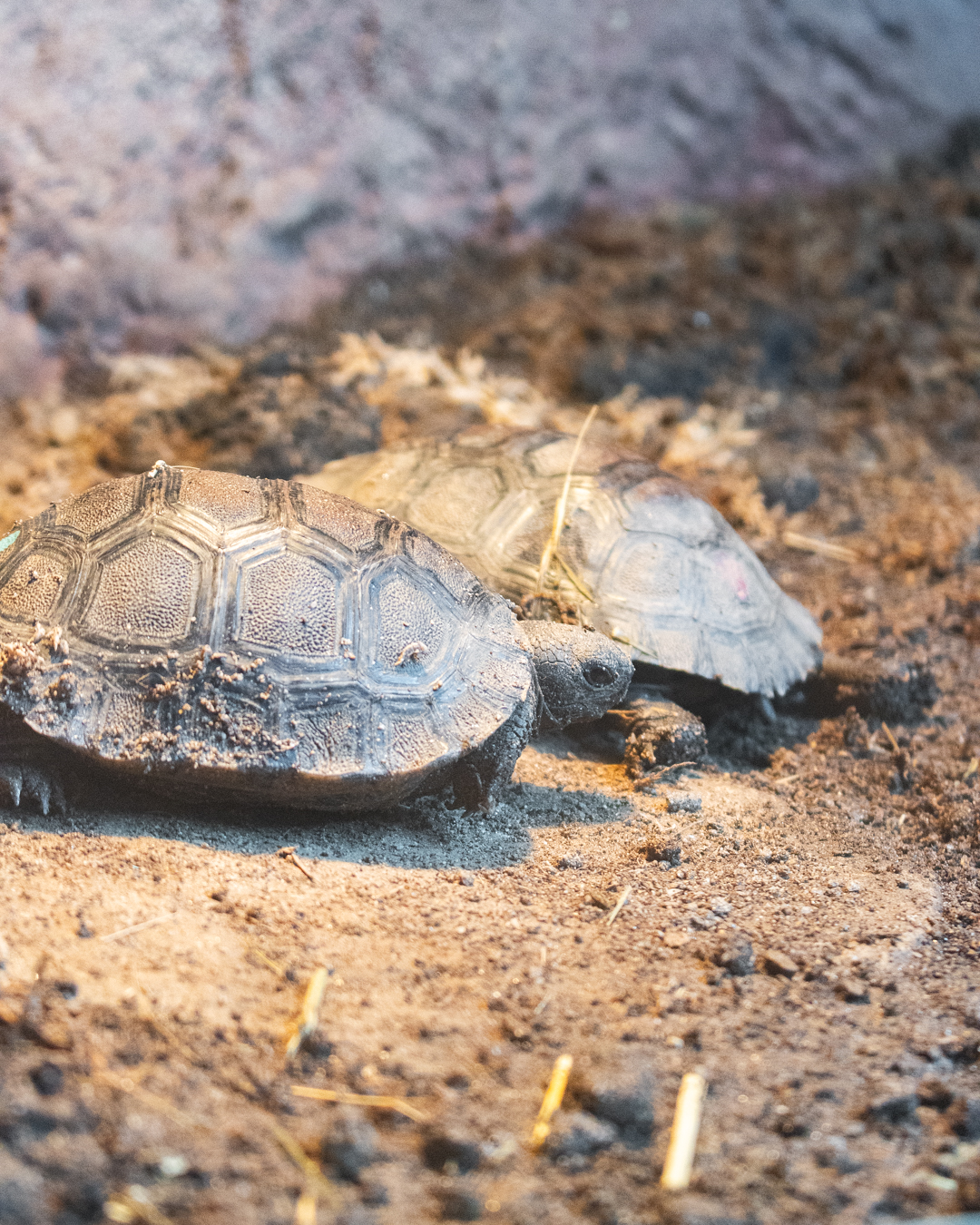
- The bond between Sophia and Blanche, two Galapagos tortoises, illustrates the social interactions within tortoise species, contributing to understanding animal behavior.
- Observing the dietary needs and growth of our Galapagos tortoise hatchlings highlights crucial aspects of captive management and health.
- The significance of the Reptile and Amphibian House as an educational resource and conservation effort showcasing Galapagos tortoises.
- Insights into Galapagos tortoises’ natural habitats and the importance of preservation efforts for these iconic reptiles.
- The role of zoos in wildlife conservation and education, offering an opportunity to connect with endangered species.
Sophia and Blanche, our golden girls, the Galapagos tortoises, are a captivating presence at the Reptile and Amphibian House. Their interactions provide a glimpse into the social dynamics of tortoise species, highlighting the importance of companionship. Though often solitary, tortoises engage in social behaviors that can influence wellbeing. Observing Sophia and Blanche spending quality time together can help researchers and enthusiasts understand these complex interactions better.
The dietary needs of our Galapagos tortoise hatchlings are another critical aspect of their care. As these young reptiles grow, nutritional adjustments ensure their health and development. Galapagos tortoises naturally consume a varied diet rich in high-fiber vegetation. In captivity, providing a comparable diet requires understanding their specific nutritional requirements to avoid common health issues such as shell deformities or malnutrition. Monitoring their growth and adjusting their diet highlights the importance of precision in zoo management.
In their natural habitat, Galapagos tortoises thrive in diverse environments, from arid lowlands to humid highlands. Preservation of these ecosystems is crucial. Habitat degradation due to human activities has led to a decline in tortoise populations on the archipelago. Conservation efforts, both in situ and ex situ, are vital for their survival. Zoos play a significant role by participating in breeding programs and raising awareness about the plight of these reptiles, promoting a deeper connection with visitors.
The Reptile and Amphibian House serves as more than just an exhibit; it’s an educational resource that enhances understanding of reptile conservation. By visiting, people can learn about the threats facing Galapagos tortoises and the importance of preserving biodiversity. Engaging with these animals fosters a sense of responsibility towards conservation efforts, inspiring visitors to support initiatives protecting these ancient creatures.
Zoos have become pivotal in wildlife conservation and education. By housing endangered species such as the Galapagos tortoises, zoos contribute to global conservation initiatives and provide opportunities for public education. Learning about these iconic reptiles and their habitat challenges encourages community support for preservation efforts. The connection formed between visitors and animals highlights the ongoing need for conservation advocacy and education.
Sophia and Blanche, part of our cherished cohort of Galapagos tortoises, symbolize a link to the ancient world of reptiles. Their presence is a reminder of the delicate balance in ecosystems and the essential roles humans play in protecting these treasures. Engaging with these unique creatures through educational programs and exhibits fosters a commitment to conservation, galvanizing efforts to protect the future of Galapagos tortoises for generations to come.
*****
Source Description
Two of our golden girls, Sophia and Blanche, spending some quality time together 🥰
Our four female Galapagos tortoise hatchlings are doing great! They’re growing fast and will soon get a diet increase to match their size. Stop by the Reptile and Amphibian House to say hello or catch them in the outdoor yard when weather is nice! 🐢
