
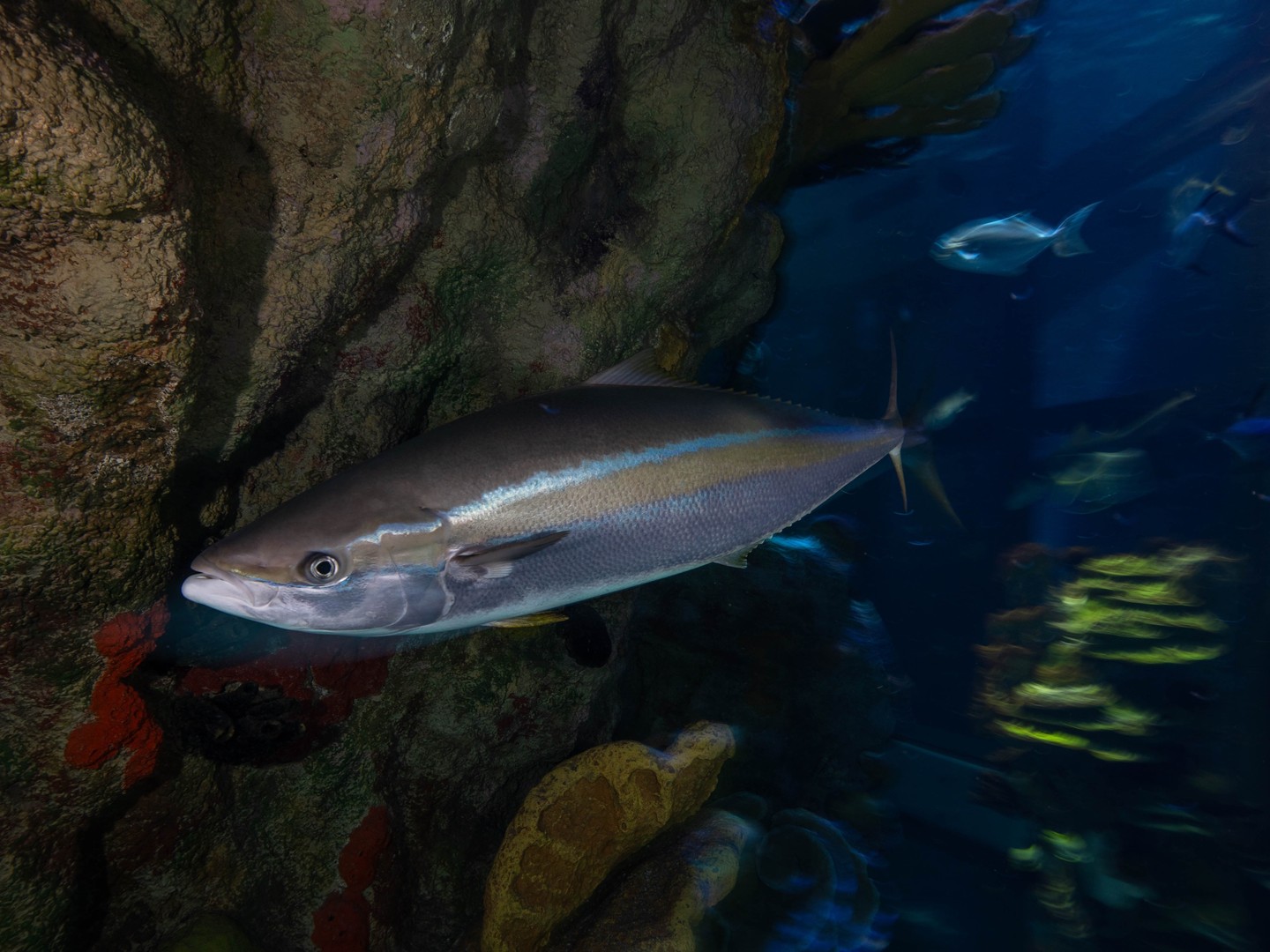
- The physical characteristics and growth of the rainbow runner
- The ecological habitat and distribution of rainbow runners
- Their classification within marine ecosystems
- The role of rainbow runners in the aquarium setting
- Conservation efforts related to marine life, including rainbows runners
The rainbow runner is an intriguing species found within tropical and subtropical ocean waters. Currently, this fish holds the distinction of being one of the largest residents in the Giant Ocean Tank, reaching a maximum size of four feet. Remarkably, when this fish arrived at the aquarium in 2014, it measured a mere five inches, showcasing its impressive growth potential.
Physically, the rainbow runner is characterized by two vibrant blue stripes that traverse its body, accompanied by a central golden stripe. While the name may suggest a spectrum of colors, the actual hues of the fish focus on blue and gold, with its streamlined form optimizing its speed in aquatic environments. These adaptations allow the rainbow runner to thrive as a fast-moving predator in the ocean, making it an effective hunter.
Ecologically, rainbow runners inhabit tropical and subtropical oceans around the globe. This extensive range is one reason why you might encounter different local names for the species. Common aliases include Spanish jack and Hawaiian salmon, reflecting its significance in various cultures and fisheries. This species often frequents open waters, typically near reefs and islands, emphasizing its reliance on healthy marine ecosystems.
Within scientific classification, the rainbow runner belongs to the jack family, Carangidae. It is one of eight species showcased in exhibits that feature jacks. Other species in this family include lookdowns and permits, each contributing to the diversity of marine life celebrated in aquariums. The taxonomic relationship within this family highlights how closely related species can exhibit both similarities and differences in behavior as well as physical characteristics.
In the aquarium environment, rainbow runners play a vital role. Their presence enriches the exhibit and offers a point of fascination for visitors. Observing their behaviors—such as schooling, feeding, and interaction with other species—provides valuable insights into their natural activities. The aquarium setting promotes awareness of marine conservation while educating the public about the complexities of marine ecosystems.
Conservation remains essential for species like the rainbow runner. Although not currently endangered, many marine species face pressures from overfishing, pollution, and habitat destruction. Raising awareness of these challenges and advocating for sustainable practices can significantly impact the health of marine environments. Organizations focused on marine conservation often target educational outreach and community engagement to encourage mindful stewardship of ocean resources.
As part of our broader ecosystem, rainbow runners contribute to the balance of marine life. Their predatory role influences the populations of smaller fish and helps maintain ecological integrity in their habitats. By understanding this species better, we can more effectively advocate for policies aimed at protecting both the species and its environment.
This relationship extends beyond ecological significance. Community members often rely on rainbow runners as a fishery resource, highlighting the importance of regulating catch limits. Sustainable fishing practices allow communities to benefit from these resources while ensuring the species can thrive for future generations. In light of these realities, the rainbow runner exemplifies the intersection of marine biology, community welfare, and conservation advocacy.
In summary, the study of the rainbow runner is a compelling blend of zoology and conservation principles. The growth and behavior of this fascinating fish tell a story about adaptability and the need for concerted efforts to protect marine ecosystems. Through responsible management and continued education, we can safeguard the future of rainbow runners and countless other species, creating a more sustainable and balanced ocean environment.
*****
Source Description
With a maximum size of four feet, the rainbow runner is currently one of the largest fish in our Giant Ocean Tank! 🌈🐠
When this fish arrived at the Aquarium in 2014, they were just five inches long. That’s quite a growth spurt!
Though not technically rainbow-colored, the species gets its name from the two vibrant blue stripes that run the length of its body, separated by a golden stripe. It’s a member of the jack family and one of eight jack species you’ll find in the exhibit—alongside lookdowns, permits, and more.
Rainbow runners are found throughout tropical and subtropical oceans around the world, which is why you might hear them called by other local names too—like Spanish jack or Hawaiian salmon.
