
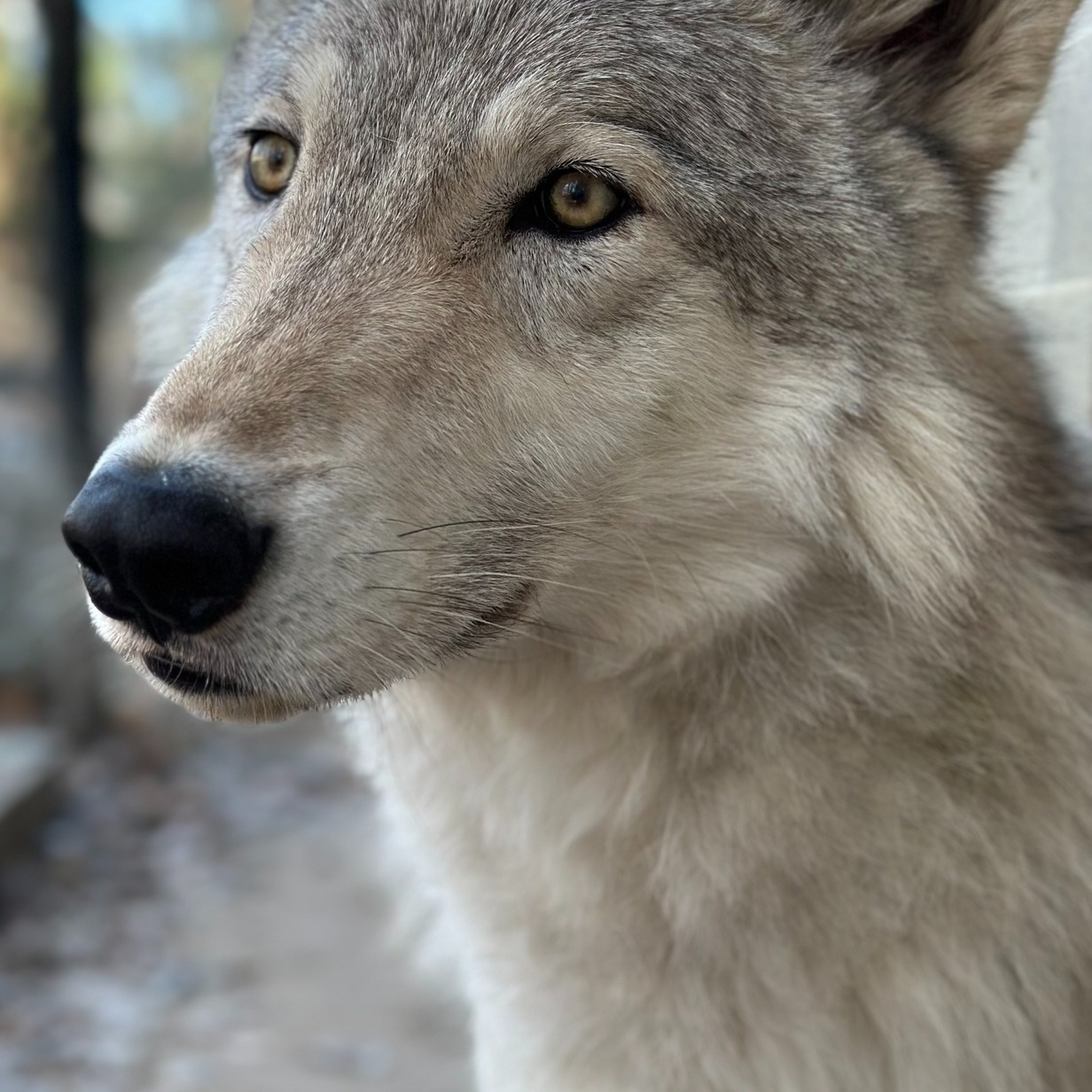
- Simpson’s Early Life and Diagnosis
- The Impact of Congenital Hydrocephalus on Wolves
- Community Support and Veterinary Interventions
- Simpson’s Legacy at ZooMontana
- Conservation and Care for Wolves in Captivity
Simpson’s Early Life and Diagnosis
Simpson’s story began near Condon, Montana, where he was discovered abandoned by his pack at just five weeks old. He was brought to ZooMontana in the summer of 2020, offering him a chance at life among those who could care for him. Early on, caregivers observed irregular behaviors, including clumsiness and poor eyesight. These symptoms led to a veterinary examination, revealing a diagnosis of congenital hydrocephalus—a condition marked by an accumulation of cerebrospinal fluid within the brain.
This diagnosis, relatively rare among wolves, presented significant challenges. Hydrocephalus can cause increased pressure on the brain, leading to neurological issues, which were visible in Simpson’s behavior. Understanding this condition involves recognizing the specific anatomical and physiological challenges it poses. In canids, this can manifest in coordination problems, vision deficits, and sometimes cognitive dysfunction. The early detection of Simpson’s condition was crucial in initiating interventions that would ultimately extend his life.
The Impact of Congenital Hydrocephalus on Wolves
Understanding congenital hydrocephalus involves unraveling the complexities of animal neuroanatomy. This disorder occurs when the flow of cerebrospinal fluid is obstructed, or sometimes when fluid production is excessive. This results in an expansion of the brain’s ventricles, causing potential damage to brain tissues. In wildlife, such conditions can be detrimental, often leading to a reduced lifespan without intervention. Simpson’s journey underscores the importance of monitoring neurological signs in captive animals, especially those with identified vulnerabilities.
For zoologists and veterinarians, assessing hydrocephalus requires a combination of observational expertise and advanced diagnostic tools such as MRI or CT scans, which are not always readily available for wildlife. Treatment often involves surgical intervention, a complex and delicate process in any animal, more so for a species like the grey wolf.
Community Support and Veterinary Interventions
Following Simpson’s diagnosis, ZooMontana turned to the community for assistance. The call for support led to widespread engagement, showcasing how public involvement can significantly impact wildlife care. Donations helped finance a critical surgical procedure: the implantation of a cerebral shunt at Washington State University’s College of Veterinary Medicine. This intricate surgery involved placing a shunt to redirect the cerebrospinal fluid from the brain to the abdomen for reabsorption.
This level of medical intervention is a testament to advances in veterinary medicine and the dedication of those who strive to enhance the quality of life for animals in captivity. However, the challenges persisted when Simpson’s shunt dislodged, necessitating another surgery conducted by specialists in Bozeman. Each medical procedure and recovery phase provided valuable insights into managing congenital conditions in captive wolves.
Simpson’s Legacy at ZooMontana
The story of Simpson serves as a poignant reminder of the deep connections that can form between humans and wildlife. Simpson’s presence at ZooMontana became a narrative of resilience and compassion. Caregivers devoted their energy to enriching Simpson’s life, offering not only medical care but emotional comfort as well.
As the sole grey wolf, his lifetime companion Onyx now continues his journey with attentive care from zoo staff. This transition highlights the importance of social structures in wolf packs and the need to provide adequate enrichment and companionship for animals like Onyx.
Conservation and Care for Wolves in Captivity
Simpson’s life is more than a story of a singular wolf; it reflects the broader challenges facing wolves in captivity. Grey wolves, an iconic species in North American wildlife, embody the complexity of conservation efforts. Habitat preservation, public education, and ecological awareness are vital components of effective conservation strategies.
In zoos, efforts must balance educational objectives with the ethical responsibilities of providing a life as natural and fulfilling as possible. Simpson’s journey also illustrates the role of modern zoos in biological conservation and veterinary advancements. It underscores the need for continued public support and scientific research to improve the standards of wildlife care.
Through stories like Simpson’s, there is an opportunity to foster greater understanding and appreciation for the intricate lives of animals that inhabit our shared world. Simpson’s impact reaches beyond his physical presence, inspiring ongoing efforts to conserve wildlife and enhance animal welfare practices globally. In celebrating his life, we also reaffirm our commitment to the care and future of wolves and the natural world they represent.
*****
Source Description
With heavy hearts, we share the passing of Simpson, our beloved grey wolf.
Simpson’s story is one that we hold near and dear to us, and one that we will tell for years to come. Simpson was found abandoned by his pack near Condon, Montana, when he was thought to be about five weeks old. He was then brought to ZooMontana in June of 2020. After noticing some irregular behavior, such as clumsiness and poor eyesight, a trip to the vet determined that Simpson had a condition known as congenital hydrocephalus. This condition causes a buildup of fluid on the brain, which is something that Simpson was born with.
Upon this diagnosis in 2021, we asked for public help to raise funds for Simpson’s surgery. The outpouring of support and reassurance from many of you who have or know of someone who has this same diagnosis is something we will not soon forget. With your support, Simpson went to Washington State University’s College of Veterinary Medicine to have a shunt placed in his brain that would drain the fluid from his brain into his abdomen. This surgery was successful, and his original shunt lasted until just last year when the shunt dislodged. Simpson went through another shunt surgery closer to home in Bozeman with the help of Bridger Veterinary Specialists. He recovered well from this surgery, and we are so grateful for the additional time this surgery gave us.
Sadly, despite these efforts, Simpson’s condition continued to take a toll. In recent weeks, his caregivers noticed a decline in his energy and overall health. Surrounded by those who loved and cared for him most, Simpson was humanely euthanized.
His packmate, Onyx, now carries on as the sole member of our wolf pack. He will receive the utmost care and attention from our dedicated team as we move forward.
To everyone who followed Simpson’s journey, supported his care, and celebrated his life with us—thank you. You helped give him a story worth remembering. Our hearts are with you, and with the ZooMontana staff and volunteers who gave Simpson a life filled with love, dignity, and compassion.
