
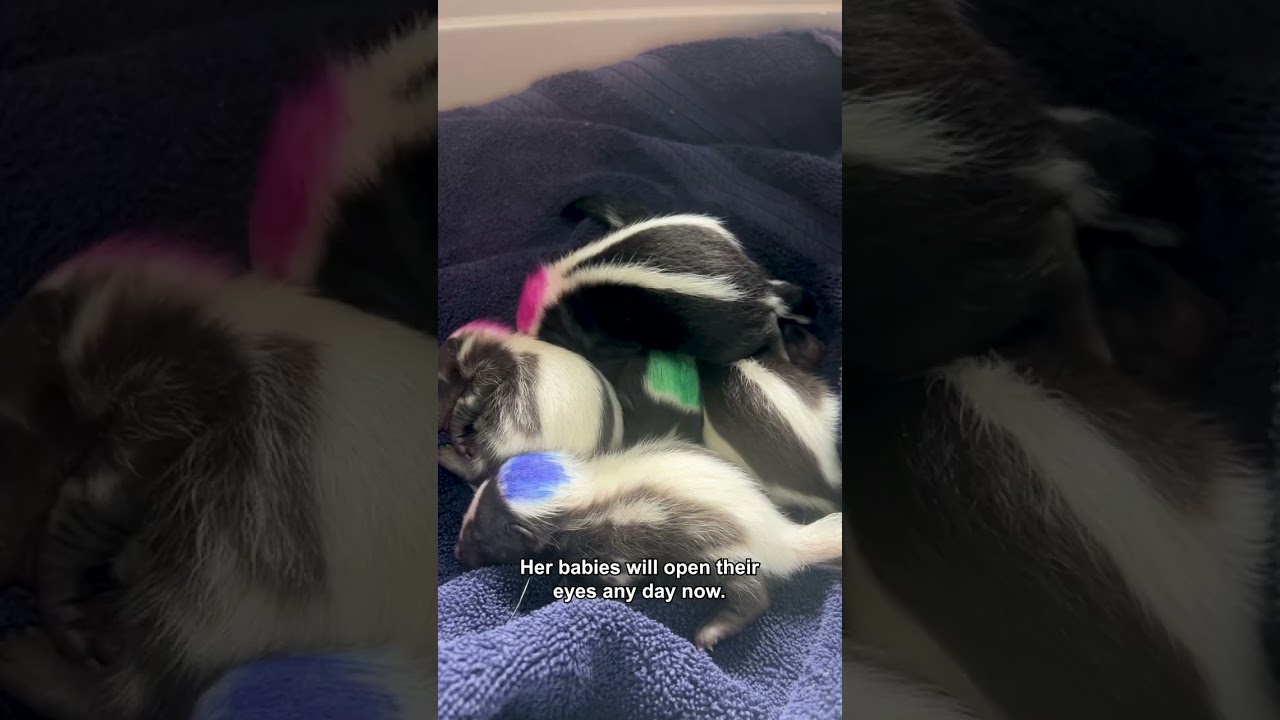
- The rapid growth and development stages of skunk kits.
- Behavioral traits and social dynamics of skunk families.
- Importance of zoology and zoo management in the nurturing of skunk kits.
- Conservation efforts and challenges in protecting skunk populations.
- Public engagement and educational value of wildlife videos.
In the fascinating journey of wildlife, the rapid development of skunk kits provides a unique insight into the intricacies of mammalian growth. Skunks, known for their distinctive black and white markings and their defensive spray, are intriguing creatures in the animal kingdom. Understanding the growth and development of skunk kits sheds light on their behavior, survival strategies, and their role in ecosystems.
The growth rate of skunk kits is remarkable. Born blind and deaf, these kits rely heavily on their mother in the early weeks. Their eyes open at about three weeks, and by the age of six weeks, they begin to explore their surroundings. This period is crucial for their motor skill development and social bonding. As they grow, skunk kits play and interact with each other, learning important survival behaviors that will benefit them in the wild.
Skunks exhibit unique behavioral traits and social dynamics. Mothers are protective and nurturing, often leading their young on exploratory missions. They communicate through various sounds and body language, teaching the kits how to forage and avoid predators. This social interaction is vital for their cognitive development. Observing these behaviors offers valuable information on skunk social structures and familial roles.
The role of zoology and zoo management is critical in supporting the health and welfare of skunk kits. Through careful monitoring and environmental enrichment, zoo professionals create habitats that encourage natural behaviors. This management ensures the kits have the best possible upbringing, simulating the challenges they might face in the wild. Collaboration between zoologists and veterinarians provides essential care and nutrition for the kits, improving their chances for a healthy adulthood.
Conservation efforts play a significant role in safeguarding skunk populations. Habitat destruction and human activities pose threats to their survival. Organizations and wildlife reserves work tirelessly to protect skunks by preserving their natural habitats and promoting biodiversity. Public education on skunk ecology and the importance of these animals in controlling insect populations fosters greater appreciation and conservation support.
The public engagement fostered by wildlife videos is immense. By showcasing the development and antics of skunk kits, these videos raise awareness and spark curiosity about wildlife. Educational content can dispel myths and encourage conservation-minded attitudes in viewers of all ages. These videos are not just entertainment; they are vital tools for inspiring future generations to value and protect our natural world.
Through an understanding of the skunk kits’ growth, behaviors, and the conservation challenges they face, we gain a broader perspective on the importance of preserving wildlife. The synergy between zoology, zoo management, and public education forms a foundation for thriving skunk populations, contributing to the health of ecosystems they inhabit.
*****
Source Description
The skunk kits are growing fast!
Padfoot and Isabel are busy moms, each raising a litter of seven baby skunks. The litters arrived just two weeks apart. Padfoot’s kits are just beginning to open their eyes and are extra snuggly. Isabel’s kits are the oldest, full of energy and already exploring their surroundings. The best time to see them is during our skunk training demonstrations in The Loft, held Mondays, Wednesdays, Thursdays, Saturdays and Sundays at 2:30 p.m.
These skunks will head to other AZA zoos when they’re mature and independent in the coming months. At their new homes, they’ll represent their wild counterparts and help even more people learn to love and appreciate skunks.
