
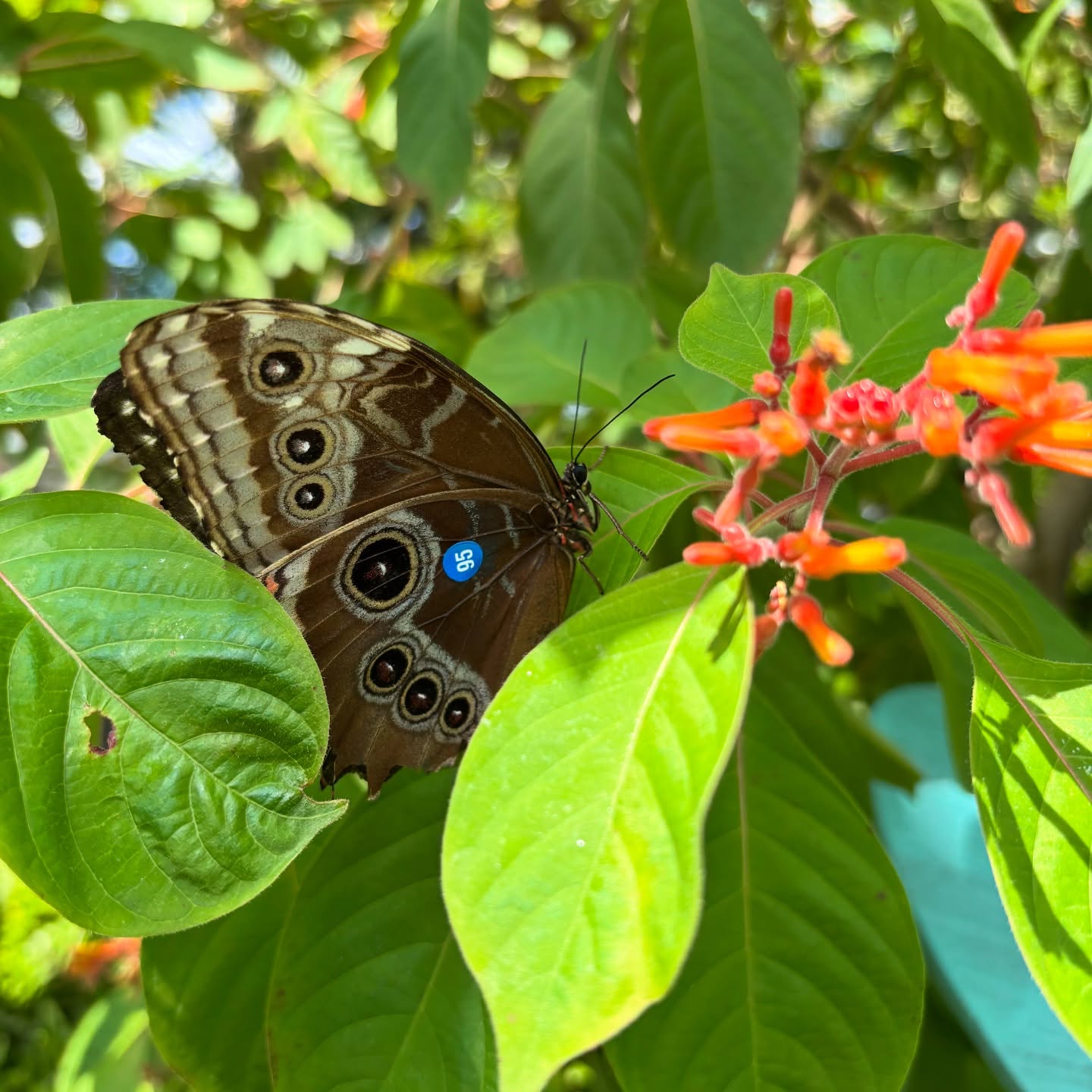
- The importance of butterfly tracking in conservation efforts.
- Detailed explanation of butterfly life cycles and longevity.
- Insights into the role of public participation in scientific research.
- The scientific and educational value of butterfly conservatories.
- Technological methods for tracking and data collection in entomology.
Butterfly Tracking in Conservation
Butterfly tracking is a pivotal component of conservation biology, providing essential insights into the lives of these delicate creatures. By observing butterflies with stickers in a tropical conservatory, scientists obtain valuable data on their behavior, movement patterns, and longevity. This information is crucial for developing effective conservation strategies, as it enhances our understanding of species dynamics and ecosystem health. The initiative of photographing stickered butterflies and sending these images to the Missouri Botanical Garden’s entomological team is a collaborative effort that enriches scientific knowledge and supports conservation initiatives.
Understanding Butterfly Life Cycles
Butterflies undergo a fascinating life cycle, encompassing four distinct stages: egg, larva (caterpillar), pupa (chrysalis), and adult. Each stage is crucial for the survival and reproduction of butterflies. Longevity varies widely among species, with some living only a few weeks while others may survive for months. Understanding these cycles is vital as it influences how butterflies interact with their environment and respond to ecological changes. Studying their life span helps researchers identify factors that affect their survival, such as climate change and habitat loss, which are critical for effective conservation management.
Public Participation in Scientific Research
Public engagement in scientific endeavors greatly benefits research outcomes, and butterfly tracking is a prime example. By inviting visitors to the conservatory to photograph and report butterfly sightings, scientists gain a broader data set than could be achieved by researchers alone. This participatory approach not only aids in data collection but also fosters a deeper connection between the public and the natural world. It encourages a sense of stewardship and raises awareness about biodiversity conservation. Moreover, the collaboration between scientists and citizen scientists can lead to increased advocacy and funding for conservation projects.
The Value of Butterfly Conservatories
Butterfly conservatories serve as both scientific research sites and educational centers. They provide a controlled environment to study butterfly behavior and physiology, offering insights that can be applied to in-situ conservation efforts. Additionally, these conservatories provide the public with a unique opportunity to observe butterflies up close, fostering appreciation and understanding of these creatures and their roles in ecosystems. Education programs within conservatories often focus on the importance of biodiversity and the need for conservation actions, contributing to a more informed and engaged populace.
Technology in Butterfly Research
Advancements in technology have revolutionized the field of entomology, allowing for more accurate and efficient data collection. In the context of butterfly tracking, technologies such as GPS tagging, remote sensing, and digital photography play significant roles. These tools enable researchers to monitor butterfly populations and movements with greater precision. Employing such technologies aids in understanding migration patterns and habitat preferences, which are crucial for developing targeted conservation strategies. The integration of citizen-sourced data further enhances this research, highlighting the synergy between technology and public participation in advancing scientific knowledge.
*****
Source Description
If you “spot” a butterfly in our Tropical Conservatory with a sticker, take a photo and send it to us at entolab@mobot.org. Our entomologists are recording data on the longevity of our butterflies and appreciate your help! 🦋
📷: Jennifer Mullix
