
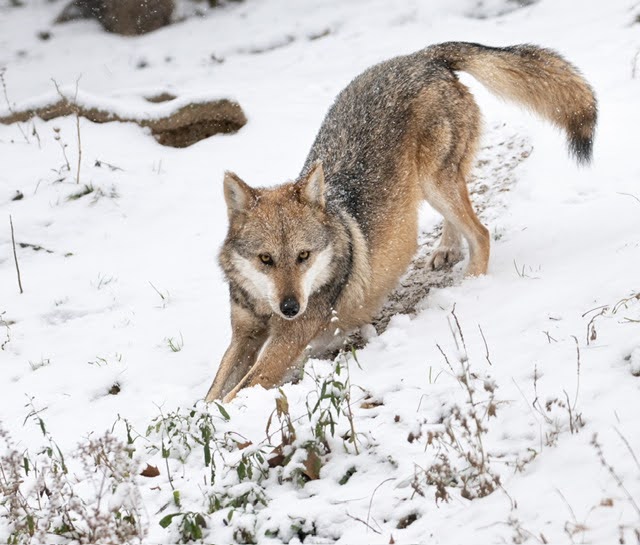
- Explore the life and characteristics of Springer, the Mexican wolf, and Chang, the American Red Wolf, emphasizing their unique attributes and roles in their respective conservation programs.
- Discuss the significance of wolf conservation, highlighting the efforts and challenges associated with preserving these crucial species.
- Explain the collaboration between zoos and conservation organizations in breeding and education projects to protect endangered wolf populations.
- Encourage participation and awareness through events like EarthDay365 to support wolf conservation and environmental sustainability.
Springer, our majestic Mexican wolf, and Chang, our resilient American Red Wolf, are not just awe-inspiring beings of nature; they are also representatives of two of the most endangered wolf species. Understanding their life, behavior, and natural habitats provides invaluable insight into conservation efforts.
Mexican wolves, historically native to parts of the American Southwest and northern Mexico, were once eliminated from the wild due to conflicts with human activities, such as hunting and habitat destruction. Springer is a crucial member of a conservation project aimed at preventing the extinction of this species. Mexican wolves are known for their social structures, where they travel in packs with a clear hierarchy, and breeding pairs, like Springer’s family, help maintain the continuity of their lineage.
In contrast, Chang, the American Red Wolf, symbolizes another branch of the canid family tree that faces its own set of challenges. American Red Wolves are native to the southeastern United States. Their population dwindled due to widespread land clearance and the mistaken perception of these wolves as threats. Projects for their recovery involve carefully managed breeding programs within controlled environments. Such initiatives are critical as there are fewer than 20 American Red Wolves left in the wild, making Chang a key player in the survival of his species.
Conservation is a complex tapestry that requires understanding the ecological, social, and political factors influencing species survival. Both Springer and Chang’s stories highlight the importance of conserving genetic diversity, managing habitats, and addressing human-wildlife conflicts. Programs dedicated to reintroducing these wolves into the wild are ongoing, with constant adaptation to new challenges, such as climate change and fluctuating public perceptions.
Collaborations between zoos, wildlife parks, and conservation organizations are essential in supporting breeding and educational efforts. Zoos like ours serve as vital sanctuaries where endangered wolves can thrive under expert care, educating the public and inspiring future conservationists. Managed breeding is fundamental to maintaining healthy populations with diverse genetics, allowing for eventual reintroduction into their natural habitats.
Education plays a pivotal role in garnering public support for wolf conservation. Events such as EarthDay365 in Forest Park provide incredible opportunities to educate visitors about these magnificent creatures and the ecological roles they play. People who visit can connect with these animals on a personal level and better appreciate the importance of preserving natural biodiversity.
Participating in these educational initiatives fosters a deeper appreciation for environmental sustainability and bolsters communal efforts to protect vulnerable species. By increasing awareness and adjusting our behaviors toward wildlife and nature, each person contributes positively to the delicate balance required for the thriving of ecosystems worldwide. Whether it’s avoiding encroachment on habitats, reducing carbon footprints, or supporting legislative measures for wildlife protection, public involvement is paramount.
The contributions of Springer and Chang are not confined to captive environments. Their presence in conservation programs symbolizes hope for the continuity of threatened species. Successful conservation not only involves protecting individual animals but also encompasses broader habitat preservation and restoration efforts. By safeguarding ecosystems, we support a myriad of organisms, each playing its part in the overall health of the environment.
Through dedicated conservation efforts and an informed public, a future where wolves roam once more with stability and security is feasible. As stewards of our environment, our responsibility is to merge scientific knowledge with proactive conservation actions, ensuring that the howl of the wolf continues to be heard, a symbol of wild vitality and balance.
*****
Source Description
Awoooo – it’s Springer, our Mexican wolf, and Chang, our American Red Wolf’s birthdays today!
Visit us this weekend at EarthDay365 in Forest Park to learn about wolves and their conservation. Stop by our booth and say hi!
