
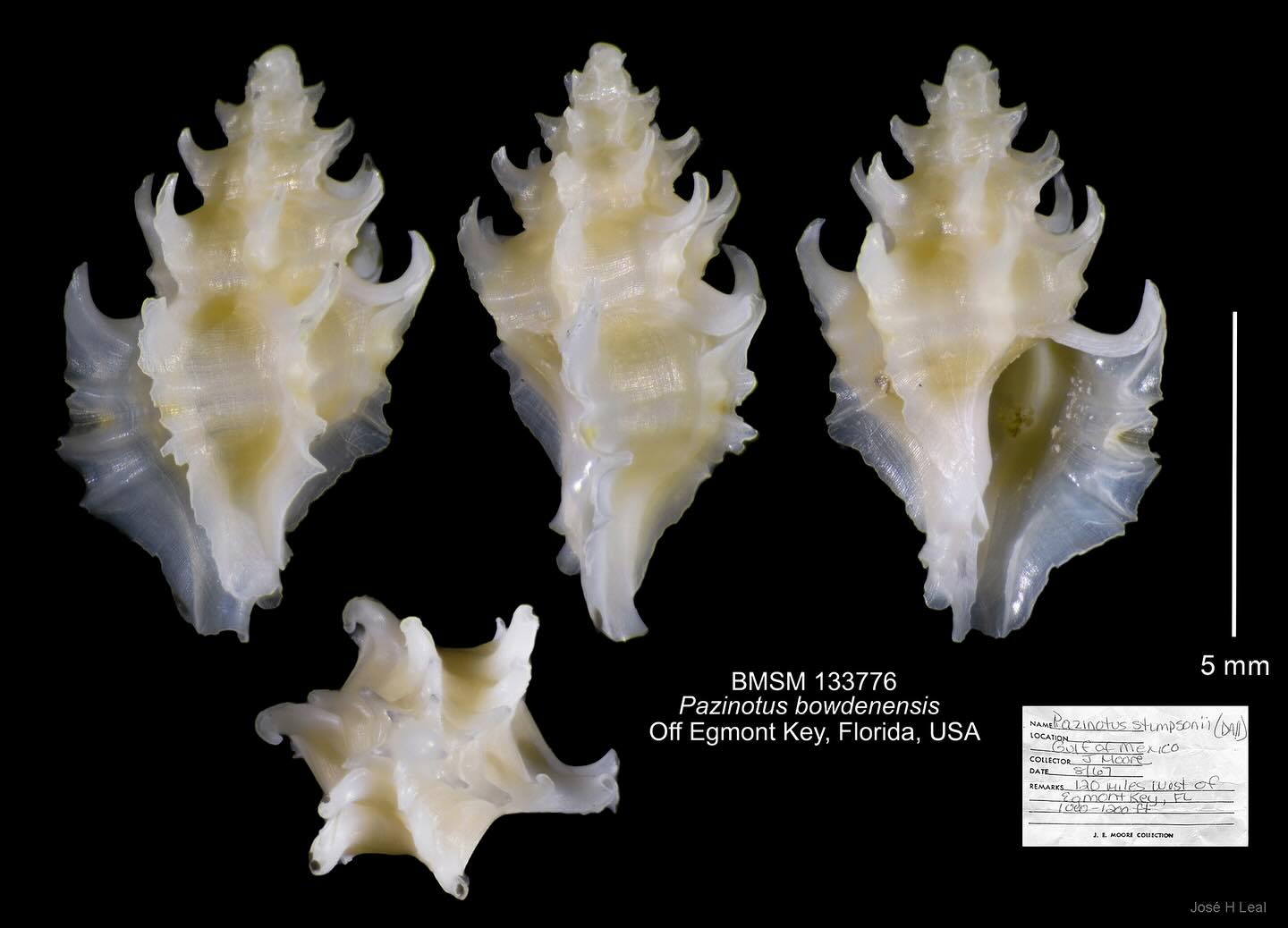
- Overview of Pazinotus bowdenensis, including physical characteristics and habitat
- Historical context and significance of the species discovery
- Distribution and ecological role in the Gulf of Mexico
- Conservation status and implications for marine ecosystems
- Research and educational initiatives surrounding the Bowden Murex
Pazinotus bowdenensis, commonly known as The Bowden Murex, is a fascinating marine gastropod that showcases intricate design and adaptability. This species reaches a height of about 14 mm (approximately 0.6 inches) and exhibits a remarkable structure featuring six to seven strong varices per whorl. The varices are not just decorative; they are adorned with prominent, curved spines at the whorl shoulders. Typically ranging in color from whitish to cream-yellow, some specimens display delicate translucence, creating a visually appealing aesthetic that captivates both collectors and scientists alike.
Evolving from a singular fossil shell discovered by Dr. Emily Vokes in the Bowden Formation of Jamaica, this species offers profound insights into marine life during the late Pliocene epoch. A defining moment in malacology, Dr. Vokes’ description laid the foundation for further research into the species and its relatives. This initial fossil find emphasizes the historical significance of Pazinotus bowdenensis and its evolutionary journey, illustrating how paleontological discoveries inform current biological understandings.
The Bowden Murex inhabits the Gulf of Mexico, notably off western Florida and Alabama. The species is typically found at depths of 305-366 meters (1,000-1,200 feet), particularly around Egmont Key, Florida, where many specimens have been dredged. This depth suggests an adaptation to a specific ecological niche, characterized by distinct pressure and temperature gradients. The species contributes to the diversity of marine ecosystems and is an important member of its community, engaging in competition and interacting with various sea life forms.
Understanding the ecological role of Pazinotus bowdenensis requires a broader look at the marine environment it occupies. As a predatory snail, it preys on smaller organisms, effectively participating in trophic dynamics. The well-developed spines and varices may serve multiple functions, including defense against predators and aiding in camouflage among the substrate. The intricate features of The Bowden Murex not only contribute to its survival but also add to the complex web of life in the sea.
Threats to marine biodiversity continue to grow, highlighting the need for conservation efforts focused on species like Pazinotus bowdenensis. While this murex is not currently listed as endangered, marine ecosystems face challenges from pollution, climate change, and habitat degradation. The importance of educational initiatives surrounding such species cannot be overstated. These programs raise awareness about marine conservation, emphasizing the fragile balance of oceanic ecosystems and the species that inhabit them.
Research initiatives provide valuable data about the Bowden Murex, including its life cycle, breeding habits, and behavioral patterns. Such information is critical for developing effective conservation strategies. Collaborative projects, often funded by institutions like the National Science Foundation, enhance understanding of molluscan diversity along the Eastern Seaboard of the United States. These efforts showcase the importance of scientific inquiry in promoting marine biodiversity and environmental stewardship.
Pazinotus bowdenensis stands as a testament to the rich biodiversity of marine life in the Gulf of Mexico. Its intricate physical characteristics, historical context, ecological role, and conservation significance create a multifaceted profile worthy of exploration. Efforts to study and protect this species exemplify the broader need to safeguard marine ecosystems, ensuring that such unique organisms remain an integral part of our environmental heritage. Through dedicated research and education, the appreciation of The Bowden Murex can continue to grow, fostering a deeper understanding of the delicate interdependencies within marine habitats.
*****
Source Description
The Bowden Murex, Pazinotus bowdenensis (E. H. Vokes, 1970), reaches about 14 mm (about 0.6 inch) in height. It shows a sculpture of about 6–7 strong varices per whorl. The varices bear prominent, curved spines on the whorl shoulders. The color is whitish to cream-yellow, but some shells can be translucent and very delicately colored. The species was first named by Dr Emily Vokes from a single fossil shell from the Bowden Formation (late Pliocene) in Jamaica but has since been found living off western Florida and Alabama in the Gulf of Mexico. The shell in the photos was dredged between 305–366 meters (1,000-1,200 feet) depth off Egmont Key, Florida. Illustration by José H. Leal for the Mollusks of the Eastern Seaboard project funded by the National Science Foundation.
