
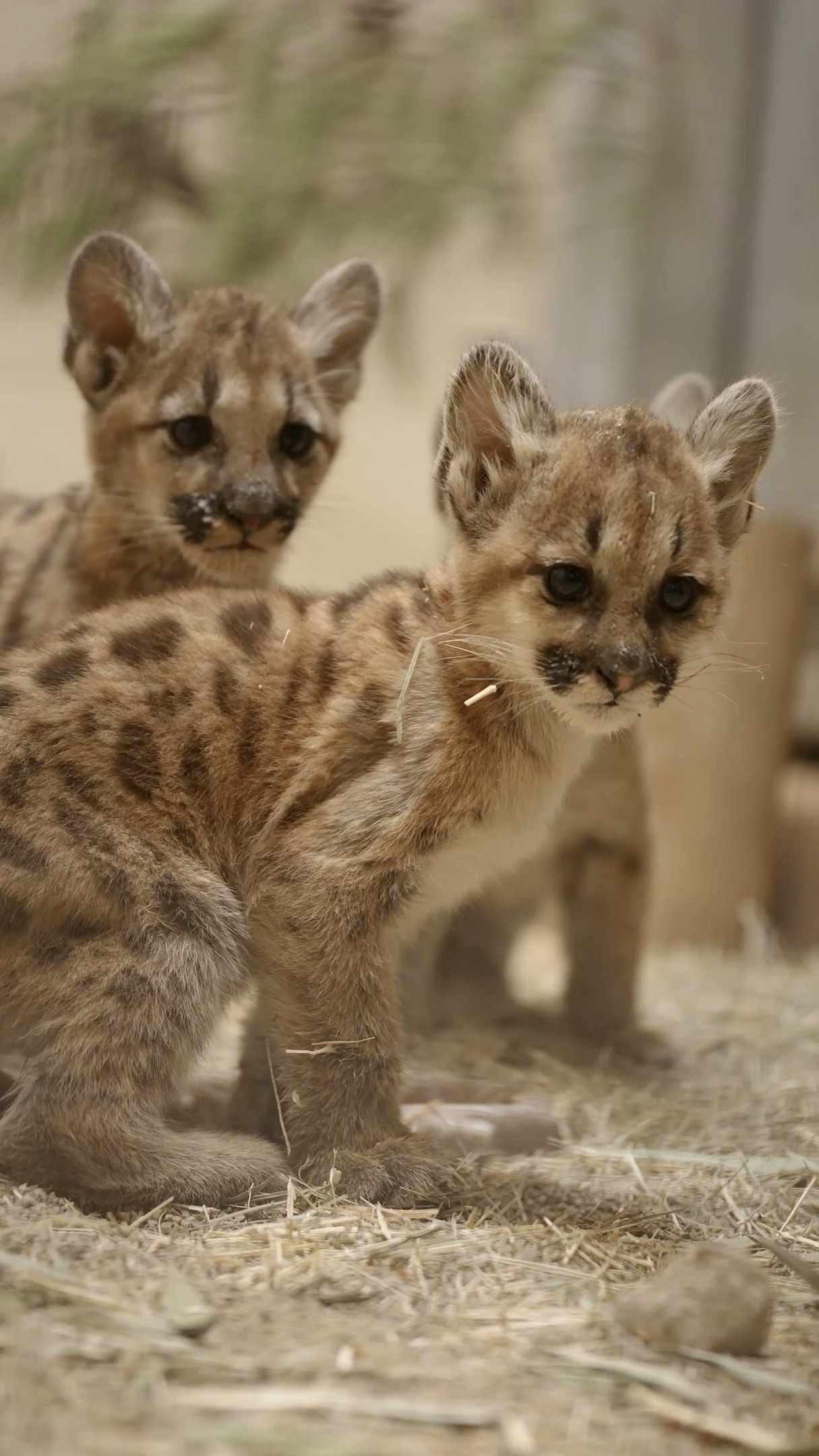
- The journey of the mountain lion trio from orphans to thriving adults.
- Distinct personalities of Hemuk, Te’Oyee, and Pehkaay and their social dynamics.
- The importance of wildlife rescue and rehabilitation in conservation efforts.
- Challenges mountain lions face in the wild and the impact of human activity.
- Educational outreach and public awareness in fostering wildlife stewardship.
The story of the mountain lion trio—Hemuk, Te’Oyee, and Pehkaay—begins two years ago when they were saved as six-week-old orphaned cubs. Their remarkable journey from vulnerable infants to celebrated young adults is not just a personal triumph, but a significant milestone for wildlife conservation organizations and the public alike. Each cub has developed a strong identity, exhibiting individual traits that, when combined, create an engaging narrative about these majestic creatures.
These mountain lions exhibit a fascinating range of personalities that reflect both their innate instincts and the environment in which they are nurtured. Hemuk, the eldest, tends to be the most curious and adventurous, often the first to explore new territory or investigate novel objects in their habitat. Te’Oyee, conversely, is more reserved, typically observing and assessing before actively engaging. This cautious nature often balances the exuberance of Hemuk. Pehkaay presents a blend of the two—playful yet thoughtful, often acting as a mediator between the spirited antics of Hemuk and Te’Oyee’s contemplative approach.
The social dynamics exhibited by this trio are significant not only for their well-being but also for understanding mountain lion behavior as a whole. Contrary to common perceptions that mountain lions are solitary animals, these cubs’ interactions have showcased a complex social structure that provides insight into their natural behaviors. Observations suggest that, in the wild, familial or kin networks can play crucial roles in survival and learning. Through their interactions, the trio engages in playful sparring and cooperative play that mimics hunting behaviors, an essential aspect of their growth.
Wildlife rescue and rehabilitation operations such as the one that saved Hemuk, Te’Oyee, and Pehkaay serve vital functions in broader conservation efforts. Upon rescue, these cubs underwent medical evaluations to ensure they were healthy and free of any congenital issues. The rehabilitation process also focused on maternal instinct development, critical for their future interactions with potential mates and offspring in the wild. Their rescue and subsequent care illustrates how human intervention can positively affect wildlife populations that face immediate threats to their survival.
Mountain lions, known scientifically as Puma concolor, face numerous challenges in their natural habitats, many of which are exacerbated by human encroachment. Habitat fragmentation due to urbanization reduces their territory and hunting grounds, increasing conflict between wildlife and human populations. This environmental pressure often leads to decreased genetic diversity, which can ultimately threaten the entire population. As communities expand and develop, understanding how to coexist with mountain lion populations is essential.
Education and public awareness play a crucial role in fostering a culture of wildlife stewardship. The story of Hemuk, Te’Oyee, and Pehkaay serves as a compelling case study to illustrate the resilience of wildlife and the importance of caring for vulnerable species. Conservation organizations often utilize such narratives to engage the public, transforming personal stories into broader educational opportunities. Schools, community centers, and even social media platforms are increasingly tasked with conveying the significance of wildlife conservation to diverse audiences.
In the two years since their rescue, Hemuk, Te’Oyee, and Pehkaay have not just grown in size but have also become ambassadors for their species. Their remarkable journey captivates the hearts of many who encounter their story. Their experience emphasizes the need for ongoing education about mountain lions, their ecological importance, and the intricate balance needed to maintain healthy ecosystems.
Public outreach initiatives focusing on mountain lions aim to dispel myths surrounding these apex predators. Many people harbor fears about living in proximity to mountain lions, often misunderstanding their behavior and habitat needs. By sharing factual information about their territoriality, hunting patterns, and roles within the food chain, public education can reduce fear and promote coexistence. It is essential to illustrate that mountain lions primarily prey on deer and are generally not a threat to humans if left undisturbed.
In addition to educating the public, conservation groups often collaborate with local governments to develop policies that protect these magnificent animals. Establishing protective zones, wildlife corridors, and promoting responsible land management practices allows mountain lions to thrive. Ensuring that these cats have safe passageways between territories can significantly enhance their chances of long-term survival in fragmented landscapes.
For those who have had the privilege of observing this mountain lion trio, the bond they share offers a glimpse into the social complexity of their species. Their growth story reflects a larger narrative about the importance of conservation efforts, especially in today’s rapidly changing environment. By championing wildlife rescue and rehabilitation, reinforcing education and community involvement, society can foster a sense of responsibility toward nature and its inhabitants.
As we celebrate the second birthday of Hemuk, Te’Oyee, and Pehkaay, we also celebrate the commitment of wildlife care specialists who dedicate their lives to rehabilitating orphaned animals. The challenges faced by mountain lions are vast, yet the successes of Hemuk, Te’Oyee, and Pehkaay serve as reminders of what can be accomplished through human compassion and informed action. Recognizing the intertwined lives of humans and animals, we find both inspiration and motivation to protect wildlife.
The two-year journey of this mountain lion trio is a testament to resilience and care. With ongoing efforts, finding solutions to mitigate human-wildlife conflict becomes an achievable goal. Living harmoniously with wildlife not only contributes to ecological balance but enriches the human experience. As more people become aware of the needs and characteristics of mountain lions, the pathway toward coexistence becomes clearer.
The story of Hemuk, Te’Oyee, and Pehkaay embodies hope and serves as a rallying call for wildlife stewardship, showcasing how compassion and informed action lead to better outcomes for all species involved. Their shared journey reminds us of our duty to protect nature’s diversity, fostering a future where both people and wildlife thrive side by side. Through education, conservation, and a commitment to coexistence, we can engage in responsible stewardship that benefits both mountain lions and humanity.
*****
Source Description
Three cubs, two years, one big milestone 🎂
The mountain lion trio is celebrating what wildlife care specialists believe to be their second birthday. Since their rescue as six-week-old orphaned cubs, our team has been paws-itively privileged to watch Hemuk, Te’Oyee, and Pehkaay’s distinct personalities shine as they continue to learn and grow together.
