
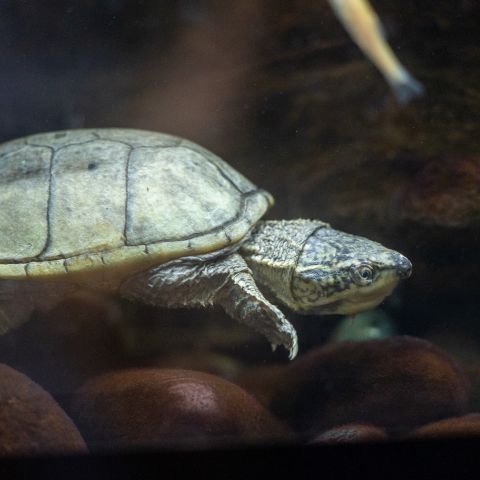
Summary of For Pete’s Sake: Training a Stinkpot Turtle:
At the Oklahoma City Zoo, animal caretakers use positive reinforcement to make care activities less stressful for animals. This method allows animals to participate actively in their care, which is mentally stimulating. Training is not just for mammals and birds, but also for reptiles and amphibians like Pete, a stinkpot turtle. The goal was to teach Pete to “station” in a transport container, making habitat cleaning and veterinary check-ups easier and less stressful. Training starts with a plan created in collaboration with the Behavioral Husbandry team. Instead of a clicker, Pete associates a flash of light with a reward. The process involves guiding him to the container using a target, gradually adjusting until he is comfortable with each step. Training is continuous to ensure behaviors are reinforced, and Pete enjoys the sessions. Visitors can see him in the Big Rivers building at Oklahoma Trails.
- Understanding Positive Reinforcement in Zoo Animal Care
- The Behavioral Training of Reptiles: Focusing on Pete the Stinkpot Turtle
- Strategies for Effective Animal Care and Stress Reduction
- The Role of Animal Training in Conservation and Education
- Insights into Animal Caretaker Collaboration and Training Methodology
Positive reinforcement is a vital component of animal care in modern zoological settings, reflected in training practices across a diverse range of species. This approach emphasizes rewarding desired behaviors, transforming potentially stressful tasks into engaging and beneficial experiences for both caretakers and animals. At the Oklahoma City Zoo, positive reinforcement is a cornerstone of their approach, applying it to mammals, birds, and notably, reptiles like Pete the stinkpot turtle. Such training not only aids in routine care but also enhances the animals’ welfare by reducing stress and fostering mental stimulation.
Training reptiles, particularly Pete the stinkpot turtle, showcases the adaptability and creativity required in animal care. Unlike more conventional pets, reptiles can present unique challenges due to their environmental needs and behavioral patterns. A significant training goal for Pete was to station in a transport container. This task, while seemingly simple, requires a targeted approach tailored to Pete’s specific behavior and habitat requirements. Positive reinforcement began with associating a signal, a flash of light, with rewards. This method bypassed conventional clickers, which are less effective underwater, demonstrating the necessity for innovative thinking in reptile care.
For Pete, the training sequence involved incremental steps to ensure comfort and compliance. Initially, the focus was on associating the light signal with positive outcomes. From there, Pete learned to approach and follow a target into the transport container. The process underscores the importance of gradual, step-by-step progression. These steps were carefully structured to allow Pete to acclimate to each phase, ensuring he remained stress-free. The target was eventually phased out, guiding Pete to enter the container voluntarily. This meticulous approach exemplifies effective training strategies, crucial for reducing stress and enhancing animal wellbeing.
Beyond individual animal care, such training practices hold significant implications for conservation and education. By reducing stress and promoting mental engagement, positive reinforcement supports healthier, more active animals. This approach not only benefits the animals but enhances educational outcomes for zoo visitors. Observing well-cared-for animals participating in their own care process educates the public on the importance of animal welfare and conservation. The ability of reptiles, amphibians, and even fish to learn through positive reinforcement challenges common misconceptions, enriching public understanding and appreciation of these species.
The collaborative efforts between zoo caretakers and behavioral specialists demonstrate the complexities and dedication involved in effective animal management. Developing a training plan for animals like Pete involves an interdisciplinary approach, drawing on expertise in animal behavior, welfare, and rehabilitation. Each training plan is crafted to suit the animal’s specific needs and environmental factors. This teamwork is crucial to achieving successful outcomes, reflecting a commitment to thoughtful and ethical animal care practices that prioritize the wellbeing of zoo inhabitants.
In essence, training strategies like those employed with Pete the stinkpot turtle underline the critical role of positive reinforcement in modern zoo management. By transforming routine care tasks into positive experiences, zoos enhance animal welfare and engage the public in meaningful conservation dialogues. Through innovative and collaborative practices, zoos can create enriching environments for their animals, while simultaneously fostering public education and conservation awareness. With ongoing dedication to improvement and adaptation, zoos continue to expand their impact on wildlife preservation and animal welfare education.
