
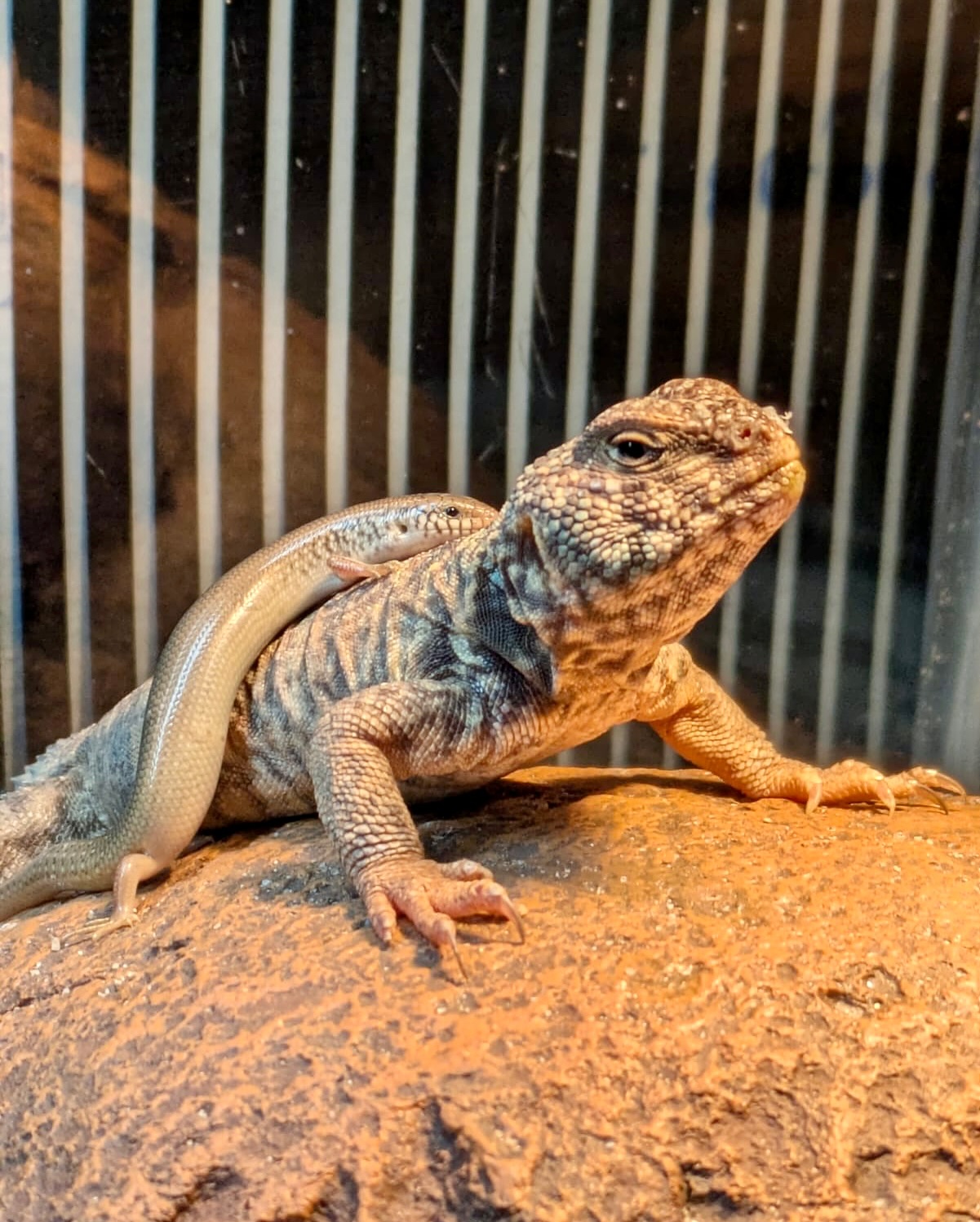
- Overview of Ornate Uromastyx and Oscillated Bronze Skink
- Social Behaviors and Habitat Preferences
- Nutritional Needs and Basking Habits
- Conservation Status and Efforts
- Importance of Awareness and Engagement in Wildlife Conservation
The ornate uromastyx (Uromastyx ornata) and the oscillated bronze skink (Mabuya unicolor) are remarkable examples of reptilian diversity. These lizards boast fascinating adaptations that allow them to thrive in contrasting environments. The ornate uromastyx, native to arid regions in North Africa and the Middle East, is well-adapted to desert life. Its robust, spiny tail is its most striking feature, serving as both a defense mechanism and a means of thermoregulation. In contrast, the oscillated bronze skink, found in various parts of sub-Saharan Africa, showcases a more sleek and agile physique. These two species demonstrate not only the beauty of lizard diversity but also the dynamic interactions that take place between different species within their habitats.
The relationship between the ornate uromastyx and the oscillated bronze skink underscores a critical aspect of herpetology: social behaviors among reptiles. Both species exhibit varying levels of social interaction. The ornate uromastyx is primarily social during basking, where it shares prime spots with others of its kind; this behavior allows it to regulate body temperature effectively. Meanwhile, the oscillated bronze skink displays more solitary tendencies. It typically prefers to bask alone, relying on its agility to navigate through the foliage of its habitat. Understanding these social dynamics gives valuable insights into individual behaviors and ecological relationships.
Nutrition plays a pivotal role in the health and longevity of the ornate uromastyx and the oscillated bronze skink. The ornate uromastyx primarily grubs through vegetation, showcasing its herbivorous diet. Its diet consists largely of leafy greens, flowers, and fruit. This specialized diet is essential for maintaining its metabolic processes and sustaining energy levels, especially to cope with the harsh desert conditions. Conversely, the oscillated bronze skink incorporates a more varied diet that includes insects, fruits, and other plant materials. This flexibility in diet allows it to adapt more easily to seasonal changes and varying availability of food sources.
Basking habits are crucial for ectothermic animals like lizards. The ornate uromastyx seeks out sunny areas to raise its body temperature, essential for digestion and energy balance. Basking is integral not only for individual health but also for social interactions, as seen when multiple individuals congregate at optimal locations. The oscillated bronze skink, although more inclined toward solitary basking, still recognizes the importance of temperature regulation and will also expose itself to sunlight to stimulate physiological processes necessary for its survival.
Both the ornate uromastyx and the oscillated bronze skink face threats that impact their populations. Habitat destruction, climate change, and poaching are significant factors that jeopardize their survival. The ornate uromastyx’s specific habitat requirements make it particularly vulnerable to environmental changes. Conservation efforts are essential not only for these species but for maintaining biodiversity as a whole. Initiatives such as habitat restoration, awareness campaigns, and breeding programs can help ensure their populations remain stable.
The conservation status of these lizards emphasizes the need for public engagement and education. Understanding the ecological roles that reptiles play fosters an appreciation for their existence and the protection of their habitats. It is vital for communities and organizations to raise awareness about the plight of reptiles. Educational programs in schools, social media campaigns, and community outreach can be powerful tools in inspiring conservation action. Every individual can contribute to broader efforts, whether through responsible pet ownership, supporting conservation organizations, or simply spreading knowledge about the natural world.
Encouraging sustainable practices and habitat protection are essential to ensure species like the ornate uromastyx and the oscillated bronze skink continue to thrive. Steps taken by individuals can lead to larger impacts. Individuals can advocate for policies that protect natural ecosystems or participate in local clean-up efforts. When communities come together to champion wildlife conservation, it sends a strong message about the value of biodiversity and the need for sustainable practices.
Awareness of reptiles, especially those as unique as the ornate uromastyx and the oscillated bronze skink, is crucial for fostering a healthier planet. Engagement through educational avenues can inspire a new generation of conservationists. This commitment to biodiversity is fundamental in addressing the challenges that various species face today. By taking an active role in protecting our natural habitats, we also safeguard the intricate web of life that sustains us all.
*****
Source Description
me and who?
This ornate uromastyx and oscellated bronze skink certainly don’t seem to mind each other’s company! Sharing is caring – especally when it comes to the prime basking spot
