
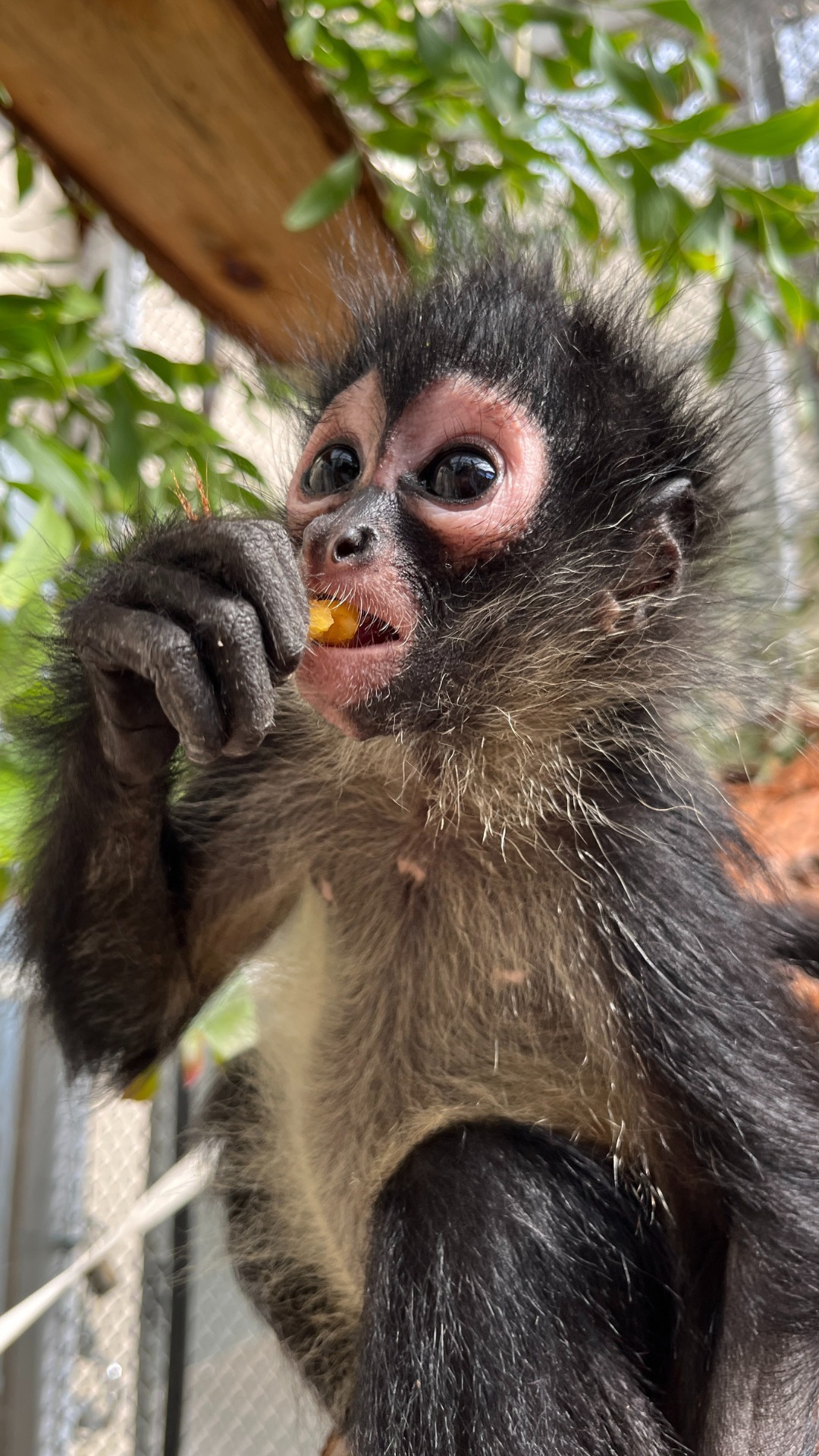
- Violeta’s recovery from quarantine and her new living environment
- The plight of spider monkeys and their endangered status
- The illegal pet trade and its impacts on wildlife
- The importance of proper care and companionship for nonhuman primates
- The role of conservation organizations and Species Survival Plans
Violeta the spider monkey has recently returned to a state of health, cleared from all infectious disease testing, and is adjusting to a larger living space that includes outdoor access. After spending time in quarantine, she is starting to put on weight, thanks to the dedicated efforts of our veterinary team. This milestone is cause for celebration, as Violeta’s journey reflects both individual progress and larger conservation issues.
Spider monkeys, including Violeta’s species, are currently classified as endangered. Their populations have been severely impacted by habitat loss, hunting, and the illegal pet trade. When discussing Violeta’s circumstances, it’s essential to understand that her life was initially not intended to be confined. Spider monkeys are highly social, intelligent creatures that thrive in dynamic environments. They are adapted to life in the treetops of tropical forests, where they engage in complex social interactions and utilize resources from their surroundings.
The illegal pet trade is a significant factor contributing to the decline of spider monkey populations. Many individuals are taken from their natural habitats and sold as exotic pets. The process often entails forceful separation from family groups, which can cause severe psychological stress. Furthermore, spider monkeys require specialized care that private owners are often incapable of providing. They need ample space for physical activity and socialization, as well as expert veterinary care to address potential health issues. In California, private ownership of nonhuman primates is illegal, reflecting a broader recognition of their complex needs.
Violeta serves as a poignant example of why laws against the private ownership of such species exist. In her previous life, she would not have received the necessary care and opportunities to flourish. Instead of living in isolation, she is now in a safe environment where she can express natural behaviors, such as climbing, foraging, and socializing with caretakers and possibly other animals in the future. Public awareness is crucial in preventing similar situations. By sharing Violeta’s story, we can highlight the ongoing challenges faced by spider monkeys and encourage greater advocacy for wildlife conservation.
Another important aspect to bring attention to is the Species Survival Plan (SSP) that is in effect for Violeta and others like her. Coordinated by the Association of Zoos and Aquariums (AZA), the SSP aims to manage the breeding of endangered species to ensure genetic diversity and population stability. This long-term strategy informs the selection of suitable mates and potential release plans for individuals back into the wild or to accredited facilities that can provide appropriate care. Violeta is currently awaiting her match, a process that prioritizes the wellbeing of the animals involved.
In discussing proper care for spider monkeys, it’s vital to state that these animals have sophisticated social needs. They exist in matriarchal groups in the wild, displaying intricate relationships that foster companionship and support. In zoos and sanctuaries, keeping them socially engaged is crucial. Isolation can lead to various psychological issues, including depression and behavioral problems. Proper care in a sanctuary setting allows them to thrive emotionally and physically.
In addition to social interaction, spider monkeys require enclosures that mimic their natural habitats. These environments should include climbing structures, foliage for foraging, and spaces that facilitate movement in three dimensions. Providing a variety of enrichment activities can help stimulate natural behaviors, ensuring a more fulfilled existence. The veterinary care that Violeta has benefited from helps monitor her health, ensuring that she is gaining weight appropriately and remaining active.
Another key point is advocacy and education. Stories like Violeta’s prompt discussions about wildlife laws and conservation efforts. The importance of conservation extends beyond a single species; it encompasses the entire ecosystem. The loss of spider monkeys not only impacts their immediate population but also disrupts ecological balance. In their natural habitats, these monkeys play a role in seed dispersal, helping to maintain the health of forest ecosystems.
As public awareness rises, so do efforts to combat the illegal pet trade. Organizations worldwide are dedicating resources to wildlife education and conservation initiatives. Working together with communities, these groups aim to strengthen local laws and create protective reserves where species like spider monkeys can safely exist.
Moreover, social media and digital platforms can serve as powerful tools for advocacy. Sharing Violeta’s story encourages people to reflect on their role in wildlife protection and may inspire actions that support conservation efforts. Engaging with local environmental organizations fosters community involvement, promoting behaviors that align with sustainable practices.
Ultimately, Violeta’s journey reminds us of the intricate relationship between humans and wildlife. This connection can be a driving force for change, inspiring others to become advocates for less fortunate animals. Education is pivotal; when people understand the significance of species conservation, they are more likely to support protective measures. Emphasizing the plight of endangered species like the spider monkey can energize efforts to combat both habitat loss and illegal trafficking.
In closing, let Violeta’s progress be a beacon of hope. Her experience underscores the need for continued vigilance and proactive measures in wildlife conservation. Every story matters; every voice can contribute to saving endangered species. Spider monkeys, in particular, deserve a second chance in environments that respect and fulfill their needs. By ensuring that individuals like Violeta can thrive in sanctuaries or suitable forever homes, we take one step closer to a world where wildlife is respected and cherished.
*****
Source Description
Guess who’s out of quarantine and loving her new space? Violeta is! 💟
Cleared of all infectious disease testing, she’s moved to a larger area with outdoor access and is gaining weight slowly but steadily (thanks to our amazing vet team ✨)!
While celebrating Violeta’s progress, we acknowledge this wasn’t the life she was meant for. Spider monkeys are endangered and among the most trafficked animals globally. Many are stolen from the wild and sold illegally as pets. Private ownership of a nonhuman primate is illegal in California, and for good reason. These intelligent, social animals need expert care, space, and companionship that private homes can’t provide.
We are now waiting for the AZA Species Survival Plan to find her a forever home. Until then, she’ll be here, snacking, swinging, and repeating! 🐒
📩 Share her story and spread the word that to prevent more tough situations like this one.
