
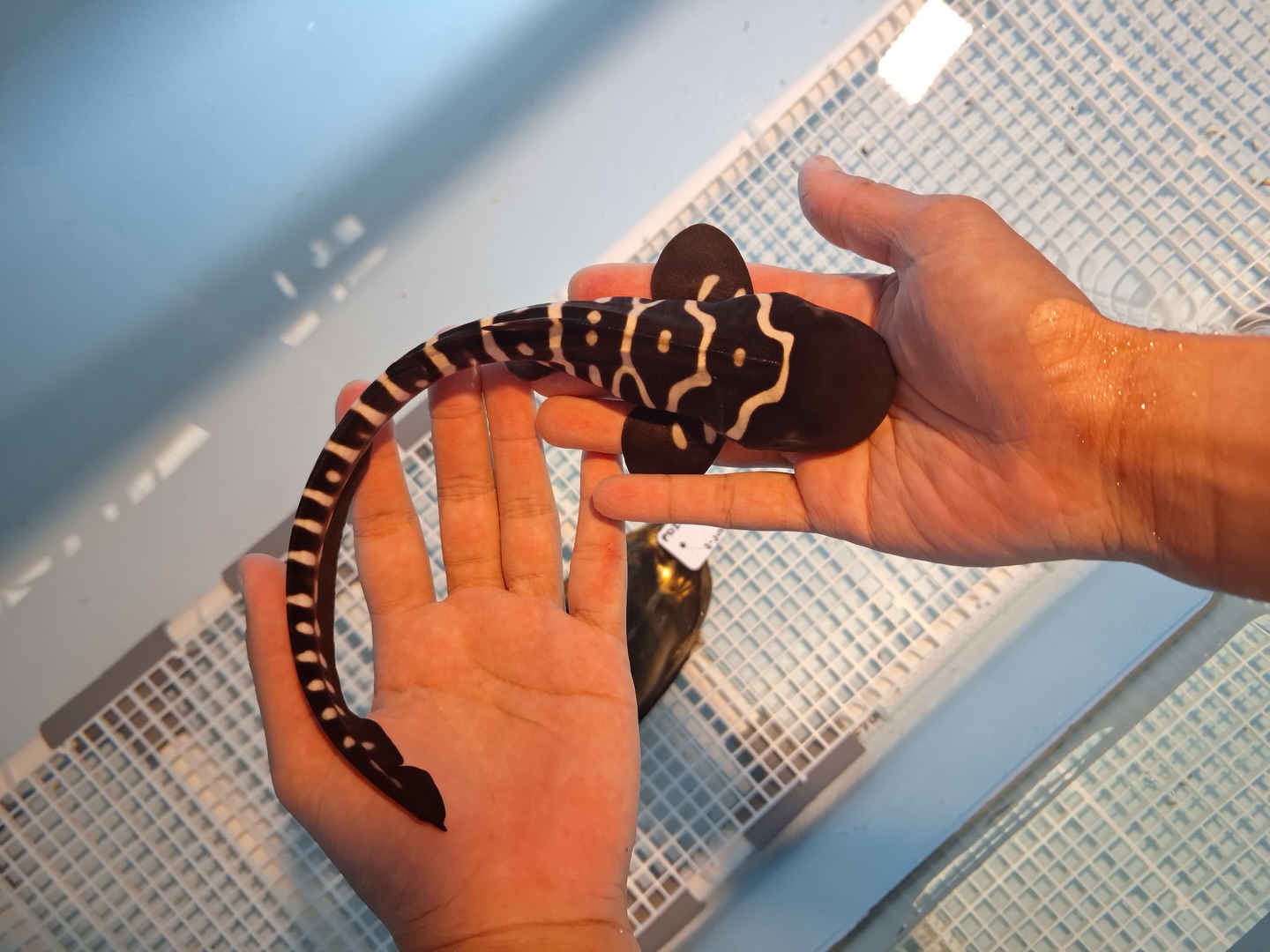
- The significance of the zebra shark’s hatching and its implications for conservation efforts.
- Role of local “shark nannies” and their impact on juvenile shark care.
- Overview of the StAR (Stegostoma tigrinum Augmentation and Recovery) Project and its objectives.
- The importance of global partnerships in wildlife conservation.
- The journey from captivity to the wild: a look at Jelly’s future.
The hatching of Jelly, an endangered zebra shark pup, marks a pivotal moment in marine conservation. With both parents, Peanut and Butter, residing at Point Defiance Zoo & Aquarium in Tacoma, Washington, this event is more than just a biological occurrence; it symbolizes hope for the zebra shark species, which has faced significant decline due to habitat loss, pollution, and overfishing.
Zebra sharks, also known as Stegostoma tigrinum, inhabit shallow waters of the Indo-Pacific region. Their striking appearance, characterized by elongated bodies and distinctive stripes, has made them a focal point of marine exhibitions. However, their conservation status is alarming, with habitat destruction and climate change threatening their populations. The arrival of Jelly champions the cause and brings attention to the urgent need for protective measures for vulnerable marine species.
Caring for Jelly is not just the responsibility of the Point Defiance Zoo & Aquarium staff; a group known as “shark nannies” has stepped in to ensure that she receives the critical early care necessary for a young shark. These nannies play a vital role in acclimating the pup to her surroundings, providing minimal human interaction to prevent excessive conditioning. The underlying philosophy here is to prepare Jelly for a successful transition back to her natural habitat. This practice minimizes the risk of juvenile sharks becoming dependent on human intervention, which could compromise their ability to survive in the wild.
The StAR (Stegostoma tigrinum Augmentation and Recovery) Project focuses on reinforcing zebra shark populations in their natural environments. When Jelly matures, she will be tagged and released into the protected waters of Raja Ampat, Indonesia. This specific area is known for its rich biodiversity and pristine coral reefs, making it an ideal habitat for jelly and other marine life. The project aims to create a sustainable population by closely monitoring released individuals, assessing their adaptation to the wild, and gathering data on their behaviors.
Global partnerships play a crucial role in marine conservation efforts like the StAR Project. Collaborations with organizations such as ReShark enhance the effectiveness of these initiatives through shared resources and expertise. By pooling knowledge and efforts, conservationists can better address the multifaceted challenges facing marine species like the zebra shark. The importance of these alliances cannot be overstated; they amplify the impact of individual organizations and facilitate access to essential funding, research, and technology.
The journey from captivity to the wild for Jelly embodies the essence of conservation efforts. Upon her release in Raja Ampat, her progress will be closely monitored. Tagging juvenile sharks allows researchers to track their movement and behavior, providing invaluable insights into their life cycles. This information can inform future conservation strategies and contribute to a broader understanding of zebra shark populations.
Marine ecosystems depend on a delicate balance. Healthy shark populations help maintain that balance by regulating prey populations and contributing to marine biodiversity. The protection of zebra sharks is not just beneficial for their species; it has far-reaching effects on entire ocean ecosystems. By celebrating Jelly’s arrival and supporting initiatives like the StAR Project, we take significant steps towards protecting our oceans and ensuring the survival of various marine species.
Moreover, public awareness is a key component in the advancement of conservation efforts. Programs like those at Point Defiance Zoo & Aquarium provide educational opportunities for visitors, fostering a connection between people and marine life. Exhibits featuring Jelly’s story can inspire individuals to take action, whether through direct involvement in conservation projects or simple lifestyle adjustments to reduce their environmental impact.
The challenges facing zebra sharks are multifaceted and require a blend of innovative approaches. While traditional conservation methods maintain significance, addressing issues such as climate change and plastic pollution also holds paramount importance. Efforts to promote sustainable fishing practices help protect not just shark populations, but all marine inhabitants. Educating communities surrounding the Raja Ampat region on sustainable practices ensures that Jelly’s future home is preserved for generations to come.
Additionally, embracing technology in conservation efforts cannot be overlooked. Advances in monitoring tools provide greater insight into animal movements, while camera traps and underwater drones can gather crucial data in hard-to-reach areas. These technologies can track Jelly’s transition to the wild, offering researchers real-time information about her adaptation and success.
As Jelly continues to grow under the attentive care of her shark nannies, the community around Point Defiance Zoo & Aquarium is united in a shared goal: to see her flourish in the wild. Each milestone she reaches reflects the broader efforts of marine conservationists working tirelessly to protect species in peril. The collaborative commitment to preserving aquatic biodiversity is a powerful reminder that progress can be achieved through compassionate action and scientific inquiry.
With a focus on species recovery, the narrative of Jelly, the zebra shark pup, resonates beyond her life. She stands as a testament to the strength of both individual contributions and collective initiatives aiming to safeguard our oceans and their inhabitants. Whether through conservation projects, educational programs, or simple lifestyle changes, each of us has a role in nurturing our marine environments.
A core element lies in the ability of these initiatives to inspire future generations. Children who learn about Jelly’s journey may grow up to become the scientists, policymakers, and conservationists of tomorrow. Understanding the interconnectedness of ecosystems fosters a sense of responsibility towards the planet, propelling societal shifts in attitudes and behaviors that will benefit the environment.
In exploring Jelly’s world and the efforts put forth by Point Defiance Zoo & Aquarium, ReShark, and other partners, we gain insight into the complexities of wildlife conservation. Their commitment to caring for Jelly, coupled with innovative approaches to recovery, underscores the necessity of ongoing efforts to bolster threatened marine species.
Jelly’s story exemplifies the importance of nurturing marine ecosystems and highlights the dedication of many individuals and organizations committed to preserving biodiversity. Through education, collaboration, and the observance of nature, we can strive towards a future where aquatic life thrives, and species like Jelly the zebra shark live full, free lives in their natural habitats.
As we welcome Jelly into the world, we also embrace the broader mission of conservation, which connects us all. Protecting marine life is not just an aspiration; it is an urgent need. Each hatching is a chance for hope, a call to action, and an opportunity to reaffirm our commitment to the health of the oceans. Through concerted efforts and compassion, we can help ensure a brighter future for Jelly and countless species that depend on our dedication to their survival.
*****
Source Description
Help us welcome Jelly to the world — a newly hatched endangered zebra shark pup in Indonesia! 🦈💙
Thanks to parents Peanut and Butter at Point Defiance Zoo & Aquarium and our partnership with the global coalition ReShark, this tiny pup represents real hope for her species.
Local “shark nannies” are now caring for Jelly with minimal human conditioning. Once she’s grown, she’ll be tagged and released into the protected waters of Raja Ampat as part of the StAR (Stegostoma tigrinum Augmentation and Recovery) Project.
From Tacoma to the tropics: this is conservation in action. 💙
📸: Photos from Mardia Sultan – @rarcc / @resharkorg
