
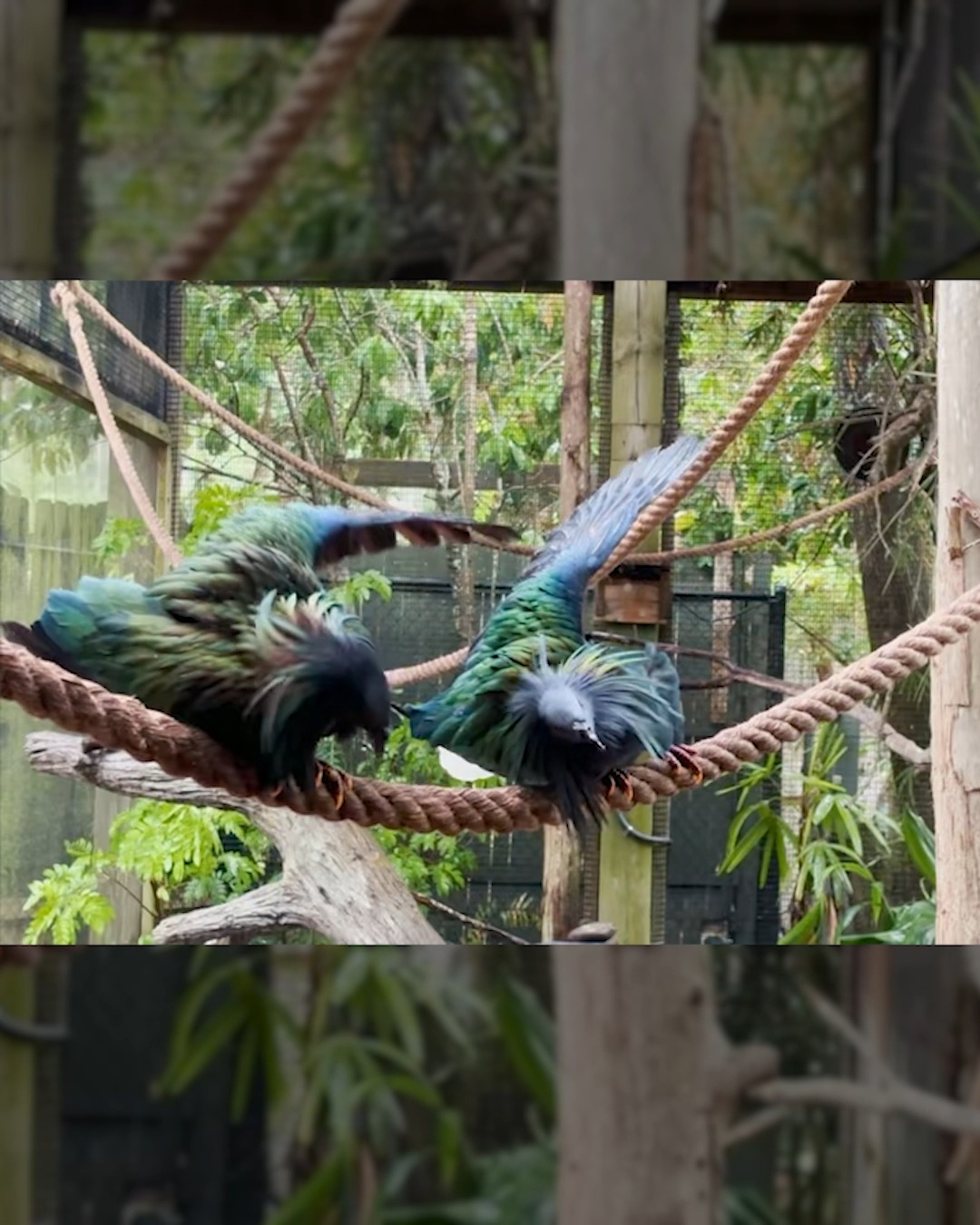
- The unique habits and behaviors of Nicobar pigeons during rain
- The significance of "calling dibs" in animal behavior, particularly in shared habitats
- Zoological insights into the social dynamics of Nicobar pigeons
- The role of zoos and conservation efforts in preserving Nicobar pigeons
- The importance of understanding animal interactions for wildlife management
When you and your bestie both call dibs on the good shower spot, it’s usually a light-hearted affair about comfort and companionship. In the animal kingdom, this scenario plays out with fascinating intricacies. Among the numerous species that demonstrate this behavior are Nicobar pigeons. Known for their striking appearance, these birds also exhibit interesting social dynamics, especially during rain. Observing them can offer substantial insights into animal behavior and conservation.
The Nicobar pigeon, native to the Nicobar Islands, coastal regions, and small islets of the Pacific and Southeast Asia, flaunts an extraordinary combination of iridescent plumage and a robust body structure. Their radiant green and copper feathers catch the light much like the glint off a gem, while their distinctive white tail contrasts sharply with their darker body, making them a visual feast. But beyond their physical allure, Nicobar pigeons possess intriguing behaviors, particularly when it comes to rain showers and space-sharing.
When rain graces the dense canopies of their habitat, these birds take the opportunity to indulge in a natural ‘shower’. Unlike humans, pigeons do not have a permanent bathroom or shower room, so they must navigate their environment for optimum shower spots. The prospect of a refreshing rain bath prompts them to claim favorable perches, often leading to competitive interactions. This behavior is akin to the playful banter humans experience with friends over limited resources like a coveted shower spot.
Understanding the act of ‘calling dibs’ among Nicobar pigeons sheds light on broader animal behavior themes. In ethology, the study of these behaviors showcases how animals prioritize their needs and interact socially. Territories or resources, like a preferred bathing spot, necessitate negotiation among individuals. This negotiation often includes vocalizations, displays of feathers, or physical presence. The ability to assert dominance or negotiate space is crucial for reducing conflicts and ensuring access to necessary resources. Observing these patterns allows researchers to interpret how animals manage shared habitat use, coordinate social structures, and sustain community health.
The social dynamics of Nicobar pigeons extend beyond just space-sharing. Their flocking behavior, for instance, is a strategic adaptation against predation. In groups, they are less vulnerable to predators, enhancing their collective survival chances. Within these groups, establishing social hierarchies becomes vital. The pigeons rely on subtle cues and negotiations to avoid unnecessary conflicts, highlighting cooperation over competition. The cue-taking and exchanging behaviors showcase an intricate survival strategy.
Zoological institutions, such as zoos, play a significant role in conserving Nicobar pigeons and providing environments where these birds can be studied thoroughly. By creating simulated natural habitats within enclosures, zoos offer platforms for observing interactions. This information is invaluable for forming conservation strategies. Through education and research, zoos aim to preserve this species by understanding its needs and facilitating breeding programs that mirror natural social structures.
Conservation efforts are essential due to challenges Nicobar pigeons face in the wild, including habitat loss, predation by invasive species, and hunting. Protecting these birds requires collaborative efforts that combine habitat conservation, responsible wildlife management, and community involvement. By safeguarding the environments these pigeons inhabit, conservationists can help stabilize their populations, contributing to broader ecological health.
One cannot overstate the importance of understanding animal interactions like those of Nicobar pigeons for effective wildlife management. By identifying patterns and predicting behaviors, conservationists and ecologists can design better habitats, anticipate environmental changes, and deploy strategic interventions to preserve biodiversity. Comprehensive knowledge of these behaviors enhances our ability to implement effective conservation measures.
When observing Nicobar pigeons during a rain bath, it’s not just an enchanting spectacle but a lesson in environmental stewardship. The interactions tell a story of survival, cooperation, and the delicate balance of nature. Understanding the nuances of their behavior and the fiddly dance of social dynamics enriches our appreciation for wildlife and highlights the intricate connections within ecosystems.
Thus, when both you and your bestie call dibs on that good shower spot, there’s more to the tale than meets the eye. It’s a narrative told time and again across the animal kingdom, a mosaic of behaviors set against the backdrop of survival and social interaction. Amidst the beauty and complexity, we find lessons worth learning and lives worth conserving.
*****
Source Description
When you and your bestie both call dibs on the good shower spot. 💦🕊️
These Nicobar pigeons know how to make the most of a rainy day.
.
.
.
class=”instagram-media” data-instgrm-permalink=”https://www.instagram.com/reel/DKUbOLgpm_G/” data-instgrm-version=”14″ style=” background: border:0; border-radius:3px; box-shadow:0 0 1px 0 rgba(0,0,0,0.5),0 1px 10px 0 rgba(0,0,0,0.15); margin: 1px; max-width:540px; min-width:326px; padding:0; width:99.375%; width:-webkit-calc(100% – 2px); width:calc(100% – 2px);”>
